Sen. Elizabeth Warren is siding with President Donald Trump on an issue few would have expected to unite the progressive Massachusetts Democrat and the Republican president: how America’s biggest defense contractors spend their money.
Warren and Republican Sen. Mike Lee of Utah are urging Pete Hegseth to support permanent restrictions on shareholder payouts and executive rewards at defense companies that fail to meet Pentagon production and performance goals. Their push comes after Senate staff found that 20 large publicly traded defense contractors cut buybacks and dividends by about $2 billion during the first quarter of 2026 compared with the same period last year.
At the same time, those companies increased capital investment by roughly $1.2 billion, putting more money toward long-term needs such as equipment, factories and additional production capacity. Warren and Lee see those numbers as evidence that tougher pressure from Washington may be changing corporate priorities.
The partnership does not mean Warren has embraced Trump’s wider political agenda. It does show how frustration with delayed weapons programs, rising costs and billions in shareholder payouts has created an unusual opening for bipartisan action.
Warren and Lee Want Trump’s Pressure Made Permanent
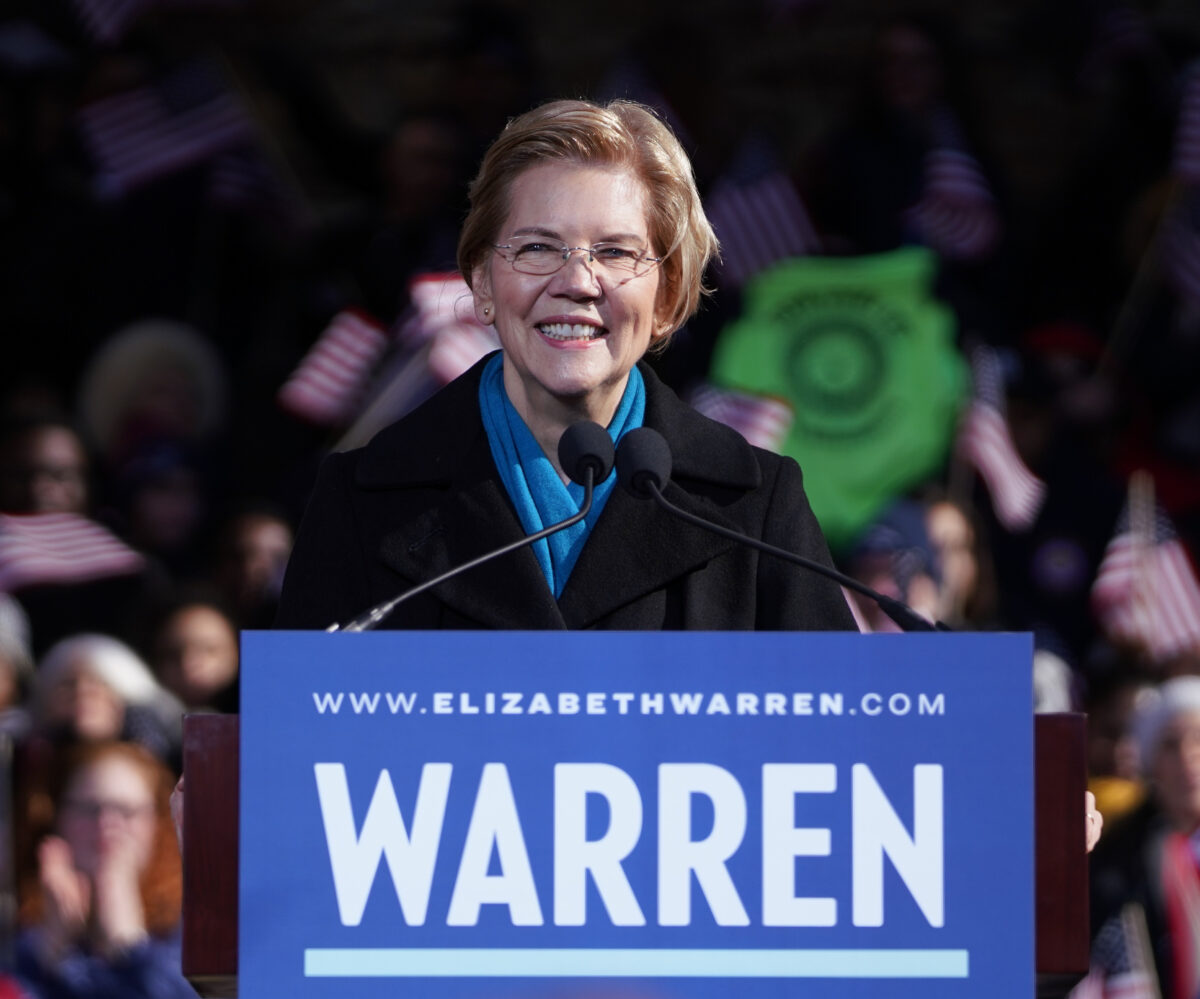
Elizabeth Warren via Wikimedia Commons licensed under CC BY 2.0
Trump moved aggressively on the issue when he signed an executive order in January aimed at defense contractors that fail to deliver, invest adequately in production or give U.S. military contracts sufficient priority.
The January 7 order directs the Pentagon to identify underperforming contractors that continue spending money on stock buybacks and corporate distributions. It also calls for future contracts to block those payouts during periods of underperformance and allows other remedies when companies fail to correct deficiencies.
Executive compensation is part of the equation too.
Future incentive packages are supposed to reward on-time delivery, greater production, and operational improvements instead of focusing heavily on short-term financial measurements. The order also allows executive base salaries to be capped at existing levels in certain cases involving underperforming contractors, where federal law allows it.
Warren has already worked across the aisle on legislation designed to make those ideas more durable. She and Republican Sen. Josh Hawley introduced a bill in March that would limit stock buybacks permanently for contractors that fail to meet specific requirements.
“It makes no sense for the federal government to fork over billions in taxpayer dollars to giant military contractors,” Warren said when the legislation was introduced.
Her argument is straightforward: companies receiving enormous federal contracts should not be able to prioritize shareholders and senior executives while falling behind on the military equipment taxpayers hired them to deliver.
The Spending Numbers Give Senators Fresh Ammunition
The latest financial figures are central to Warren and Lee’s case.
Their staffs examined earnings calls and financial information from the 20 largest publicly traded U.S. defense contractors. Collectively, the companies reduced buybacks and dividends by $2 billion in the first three months of 2026 while capital spending increased by $1.2 billion.
Four of the industry’s biggest names offer an even clearer picture.
Lockheed Martin, RTX, Northrop Grumman and General Dynamics combined spent approximately $4.2 billion on dividends and stock repurchases during the first quarter of 2025. Their combined figure dropped to about $2.7 billion during the same period in 2026.
The pattern was not universal. RTX increased its payouts slightly, while Lockheed Martin, Northrop Grumman and General Dynamics recorded declines. GE Aerospace also increased stock buybacks, something Warren and Lee have pointed to while arguing that an executive order alone may not create lasting change.
There is also an important limit to what the numbers prove.
A decline in shareholder payouts does not establish that every dollar saved automatically moved into missile plants, aircraft production lines or other military projects. The senators are making a broader argument that restrictions may encourage firms to keep more capital available for expanding production rather than immediately returning it to investors.
Pentagon Delays Make the Money Fight Bigger Than CEO Pay
The debate would carry less political weight if the Pentagon were consistently getting weapons quickly, cheaply and on schedule.
It is not.
The government plans to invest more than $2.4 trillion in developing and buying some of its most expensive weapons programs. Yet the latest federal assessment found continuing problems with speed, schedules and the way major systems move from development into military use.
Major acquisition programs again faced delays, and the average expected time needed to deliver an initial capability has climbed beyond 12 years. The review also found that some programs entered rapid acquisition pathways while still relying on technologies that needed more development, making quick delivery harder to achieve.
That history changes the political argument.
This is no longer simply a debate about whether corporate executives make too much money. It is about what financial rewards should look like when the federal government spends massive amounts on weapons but still struggles with late programs, rising costs and slow production.
Critics of tighter government control can argue that private companies still need flexibility to attract investors, compensate executives and decide where capital can generate the strongest returns.
Supporters see defense contractors differently from ordinary corporations. Their biggest customer is often the U.S. government, and failure to deliver does not simply affect a quarterly earnings report. It can affect military inventories, readiness and the government’s ability to respond to national security demands.
Congress Is Moving the Fight Beyond Trump’s Executive Order
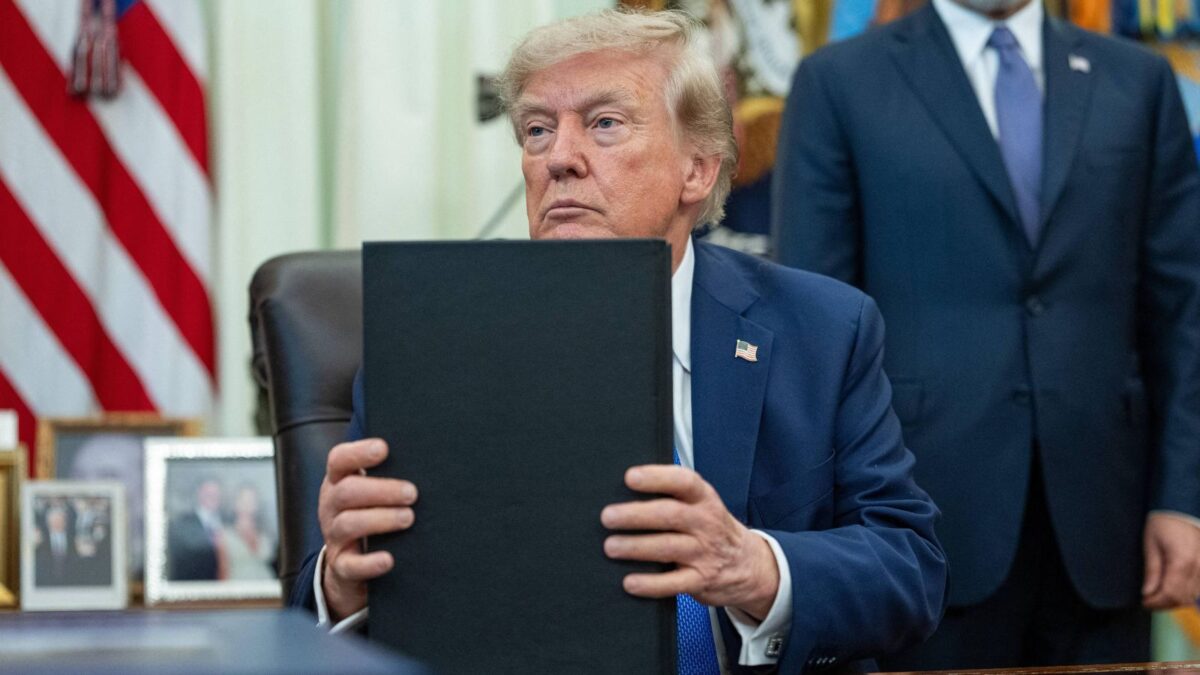
That distinction explains why Warren, Lee and other lawmakers want legislation rather than relying solely on presidential action.
Executive orders can be revised or reversed by future administrations. Federal law is harder to undo.
The effort has already moved into the annual defense policy process. A stock buyback provision included in the Senate Armed Services Committee’s fiscal 2027 defense authorization package would prohibit companies from repurchasing shares when they are failing to meet Pentagon performance needs.
That gives the bipartisan push more significance than the unlikely sight of Warren praising a Trump policy.
The larger question is whether Washington is beginning to redefine what companies must do in exchange for enormous defense contracts. Instead of viewing delivery problems and corporate payouts as separate issues, lawmakers are increasingly trying to connect financial rewards directly to performance.
Trump approaches the issue through military production and readiness. Warren has long approached corporate behavior through taxpayer protection and accountability. In this case, those paths have brought them surprisingly close to the same place.
What remains unsettled is whether restrictions on dividends, buybacks and executive compensation will actually produce more weapons faster, or whether deeper problems inside the Pentagon’s acquisition system will continue slowing programs regardless of how contractors distribute their profits.