Turkey may be the traditional star of Thanksgiving, but there’s no rule saying it has to headline every holiday dinner. Sometimes, the most memorable meal begins when you move the familiar bird aside and let something unexpected take center stage.
And there are plenty of possibilities. One Serious Eats recipe says a five-pound duck serves two to four people, while Love and Lemons offers a stuffed squash centerpiece that serves eight. The National Pork Board even recommends pork loin for gatherings of eight to ten guests.
From beautifully glazed ham to golden mushroom Wellington, these nine documented recipes offer different flavors, serving sizes, and preparation styles. None is guaranteed to outperform turkey, but each gives you a reason to reconsider the holiday menu.
Glazed Ham: A Familiar Favorite Without the Whole-Bird Fuss
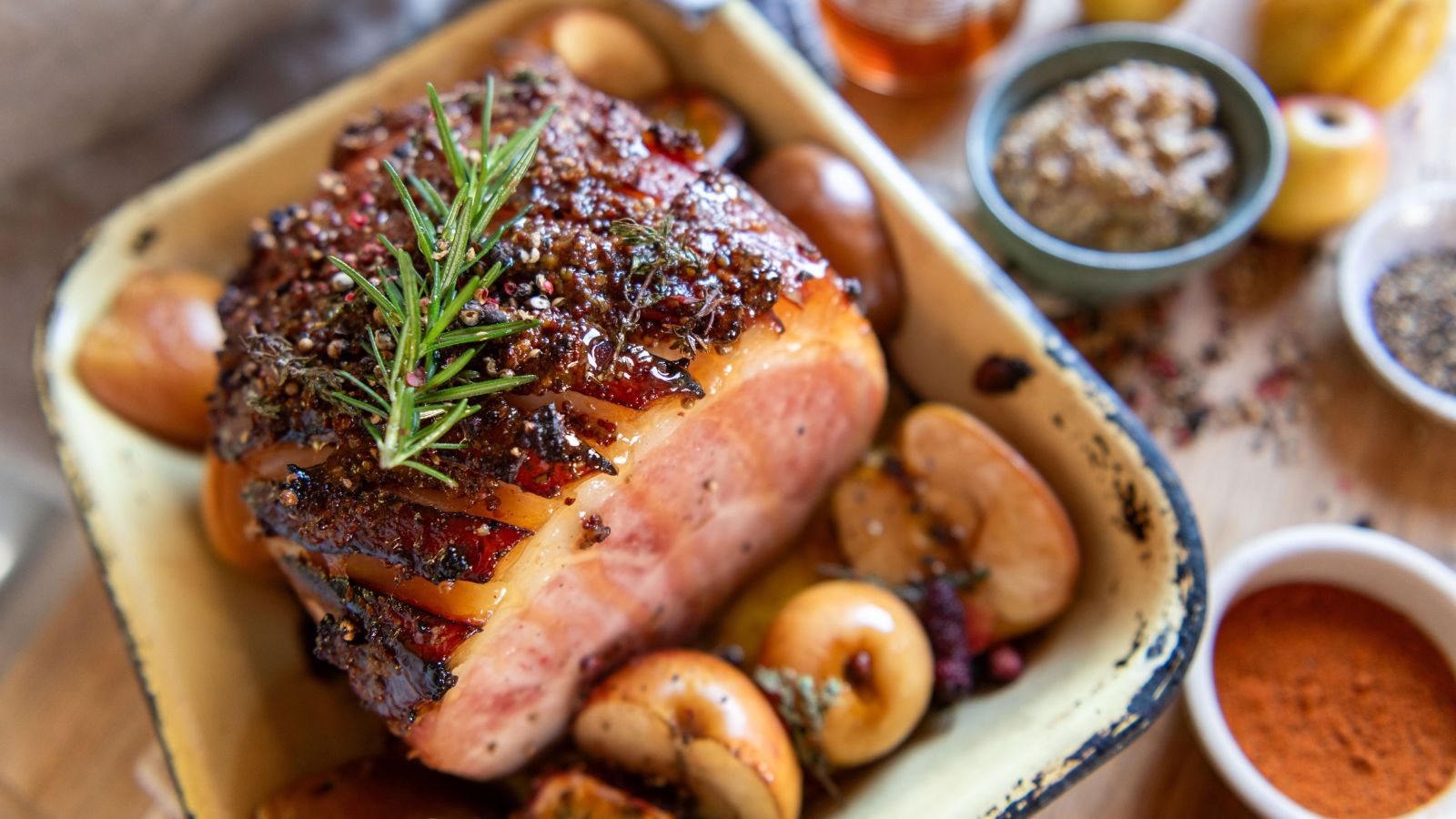
There’s something irresistible about a glossy ham sitting at the center of a holiday table. Its caramel-colored glaze catches the light, while neatly arranged slices make serving feel almost effortless.
Honey Baked Ham offers fully cooked, spiral-sliced ham that requires no additional cooking before serving. The company recommends enjoying it without reheating or gently warming individual slices rather than heating the entire ham. Planning matters, though. HoneyBaked provides different refrigerator-thawing instructions depending on the product and size, so check the specific package.
Why try it: A fully cooked ham offers an alternative to preparing a raw holiday centerpiece. Just remember that not every supermarket ham arrives ready to eat.
Beef Tenderloin: An Elegant Roast With Mushrooms and Shallots
Few things announce a special dinner quite like beautifully sliced roast beef arranged across a serving platter. The beef industry’s Classic Holiday Dinners collection features Classic Beef Chateaubriand, prepared with tenderloin, white wine, mushrooms, and shallots.
The combination brings together the richness of roasted beef and the savory depth of mushrooms, with the shallot-and-wine sauce adding another layer of flavor. It’s a different experience from carving a whole bird, particularly when the roast arrives already sliced and ready to serve.
Why try it: Tenderloin makes an appealing centerpiece for guests who enjoy roast beef. Check the recipe’s required cut and portion size before planning how many people it will serve.
Cranberry-Apple Braised Brisket: A Celebration of Fall Flavors
Some holiday dishes seem made for crisp November afternoons, when cinnamon and roasted fruit fill the kitchen with familiar autumn aromas. The Autumn Harvest Braised Beef Brisket recipe from Beef. It’s What’s For Dinner combines brisket with apples, cranberries, cinnamon, and other seasonings.
Unlike roasted tenderloin, this brisket is browned and then slowly braised. The recipe finishes with an apple-and-cranberry mixture spooned alongside the sliced beef. The combination links Thanksgiving’s familiar fruit flavors to a completely different main dish.
Why try it: This flavorful option suits cooks who enjoy slow-braised meat, though it takes considerably more time than a quick roast.
Roast Pork Loin: A Centerpiece Made for Sharing
A beautifully browned pork loin can bring the same sense of occasion as a traditional Thanksgiving roast, without repeating the familiar turkey presentation.
According to the National Pork Board, pork loin is a suggested choice for gatherings of approximately eight to ten guests. For smaller celebrations, the organization recommends considering pork tenderloin instead.
These two cuts differ, so don’t treat their cooking instructions as interchangeable. The Pork Board also highlights holiday combinations featuring pork roast, bacon, Brussels sprouts, and pomegranate.
Why try it: Pork loin offers a sliced roast that can anchor a larger holiday table. Choose the roast weight based on your guest count rather than assuming every loin feeds ten people.
Related: How Families Celebrated Thanksgiving in the 1950s
Duck à l’Orange: A French Classic With a Dramatic Finish
If Thanksgiving dinner deserves a little theater, duck à l’orange knows how to make an entrance. Serious Eats’ Daniel Gritzer developed a version pairing roasted duck with a deeply flavored orange sauce. The sauce uses stock and a sweet-tart caramel-and-vinegar mixture known as a gastrique.
His recipe calls for an approximately five-pound duck and serves two to four people as a main course. But this isn’t a last-minute holiday shortcut. The published total time is six hours and 25 minutes, including chilling and extensive sauce preparation.
Why try it: Duck à l’orange makes an impressive centerpiece for smaller gatherings, if you’re willing to spend considerable time preparing it.
Lemon-Dill Salmon: A Bright Alternative to Roasted Meat
Not every Thanksgiving main dish needs a crispy skin, carved bones, or hours in the oven. In an August 2026 Serious Eats recipe, Zola Gregory prepares four six-ounce salmon fillets in individual foil packets with lemon, butter, and fresh dill.
The accompanying tartar sauce combines Greek yogurt, mayonnaise, capers, dill, lemon juice, and garlic. The recipe lists 35 minutes total and also provides instructions for adapting the preparation to a three-to-four-pound side of salmon. One important distinction: the author’s preferred salmon temperatures are below the federal household recommendation of 145°F.
Why try it: Salmon offers a shorter, citrus-forward preparation for a smaller gathering, with tartar sauce providing a flavorful finishing touch.
Mushroom Wellington: A Golden Pastry Worth Celebrating
A golden pastry arriving at the table has a certain magic. The first cut reveals its filling, and suddenly everyone wants to know what’s inside. Roxy Pope and Ben Pook’s Mushroom Wellington, published by BBC Food, combines roasted portobello or flat mushrooms with lentils, mixed nuts, dried apricots, onions, garlic, and herbs.
The Wellington is wrapped in vegan puff pastry, making it a centerpiece that serves six. Roast the mushrooms for about 15 minutes before assembly, then bake the completed Wellington for another 40 to 50 minutes. That final baking time doesn’t include prep.
Why try it: Mushroom Wellington brings a dramatic pastry presentation to a turkey-free table. Check the pastry ingredients carefully, and remember that the filling contains nuts.
Stuffed Acorn Squash: Autumn Served in Its Own Little Bowl
Sometimes nature supplies the prettiest serving dish. Love and Lemons’ stuffed acorn squash uses four halved squashes to create eight servings, each filled with a colorful mixture of brown and wild rice, mushrooms, apples, feta, cranberries, pecans, pepitas, and herbs.
An apple-cider-vinegar dressing ties the ingredients together. The recipe lists one hour total, with squash roasting taking approximately 25 to 40 minutes depending on size. There is also a useful advance-preparation option: the squash, cooked rice, and dressing can be prepared up to three days ahead and refrigerated.
Why try it: It’s a colorful individual centerpiece with practical make-ahead possibilities. The recipe contains feta and nuts, details worth checking when planning your menu.
Cranberry-Chestnut Nut Roast: A Festive Loaf With Character
A beautifully sliced nut roast can look every bit as deliberate as a traditional carved centerpiece. BBC Food’s Justine Pattison offers a cranberry-chestnut nut roast combining mixed nuts, cashew butter, cooked chestnuts, cranberries, vegetables, herbs, and lemon zest.
Her recipe serves six and bakes in a lined two-pound loaf tin. Bake the loaf covered for 30 minutes, then uncovered for 20 minutes, and rest for five minutes before turning out. Pattison also recommends refrigerating the prepared roast for up to three days or freezing individually wrapped slices for up to three months.
Why try it: This make-ahead option features familiar festive ingredients. It’s vegan as written, but it contains nuts and requires checking the stock and milk-alternative ingredients.
A Little Holiday Planning Goes a Long Way
Whether you’re preparing duck for two or stuffed squash for eight, the best centerpiece suits your guests, schedule, and cooking space.
For meat and seafood, follow FoodSafety.gov’s cooking-temperature guidance: 145°F with a three-minute rest for beef and pork roasts, 165°F for duck, and 145°F for fish. Refrigerate perishable foods promptly; don’t leave them out for long.
Thanksgiving doesn’t lose its charm when turkey takes a year off. Sometimes a new centerpiece brings fresh conversation, unexpected flavors, and another cherished memory to the table.