Those neatly packaged fruits and vegetables might save you a few minutes, but they could also inflate your grocery bill.
Walk through almost any supermarket produce section and you will find containers of diced onions, sliced peppers, cubed watermelon, shredded carrots, and ready-to-cook vegetables. They promise convenience, and for busy shoppers, that convenience can be worth paying for. However, some pre-cut foods cost considerably more than their whole counterparts, spoil faster, or offer fewer options once you bring them home. The trick is knowing which shortcuts are worth your money and which you can easily handle yourself.
Pre-Cut Fruit
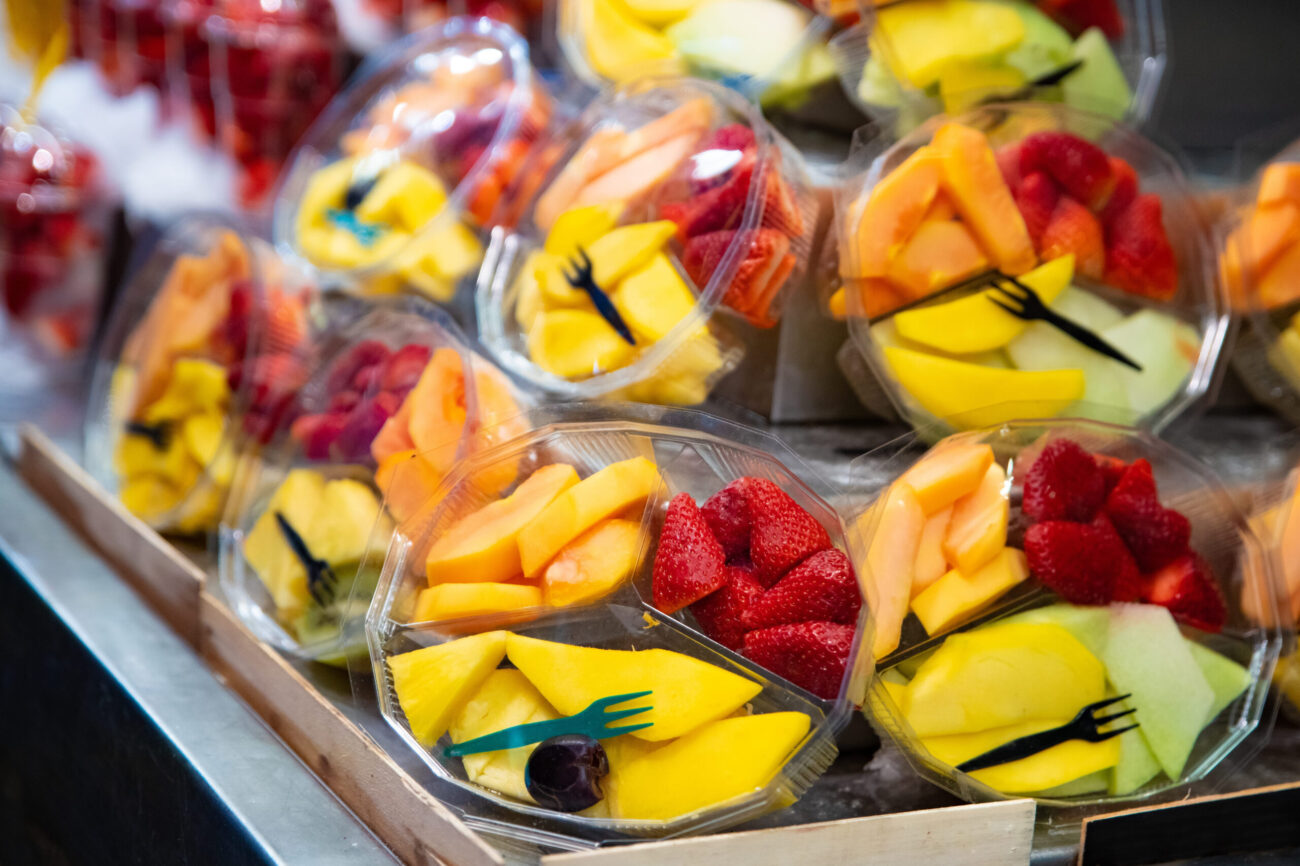
Paying extra for someone else to slice your pineapple can feel convenient until you compare the prices.
Pineapple, melon, mango, and watermelon are often sold in clear containers ready for snacking. You are paying for the fruit, preparation, packaging, and labor, which can make these products more expensive than buying whole fruit. If you have time to prepare it yourself, you could save money and get several portions from a single purchase.
Whole fruit also gives you more flexibility. Slice some for breakfast, freeze the rest for smoothies, or save it for another meal. If cutting certain fruits is difficult or inconvenient, however, the prepared version may still be worth the extra cost.
Shredded Cheese
A block of cheese can offer better value than a bag of ready-made shreds.
Pre-shredded cheese is convenient for tacos, pizza, and casseroles, but it can cost more per pound than a comparable block. Wide shredded varieties also contain anti-caking ingredients to prevent the pieces from sticking together.
Grating cheese at home takes only a few minutes and can melt more smoothly in certain sauces. If you regularly prepare dishes that depend on melted cheese, keeping a block in the refrigerator may be a worthwhile habit.
Diced Onions
One of the cheapest ingredients in your kitchen becomes less of a bargain when it arrives in a plastic container.
Onions are inexpensive, versatile, and useful in countless recipes. Buying them already diced saves chopping time, but processing and packaging can increase the price.
Whole onions also tend to last longer when stored in a cool, dry, well-ventilated place. If you cook frequently, chop several at once and refrigerate the portions you plan to use soon. You can freeze extra chopped onions for cooked dishes to make future meal prep easier.
Sliced Bell Peppers
Those colorful pepper strips look attractive in the produce aisle, but preparing them yourself is remarkably simple.
Pre-cut peppers are handy for stir-fries, fajitas, and salads. However, whole peppers usually offer better value, and you can choose exactly how much to prepare for each meal.
Wash the peppers, remove the stems and seeds, and cut them into strips or cubes. Refrigerate extra portions for short-term use or freeze them for cooked dishes. Frozen peppers may soften after thawing, so save them for soups and stir-fries rather than salads.
Peeled Garlic
A container of peeled garlic saves a fiddly task, but whole garlic is often more economical.
Whole garlic bulbs generally provide plenty of cloves for a modest price. You can peel only what you need, crush it with the flat side of a knife, and add it directly to your cooking.
Pre-peeled garlic isn’t necessarily a bad buy, especially if you cook in large quantities or dislike peeling individual cloves. Compare the unit prices and check the package date before deciding which option makes sense.
Shredded Carrots
A whole carrot can become a salad topping, soup ingredient, or baking staple with just a few strokes of a grater.
Bagged shredded carrots are convenient for coleslaw and quick salads, but whole carrots often cost less and offer more possibilities. You can slice them into sticks for snacks, dice them for soups, or grate them for cakes and muffins.
Keep whole carrots refrigerated to maintain their quality. If convenience matters most on busy evenings, however, the extra cost of ready-shredded carrots may be reasonable.
Pre-Cut Broccoli
Ready-to-roast florets are tempting, but a whole head gives you more control over what you use.
Pre-cut broccoli makes meal preparation easier, yet whole broccoli can be a better buy. You can cut the florets to your preferred size and use the tender stem in soups, stir-fries, or other vegetable dishes.
Do not automatically discard the stem. Peel away any tough outer layer, then slice the tender center into pieces. It is another way to get more from the vegetables you purchase.
Related: September Is the Month to Give Your Garden a Second Act: Here’s What to Plant Now
Cubed Butternut Squash
A whole squash can look intimidating, but the savings may justify learning how to prepare it safely.
Ready-cubed squash is useful for roasting and soups, especially when you are short on time. Buying a whole squash can cost less, and you can cut it into cubes, wedges, or slices depending on your recipe.
Use a stable cutting board and a sharp, sturdy knife, and be careful when cutting through the hard skin. If handling a large squash is difficult, the pre-cut version may be worth the additional expense.
Pre-Cut Stir-Fry Vegetables
A colorful bag of mixed vegetables makes dinner easy, but you may already have everything needed to create your own combination.
Prepared stir-fry mixes often include cabbage, carrots, peppers, and broccoli. Buying these ingredients separately may cost less, particularly if you use them across several meals.
You can also customize the mixture to your preferences and reduce waste by using vegetables already in the refrigerator. Keeping versatile ingredients on hand makes this easier, and Uncle Jo readers can find more inspiration in 10 Simple Habits to Recharge Your Mind and Body, which explores small everyday habits that can make routines more manageable.
When Is Pre-Cut Food Worth Buying?
Saving money matters, but so does choosing food you can realistically prepare and enjoy.
Pre-cut produce can help people with busy schedules, limited kitchen equipment, or difficulty handling knives. It may also prevent waste if buying a smaller prepared portion means you eat it rather than letting a whole vegetable spoil.
For foods that need refrigeration, follow the package’s storage instructions and use them promptly. The U.S. Food and Drug Administration’s produce safety guidance recommends keeping cut produce refrigerated and handling fruits and vegetables safely.
Before buying, compare unit prices, consider how much you will use, and think about the time saved. Sometimes convenience is worth paying for. Other times, a whole vegetable and a few minutes of preparation are all you need.
Which pre-cut grocery item do you buy most often, and would you consider switching to the whole version to save money?