Couscous has been around for centuries, but medieval North African versions often differed from what we eat today.
Some recipes were surprisingly simple, while others required elaborate preparations that would challenge today’s adventurous cooks. 13th-century cookbooks reveal how creative people were with this familiar dish.
Here are five unusual medieval couscous preparations that offer a fascinating glimpse into the past.
Soldiers’ Couscous (Kuskus Fityni)
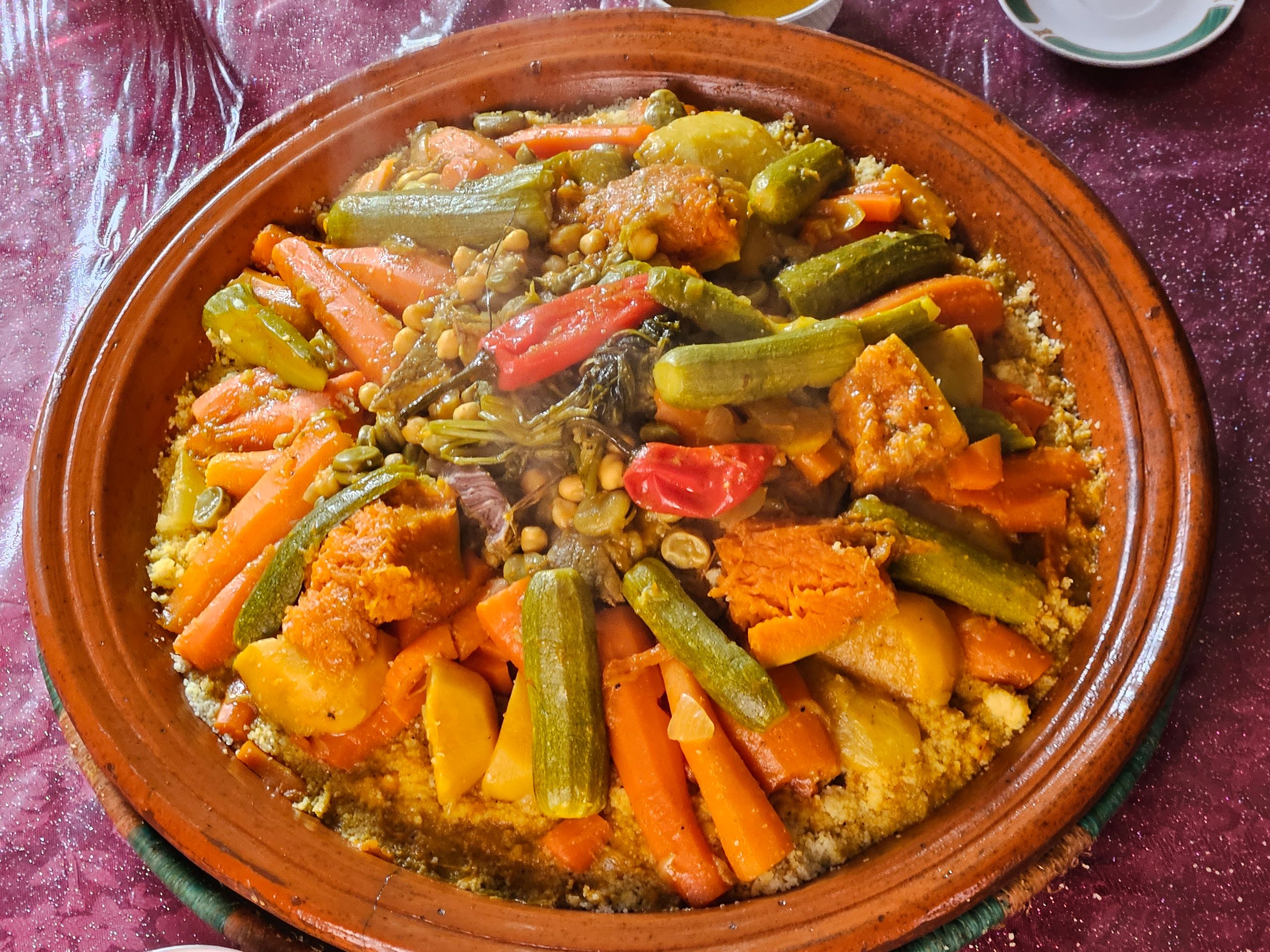
In 13th-century Marrakech, cooks prepared a hearty couscous dish known as Kuskus Fityni, sometimes translated as Soldiers’ Couscous.
The recipe appears in the Anonymous Andalusian Cookbook, a collection of medieval dishes from North Africa and Muslim-ruled Spain. Unlike modern preparations, where broth is often poured over couscous, this version lets the grains absorb the meat broth as they cook.
First, cooks combined the meat and vegetables. Once tender, they removed the meat and vegetables, strained the broth, and returned it to the heat. They then added the previously cooked, fat-rubbed couscous and gently heated it until it absorbed the flavorful liquid.
The finished grains were arranged on a serving platter, topped with the meat and vegetables, and sprinkled with cinnamon.
That final touch might seem unusual to anyone who associates cinnamon mainly with desserts. However, the spice was also an important ingredient in medieval savory dishes.
Couscous Made From Bread Crumbs
What if you could make couscous without using the usual semolina grains? Medieval cooks had already explored that possibility.
The same 13th-century Andalusian cookbook describes an unusual version made from fine white bread crumbs. Rather than preparing tiny grains from semolina, cooks rubbed the bread crumbs between their hands to create a couscous-like texture.
The bread needed to be at a suitable temperature, neither too hot nor too cold, before being worked into small pieces. The crumbs were then steamed in a perforated cooking vessel.
One preparation paired this bread-based couscous with gueddid, a traditional form of dried, preserved meat, and its broth.
This inventive use of bread shows how medieval cooks could transform a familiar ingredient into something completely different.
For modern home cooks, it also reminds us that couscous wasn’t always limited to the grains commonly found in grocery stores today.
Fava Bean Couscous With a Creamy Sauce
Beans and couscous might sound like a straightforward combination, but a medieval preparation took things further.
The 13th-century Andalusian scholar Ibn Razīn al-Tujībī recorded a dish involving couscous and bayssar, a thick preparation made from fava beans.
To prepare it, the cook boiled dried fava beans, washed them, and cooked them again until soft. The cook then blended the beans with oil into a smooth, thick mixture, adding hot water as needed.
Meanwhile, the cook prepared the couscous separately and mixed it with butter. Once the fava bean mixture began boiling, add the couscous and let it absorb the creamy liquid.
The result was a rich, comforting dish that relied on beans rather than a meat-based stew for its main flavor and texture.
Versions combining fava beans and couscous remain part of North African cooking traditions, although modern ingredients and preparation methods can differ considerably from medieval descriptions.
Couscous With Chicken, Turnips, and Cow’s Eyes
Some medieval recipes are easy to imagine appearing on a modern dinner table. Others remind us how much food traditions have changed.
One particularly unusual couscous preparation in the Anonymous Andalusian Cookbook combined chicken, clarified butter, Toledo-associated turnips, and cow’s eyes.
Yes, actual cow’s eyes.
The historical account describes it as a special preparation, showing how ingredients many diners might avoid today once appeared in elaborate meals.
The inclusion of Toledo turnips is also interesting. Toledo, in present-day Spain, was an important city in medieval al-Andalus, where North African and Iberian culinary traditions interacted.
The surviving description doesn’t provide enough detail to confidently reconstruct every cooking stage. Still, the ingredient combination offers a remarkable example of how unfamiliar medieval dishes can seem to modern readers.
Most people wouldn’t rush to recreate it, but it deserves a place in couscous history.
Couscous Stuffed Inside a Roasted Sheep’s Belly
Most people expect couscous to be served underneath meat and vegetables. Medieval cooks sometimes reversed that arrangement entirely.
Another preparation recorded by Ibn Razīn al-Tujībī involved stuffing couscous into a sheep’s belly before roasting.
The process began with cleaning and preparing the animal’s belly. A mixture of fat and seasoningssc was used, while cooked couscous was flavored with clarified butter, cinnamon, and a little mastic, an aromatic tree resin.
The couscous mixture was placed inside the prepared belly, which was sewn shut and roasted.
Once cooked, the dish was presented with pieces of meat and finished with cinnamon.
It was far more elaborate than an ordinary bowl of couscous, requiring careful preparation and a lengthy cooking process.
Today, stuffing poultry or other cuts of meat with seasoned grains is familiar in many cuisines. This medieval dish demonstrates a particularly striking variation on that idea.
A Familiar Dish With an Unexpected History
These five preparations show that medieval couscous was far more varied than the familiar combination of semolina, vegetables, and meat.
Some versions were designed around simple ingredients like bread and beans. Others involved elaborate cooking techniques, preserved meats, unusual animal parts, and fragrant spices.
What makes these recipes especially fascinating is that they reveal the creativity of cooks who lived hundreds of years before modern kitchen equipment existed.
The next time you prepare couscous, remember you’re cooking a dish with a history far more adventurous than you might expect.