American pantries hold onto items long after their printed dates pass, and most of the time nothing is wrong with them.
The USDA’s Food Safety and Inspection Service defines shelf-stable food as food treated through heat or drying to destroy microorganisms that cause spoilage. Once that treatment is properly completed, certain staples can remain safe for long periods without significant deterioration.
Ten of them already sit in most American kitchens, and knowing which ones qualify can turn an overstuffed cabinet into a genuine reserve rather than a guessing game.
Honey
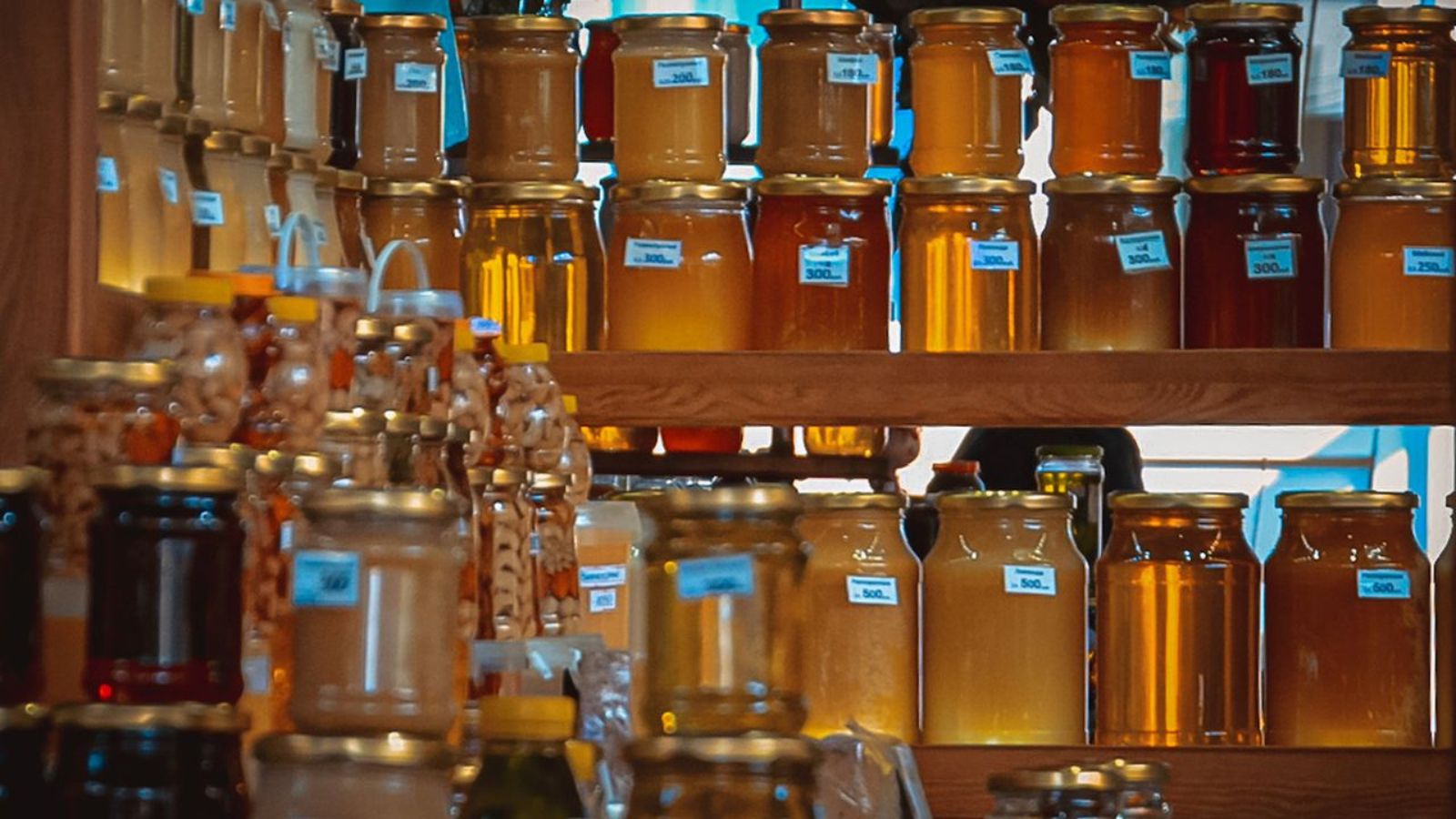
When Howard Carter’s team opened Tutankhamun’s tomb in 1922, they found sealed jars containing a thick amber substance. Later analysis confirmed it was honey, remarkably preserved after roughly 3,300 years.
Honey’s staying power comes from moisture content low enough to starve bacteria, paired with an acidic pH between 3.2 and 4.5.
Bees also add the enzyme glucose oxidase during production, generating trace hydrogen peroxide that works as a natural antimicrobial.
A sealed container still matters, since humid air can eventually let mold take hold near the surface.
Salt
Sodium chloride is a mineral rather than an organic compound, and minerals do not decay the way plant or animal matter does, per the USDA. Cooks have leaned on that property for centuries to cure meats such as country ham and corned beef, drawing moisture out of the flesh through osmosis until bacteria have nothing left to grow on.
The only real threat to a container of salt is water, which can cause caking without making the salt itself unsafe. A dry, sealed container is functionally the only upkeep it needs.
Granulated sugar
Sugar’s low moisture content makes it as inhospitable to bacteria as salt, which is why granulated sugar and corn syrup function as the primary preserving agent in homemade jellies and jams rather than a mere sweetener.
Quality can still decline within about two years as sugar absorbs ambient moisture and hardens into a solid block. Storage guidance recommends opaque, airtight containers kept somewhere cool and dry.
Raw and less-refined sugars carry slightly more moisture than pure cane or beet sugar, shortening their comfortable window somewhat.
Distilled White Vinegar
Plain white vinegar’s acidity is strong enough to make it essentially self-preserving on the shelf.
Flavored versions do not get the same allowance. Balsamic and wine vinegars carry added sugars and botanicals that gradually lose complexity after two to three years even though they remain safe to use.
A cloudy appearance or sediment at the bottom of a bottle is typically harmless mother of vinegar, not a sign of spoilage.
White Rice
White rice, jasmine rice, basmati rice and wild rice share a low oil content that keeps them shelf-stable for years once the outer bran layer has been milled away.
Brown rice keeps that oil-rich bran layer intact, which is exactly why it turns rancid within months rather than years.
The USDA’s general guidance on dry goods places rice alongside pasta and flour among foods that stay safe well beyond any printed date as long as moisture stays out.
Cornstarch
Cornstarch’s pure powdered form leaves nothing biological left for anything to break down.
The real risk is proximity rather than time, since powders readily absorb odors from whatever sits nearby in a cabinet.
Cornstarch stored next to strongly scented spices or candy can pick up a faint version of that smell without becoming unsafe to bake or thicken with.
Dry Pasta and Flour
Bouillon cubes, gravy mixes, pasta, rice, and flour are dry goods that can remain safe for long periods when commercially processed and stored properly. That differs from foods that simply carry an extended best-by date.
Separate long-term storage research puts sealed, oxygen-free pasta and flour at roughly 10 to 15 years of stable quality, compared with six to twelve months in a standard pantry box.
Moisture decides the outcome either way, since humidity introduces the conditions mold and insects need to take hold.
Dried Beans
Package dry beans in number 10 cans or mylar-type bags with oxygen removed, giving them a shelf life of ten years or more under cool, dark conditions.
Pinto beans stored properly for up to 30 years maintain over 80% consumer acceptance for emergency food use
Color and flavor fade gradually over that span even though they remain safe, which is why the same extension still recommends using beans within 12 months for the best eating quality.
Unopened Maple Syrup
Pure maple syrup that remains sealed has no meaningful expiration date; it has a property tied to sugar concentration that works the same way it does in honey and jam.
Once a bottle is opened, refrigeration becomes necessary, and the USDA’s timeline gives it roughly a year before quality starts to slip.
Crystals sometimes forming at the bottom of an older bottle are just sugar settling out of solution and dissolve back in with gentle heat.
Unpopped Popcorn Kernels
Whole popcorn kernels stay shelf-stable because the hard outer hull seals in the small amount of internal moisture the kernel needs to pop correctly while keeping external moisture out.
The tradeoff over time is functional rather than a safety one, since kernels that dry out too much eventually become less likely to pop even though they remain edible.
An airtight container in a cool, dark cabinet keeps that internal moisture where it needs to stay.