The turkey may be the centerpiece, but deciding who cooks it is only the beginning.
The grocery list, the guest count, the missing serving spoon, and who will clear the kitchen after everyone has eaten also matter. When both partners work, dividing Thanksgiving by counting dishes can leave much of the job unassigned.
A workable answer isn’t automatically the more experienced cook, the person who hosted last year, or whoever happens to be home first. It is an agreement about the whole meal, shaped by available time, preferences, skills, and other responsibilities.
That agreement does not have to produce identical assignments. It should give both people a clear understanding of what each person is taking on.

Start With the Calendar, Not the Assumption
Having two jobs in a household does not mean both partners have the same schedule.
A holiday shift, a commute, or a deadline can change what someone can reasonably do. Before choosing recipes, compare the actual workdays around Thanksgiving, including time available for shopping and preparation.
Full-time employed people averaged 8.1 hours of work on days they worked, according to the Bureau of Labor Statistics’ 2025 American Time Use Survey. Thanksgiving preparation must be planned alongside those working hours and other household responsibilities.
For planning purposes, the useful question is specific: who has an uninterrupted window for each task?
Someone working Thanksgiving morning might handle shopping earlier in the week. Someone available during the afternoon might manage the oven. Being home should not automatically mean being available, especially when that person also has work or caregiving commitments.
Count the Work Before Dividing It
A holiday menu is not yet a holiday plan.
Choosing dishes requires knowing how many people are coming. Shopping requires checking what is already in the kitchen. Cooking requires deciding which dishes need the oven at the same time.
Sociologist Allison Daminger’s 2019 study on the cognitive dimension of household labor, published in the American Sociological Review, identifies four components: anticipating needs, identifying options, making decisions, and monitoring progress. The study drew on 70 interviews with members of 35 couples.
Applied to Thanksgiving, that framework makes room for work that happens before anyone turns on a burner.
A shared list can include confirming guests and contributions, selecting recipes and checking equipment, shopping and arranging pickups, preparing and serving the food, managing household responsibilities during preparation, and washing dishes and putting the kitchen back in order.
The point is not to turn dinner into an accounting exercise. It is to make the assignment visible.
Related: 14 Strange Thanksgiving Traditions That Everyone Pretends Aren’t Weird
Equal Numbers of Dishes May Not Mean Equal Work
Three side dishes and a turkey are not interchangeable units.
Neither are a purchased pie and a casserole that requires shopping, chopping, and several preparation steps. Dish counts can start a conversation, but they don’t replace a discussion of the work involved.
One possible division is for a confident cook to prepare the main course while the other partner handles shopping, guest coordination, and cleanup. Another is for each person to take complete responsibility for particular dishes.
Both arrangements can be reasonable if both people agree.
The important distinction is between choosing a role and inheriting it without discussion. Enjoying cooking can be a good reason to cook. It need not mean accepting every related responsibility, and limited kitchen experience need not exclude someone from meaningful participation.
Give Each Perspective Room at the Table
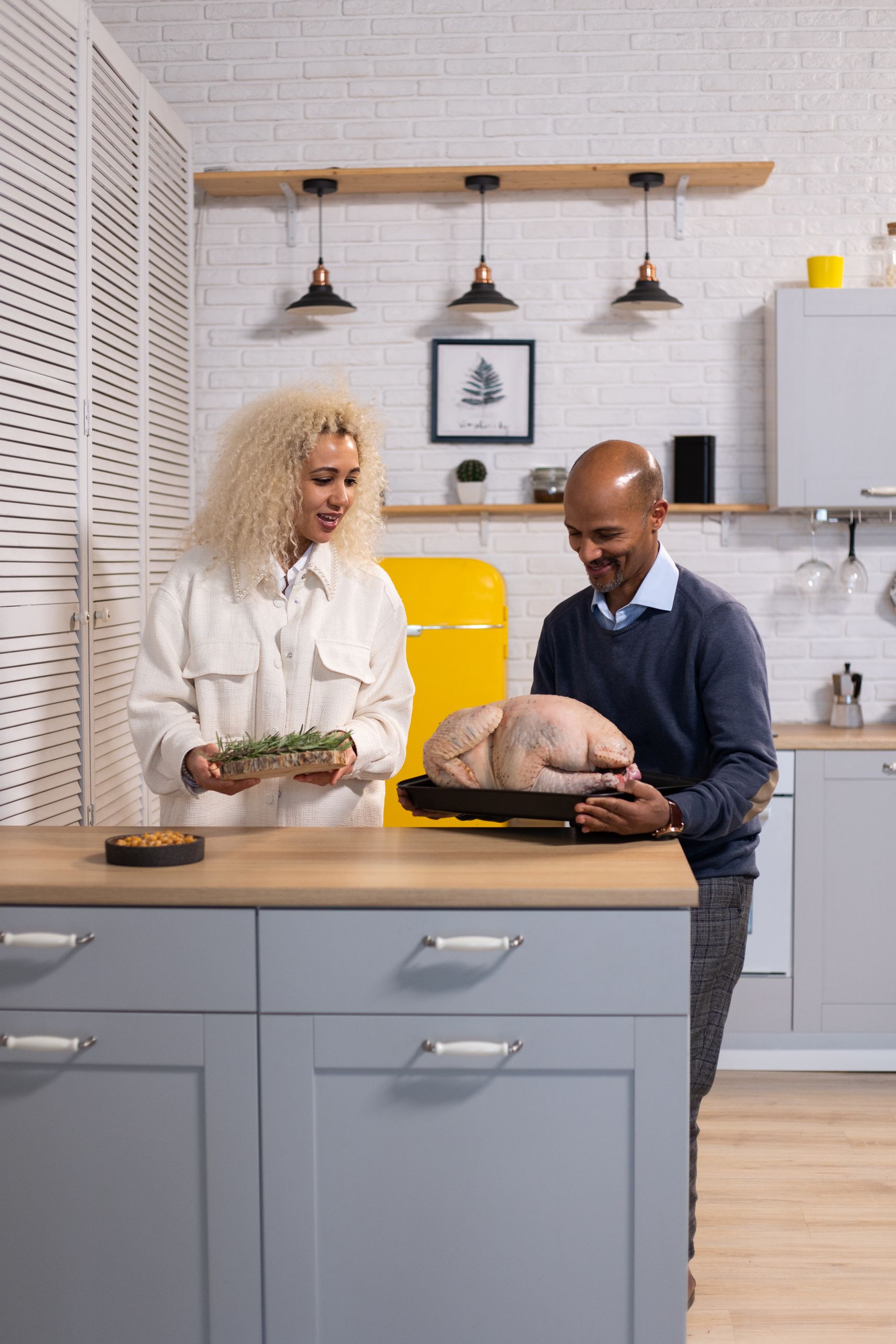
The partner who usually cooks may want to preserve a familiar recipe or avoid explaining every step during a busy afternoon.
The partner who cooks less may want a clear assignment, enough notice, and room to complete it differently. These are possibilities to discuss, not motives to assume.
Start with practical questions. Which dishes matter most to each person? Which tasks does each prefer? What is realistic alongside the week’s other work?
If one person wants an elaborate menu and the other prefers a smaller meal, decide the scope before distributing assignments. Adding a dish adds work, even when it is described as tradition.
A family recipe can remain part of the celebration without making every other element homemade. Agreement about the menu gives the later division of labor a more realistic foundation.
Related: How Families Celebrated Thanksgiving in the 1950s
Assign Ownership, Not Just Instructions
Handling a task is different from waiting to be told what to do next.
For a clearly bounded assignment, define what completion includes. Taking responsibility for potatoes, for example, might cover choosing the recipe, checking ingredients, preparing the dish, and washing the equipment used.
That does not prevent partners from asking questions or helping each other. It reduces the need for one person to direct every detail.
The same approach works outside cooking. Guest coordination can include confirming arrival times and contributions. Cleanup can include serving pieces and counters, not simply loading the dishwasher.
Agree on the outcome, then leave reasonable room for different methods. Shared responsibility does not require identical technique.
Let the Menu Match the Available Time
If the proposed meal takes longer than you have, consider changing it.
Keep the dishes that matter most and reconsider the rest. Buy one component, ask a willing guest to contribute, or offer fewer alternatives.
In NPR’s guide to Friendsgiving hosting, etiquette expert Lizzie Post and cookbook author Emily Stephenson recommend clarifying responsibilities, tracking contributions, and giving guests specific ways to participate. Their suggestions include store-bought contributions for travelers and small hosting jobs beyond bringing food.
For Thanksgiving, that could mean asking someone to bring a finished dessert or handle drinks.
Confirm contributions rather than assuming them. A guest’s dish should also fit the kitchen plan: something requiring extensive final preparation is different from something ready to serve.
Include the End of the Evening
The cooking assignment should not end when the food reaches the table.
Decide who will clear dishes, wash pans, and restore the kitchen. If one person handles most of the cooking, the other might lead cleanup, with adjustments for the rest of the day’s work.
The arrangement can change from year to year. A plan that fit last November may not fit a new schedule or a different guest list.
The same principles also work beyond two-partner households: identify the work, discuss capacity and invite specific contributions.
If Thanksgiving is meant to make room for gratitude, what better place to start than a dinner plan that lets everyone doing the work enjoy the gathering?