A simple grocery pickup order turned into an unexpected consumer debate after a Walmart shopper noticed something unusual about two bottles of French’s mustard sitting in her kitchen.
The shopper, Krysten Melville, said she immediately felt a difference between the two sealed bottles after bringing them home. One bottle seemed heavier in her hand, while the other felt noticeably lighter. Curious about whether her suspicion was correct, she placed both bottles on a kitchen scale.
The result quickly caught attention online.
One bottle reportedly weighed 1 pound, 5.6 ounces, while the other measured 1 pound, 0.7 ounces,a difference of nearly 5 ounces between two unopened containers of the same product.
The video sparked thousands of comments, with some consumers questioning whether the difference was connected to rising grocery prices, product reductions, or concerns about shrinkflation. Others argued that the explanation could be far more ordinary: manufacturing variation, packaging differences, or small inconsistencies that occur during high-volume food production.
The debate highlights a bigger question facing shoppers across America: When two identical products look the same but feel different, what is actually happening inside the package?
The French’s Mustard Weight Controversy Explained
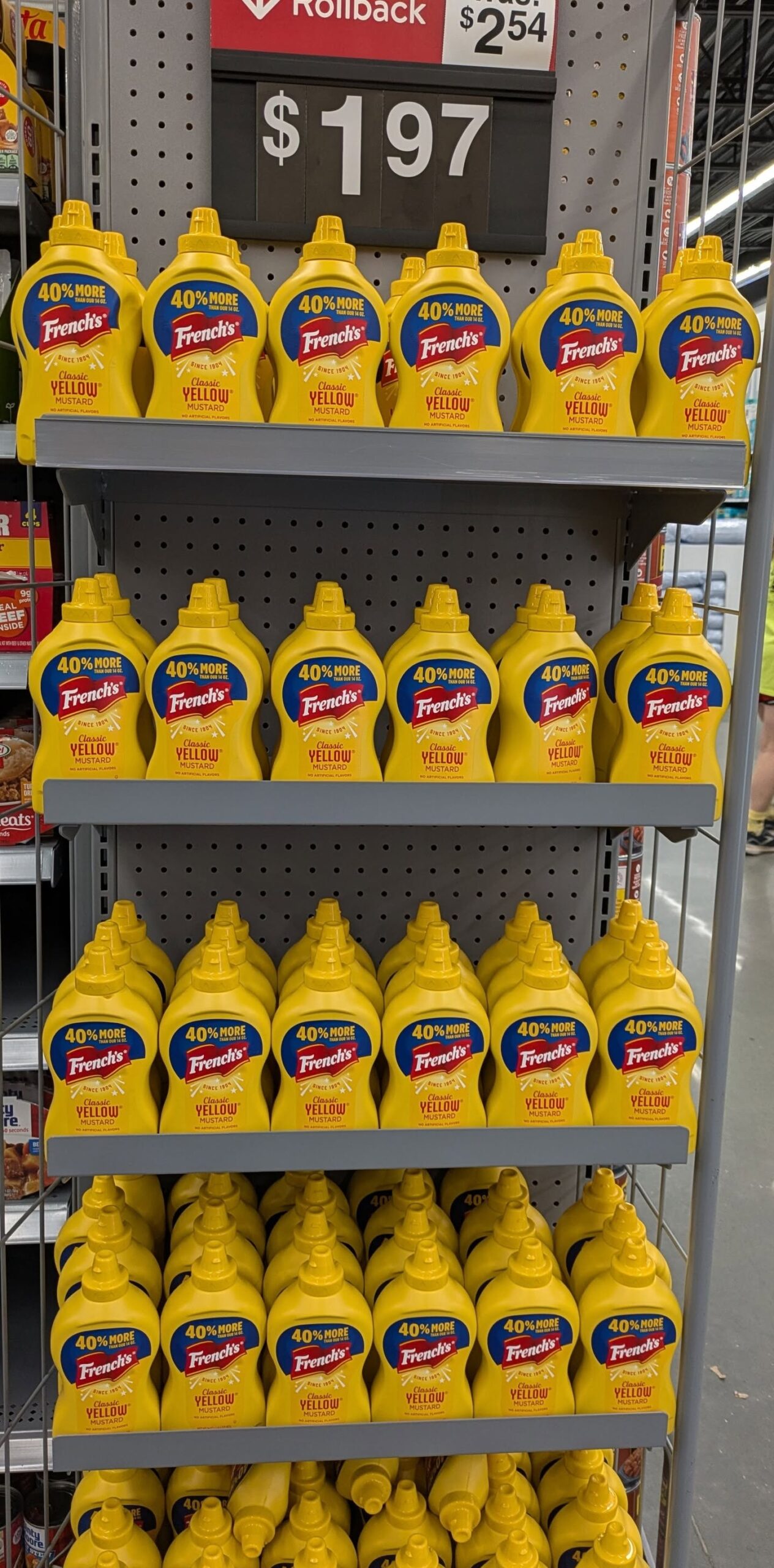
According to Melville’s viral TikTok video, the bottles were purchased through a Walmart pickup order and remained sealed when she compared them.
She explained that she noticed the difference while putting groceries away.
“These are not open. I just bought them. They are still sealed.”
After weighing the bottles, she questioned whether consumers were receiving less product for the same prices.
The video quickly gained attention because it tapped into a frustration many shoppers already feel: grocery prices have risen significantly in recent years, prompting consumers to pay closer attention to package sizes, product quantities, and value.
However, the weight difference alone does not prove that one bottle contained less mustard.
The bottles themselves, caps, labels, packaging materials, and the amount of empty space inside the container can all affect the total weight.
A complete test would require opening both bottles, removing the containers, and comparing only the mustard contents.
Why Two Bottles of the Same Product Can Have Different Weights
Large food manufacturers produce millions of units using automated filling systems. While these machines are designed to deliver consistent amounts, small variations can occur.
Manufacturing experts who commented on the viral video suggested several possible explanations.
Filling Equipment Is Not Perfect
Food production lines operate at extremely high speeds. A mustard factory may fill thousands of bottles every hour, meaning even small mechanical differences can create occasional variations.
Possible causes include:
- Slight changes in filling pressure
- Product viscosity differences
- Equipment calibration issues
- Temporary production adjustments
- Air bubbles are trapped inside the bottle.
Mustard is a thick condiment, which makes consistency more challenging compared with thinner liquids.
A small amount of air trapped in one bottle could also change how the product feels when lifted.
Bottle Weight Can Vary
Consumers often assume identical bottles have the same weight, but plastic containers are not always perfectly identical.
Manufacturing tolerances allow small differences in:
- Bottle thickness
- Cap weight
- Label material
- Plastic density
A heavier bottle does not necessarily mean it contains more mustard.
To accurately compare contents, the packaging must be removed.
Settling and Air Pockets May Change the Feel
Products like mustard can settle differently depending on storage conditions and movement during transportation.
Two bottles filled at the same facility may feel different because:
- One bottle has more trapped air.
- The mustard has settled differently.
- The product has shifted during shipping.
This does not automatically indicate that the manufacturer reduced the amount inside.
Why Consumers Are Watching Product Sizes More Closely
The French’s mustard discussion comes at a time when many shoppers are increasingly aware of shrinkflation.
Shrinkflation occurs when companies reduce the amount of product in packaging while maintaining the same price or increasing it.
Examples consumers often notice include:
- Smaller snack bags
- Reduced cereal box sizes
- Fewer sheets in household products
- Smaller beverage containers
The difference between shrinkflation and a single unusual package is important.
A shrinkflation claim requires evidence showing that a company has intentionally reduced the standard amount of product over time.
One bottle weighing less than another does not prove a company changed its package size.
How Consumer Packaging Rules Protect Shoppers
Food manufacturers in the United States must follow federal packaging requirements designed to prevent misleading quantity claims.
The label on a packaged product must accurately state the net quantity of contents.
For example, if a mustard bottle says it contains a specific number of ounces, that measurement refers to the amount of mustard inside — not the total weight of the bottle, cap, and packaging.
Regulators focus on whether the labeled amount matches the actual contents across production samples.
A single unusual package does not necessarily indicate a violation.
The Bigger Grocery Issue
The reaction to the French mustard video shows how sensitive consumers have become about everyday purchases.
Food prices remain one of the most visible parts of household spending. Even small changes in familiar products can attract attention because shoppers interact with these items regularly.
A bottle of mustard may seem insignificant, but it represents a much larger consumer concern:
Are shoppers getting the value they expect?
This question has become increasingly common as Americans compare:
- Package sizes
- Unit prices
- Store brands versus national brands
- Grocery promotions
- Product ingredients
Many shoppers now check price-per-ounce labels instead of simply looking at the sticker price.
What Shoppers Can Do When a Product Seems Underfilled
If consumers believe a product may not contain the advertised amount, experts recommend taking a few steps before making accusations.
Check the Net Quantity Label
The most important number is the net weight listed on the package.
The total weight of the sealed container includes:
- Bottle
- Cap
- Label
- Mustard
- Any trapped air
Only the labeled product quantity matters.
Compare Multiple Products
One unusual bottle does not necessarily represent a larger problem.
Consumers looking for patterns should compare:
- Several bottles from different stores
- Products purchased at different times
- The listed net weight on the the packaging
Patterns provide stronger evidence than a single comparison.
Contact the Manufacturer
Companies often have customer service teams that investigate quality concerns.
Consumers can provide:
- Product information
- Batch codes
- Purchase details
- Photos or videos
Manufacturers can use this information to identify possible production issues.
The French’s Mustard Debate Shows How Trust Shapes Consumer Decisions
The viral mustard comparison is less about one bottle and more about consumer confidence.
In an environment where shoppers are already watching prices closely, unexpected differences create immediate questions.
The available evidence does not confirm that French reduced product amounts or intentionally shortchanged customers. The weight difference shown in the video could have multiple explanations, including normal manufacturing variation.
Still, the discussion reveals something important about modern shopping habits.
Consumers are paying attention.
A few ounces, a smaller package, or a different feeling in a shopper’s hand can quickly become a national conversation when trust is involved.