For millions of Americans who grew up in the 1950s, 1960s, and 1970s, making orange juice was once a small kitchen ritual. You opened a cardboard can, dropped a frozen cylinder into a pitcher, added water, and stirred until it became the familiar breakfast drink.
Today, that once-common sight is becoming harder to find in supermarket freezers.
Frozen juice concentrate, a product that helped define American breakfast tables for generations, is losing its place in grocery stores. And in 2026, one of its biggest names made the decision official.
The decision reflects changing shopping habits, declining demand, and an industry that has increasingly favored ready-to-drink beverages.
For shoppers who remember those little cans, however, their disappearance represents something more personal: another familiar piece of everyday American life quietly slipping into the past.
An 80-Year Grocery Store Tradition Comes to an End.
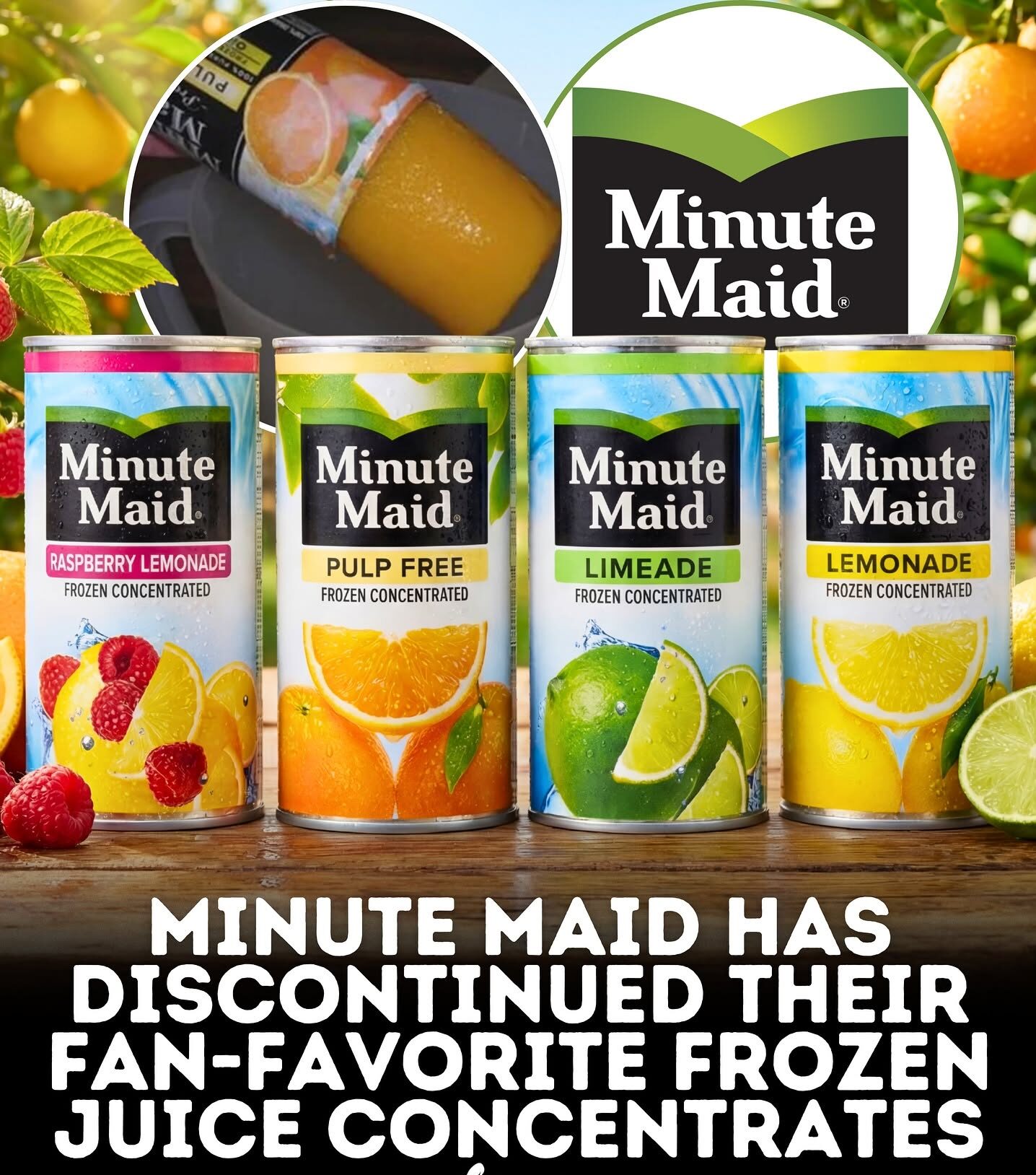
Minute Maid’s frozen orange juice story began in 1946, when Vacuum Foods Corporation introduced frozen orange juice concentrate to American consumers.
At the time, the product offered something remarkable. Families could enjoy orange juice year-round without squeezing fresh oranges or worrying about it spoiling quickly.
The concentrated juice was frozen, packaged in cylindrical containers, and shipped to stores nationwide.
Shoppers bought a can, brought it home, and mixed it with water.
The product became such a recognizable part of American life that the company eventually adopted the name Minute Maid.
Coca-Cola acquired the business in 1960, helping establish the brand as a household favorite.
But in February 2026, Coca-Cola confirmed that Minute Maid would stop selling its frozen concentrates, including orange juice, lemonade, pink lemonade, and limeade.
The products were scheduled to be discontinued by April, with remaining inventory available until supplies ran out.
Why Baby Boomers Remember Those Little Frozen Cans
For many Baby Boomers, frozen orange juice concentrate was more than another item on the grocery list.
It was part of the rhythm of family life.
A parent might take a can from the freezer while preparing breakfast. Children could watch the frozen juice slide into a pitcher, then add water and stir.
The process required a little effort, but it was straightforward enough to become a familiar household task.
Unlike today’s refrigerated cartons, frozen concentrate also offered flexibility. Families could keep a can in the freezer and prepare juice when they needed it.
That convenience made the product appealing when refrigerated juice was not as widely available.
It also became useful beyond breakfast.
Frozen lemonade concentrate could be mixed for summer gatherings, backyard parties, or an afternoon drink.
These experiences help explain why the product’s disappearance has attracted nostalgic attention. It wasn’t simply a beverage. It was a familiar routine associated with growing up in a different era.
Related:15 Foods From the ’60s Most Boomers Loved With a Passion
Coca-Cola Says Shoppers Have Moved On
The decision to discontinue Minute Maid’s frozen concentrates wasn’t presented as a temporary supply problem.
Coca-Cola described it as a response to changing customer behavior.
In a statement reported by CNN in February, a company spokesperson said the business was leaving the frozen-can category because consumer preferences had shifted.
The company said it wanted to focus on beverages that better reflect what customers buy today.
This distinction matters.
Minute Maid isn’t disappearing, and Coca-Cola isn’t abandoning juice altogether.
The company continues selling ready-to-drink juice products while ending its traditional frozen concentrate lineup.
For shoppers, however, the change means finding the familiar Minute Maid cardboard cans is no longer as simple as visiting another supermarket.
Once remaining supplies are gone, the discontinued products will no longer be replenished by the manufacturer.
Related:Nostalgic Foods Boomers Can’t Get Enough Of
Frozen Juice Sales Were Already Falling
The announcement followed a broader decline in frozen juice purchases.
According to market research firm NielsenIQ, U.S. frozen beverage sales dropped nearly 8% during the 52 weeks ending January 24, 2026.
That figure helps explain why a major beverage company would reconsider a product with such a long history.
Although frozen concentrates still had customers, the category was losing ground in an increasingly competitive beverage market.
Americans now have a wide range of options, including refrigerated juices, bottled drinks, energy drinks, and smoothies.
These alternatives compete for the same grocery budgets and refrigerator space.
For manufacturers, maintaining older products involves decisions about production, packaging, distribution, and retail demand.
A product may still inspire fond memories while attracting fewer purchases than it once did.
Minute Maid’s decision illustrates that tension between emotional attachment and modern shopping behavior.
Ready-to-Drink Juice Changed Everything
One of frozen concentrate’s biggest competitors came from an unexpected place: the juice aisle itself.
In 1973, Minute Maid introduced ready-to-drink orange juice sold in refrigerated containers.
Instead of thawing concentrate, measuring water, and mixing everything in a pitcher, customers could open a carton and pour.
That convenience gradually changed what people expected from packaged juice.
As refrigeration, pasteurization, and distribution technology improved, grocery stores could offer more products that required little preparation.
Consumers also encountered advertising that emphasized juice sold as “not from concentrate.”
Over time, ready-to-drink options became the more familiar choice for many households.
Frozen concentrate still offered an alternative, but it no longer occupied the essential role it once held.
The irony is difficult to miss: a brand that helped make frozen orange juice a staple eventually helped popularize the convenience that reduced the need for it.
Rising Orange Juice Prices Added Another Challenge
Changing habits were not the only challenge facing the juice business.
Orange juice prices also climbed as citrus production faced difficult growing conditions.
According to U.S. government pricing data cited by the Associated Press, a 12-ounce can of frozen orange juice averaged $4.82 in December 2025.
That represented a 13% increase from the previous year.
The report linked higher juice prices partly to weather-related problems that affected orange production in Brazil and Florida.
For consumers who associated frozen concentrate with affordable family breakfasts, those rising prices may have weakened one of its traditional selling points.
A product once seen as an economical choice becomes less compelling when its cost rises, and convenient alternatives are widely available.
However, the available figures do not establish that higher prices alone caused Minute Maid’s decision.
The company’s stated reason remained changing consumer preferences.
Frozen Juice Concentrate Hasn’t Disappeared Completely
Although Minute Maid has exited the category, frozen juice concentrate has not vanished from every American supermarket.
Other manufacturers have continued offering frozen juice products.
Tropicana, for example, was still selling frozen canned juice when Minute Maid’s announcement was reported earlier this year.
Some supermarkets have also carried store-brand concentrates.
Availability varies by location, retailer, and product.
That means shoppers hoping to recreate an old family breakfast may still find options, even though the Minute Maid version is being phased out.
It also means headlines suggesting that all frozen orange juice concentrate has been discontinued would be misleading.
The confirmed change affects Minute Maid’s product line in the United States and Canada, not a complete industrywide ban or disappearance.
The broader category’s future remains uncertain, particularly if demand continues declining.
Could Frozen Concentrate Ever Make a Comeback?
Grocery store history is full of products that disappeared, returned, or found new audiences.
But nostalgia alone does not guarantee a commercial comeback.
For frozen juice concentrate to regain popularity, manufacturers would need enough customers willing to choose it over ready-to-drink alternatives.
Price, convenience, flavor preferences, and availability would all influence that decision.
Some consumers may still appreciate the ability to keep a compact container in the freezer until it is needed.
Others may prefer the simplicity of opening a bottle or carton without additional preparation.
For now, Coca-Cola has not announced plans to bring back Minute Maid’s discontinued frozen concentrate lineup.
Its withdrawal marks a significant turning point for a product that helped shape America’s modern beverage industry.
Whether other brands can preserve the category will depend on future demand.
A Small Can That Represented a Different Time
Minute Maid’s frozen juice concentrate may seem like a minor change at the grocery store.
But for people who grew up watching those frozen cylinders tumble into pitchers, it represents the loss of something familiar.
The product belonged to an era when preparing breakfast often involved a few extra steps, and convenience meant having something ready in the freezer rather than already mixed in a carton.
Its decline also reveals how dramatically American shopping habits have changed.
Products that once seemed indispensable can gradually become optional as technology improves and consumer expectations evolve.
Minute Maid’s frozen juice concentrate helped define American kitchens for 80 years. Now, its departure reminds us that even the most familiar grocery staples aren’t guaranteed a permanent place on store shelves.
Other Posts You Might Like:
13 Weird Old-Fashioned Foods Only Boomers Eat
8 Classic Comfort Foods Boomers Still Crave