David’s life began with a loss he could not remember, but he would always feel a separation from the mother who gave him life. Taken from her arms as an infant and placed into the care of adoptive parents, he grew up with questions that lingered quietly in the back of his mind, a missing piece of identity he could neither name nor touch. Decades later, fueled by curiosity, courage, and a longing for connection, David finally tracked down the family he had been separated from, stepping into a reunion that promised answers but delivered complexities he had never imagined. This was not a storybook reunion filled with perfect smiles; it was a collision of past and present, memory and reality, love and unresolved grief.
Reunions with birth parents are often portrayed as emotional, tidy, and healing experiences. In reality, decades of separation, complicated histories, and emotional baggage can turn them into challenging and sometimes painful encounters. The story of reconnecting with a birth mother after a forced adoption highlights the nuanced difficulties of bridging a gap that was created under coercion and shaped by a lifetime of unresolved feelings.
David’s Reaction Upon Reuniting With His Family
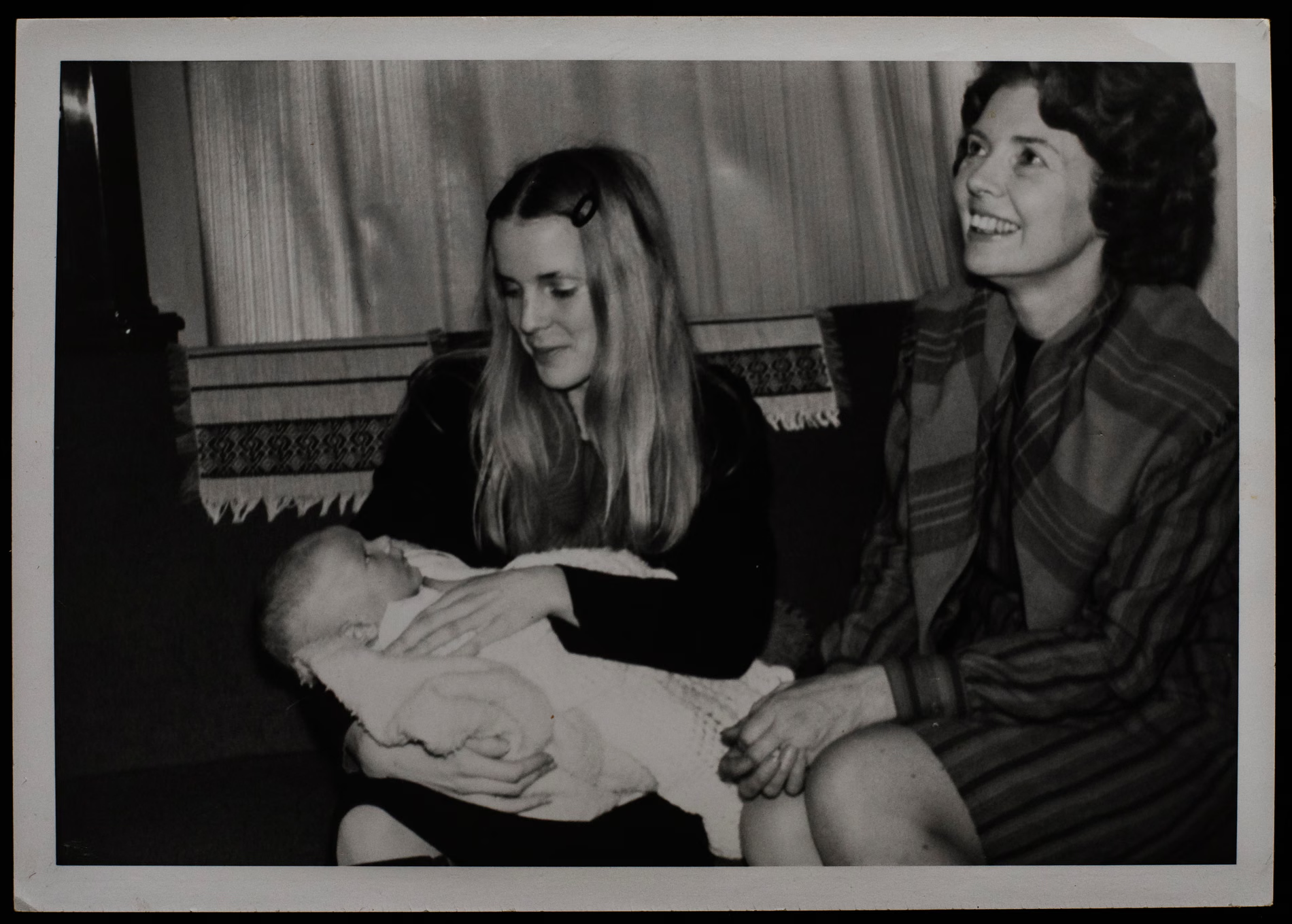
When David finally saw his mother, the flood of emotions hit him like a tidal wave he hadn’t expected. Her face was familiar yet strange, a mirror of the life he had imagined but never lived. Confusion twisted inside him as he struggled to reconcile the woman before him with the memory of absence that had shaped his entire childhood. Anger bubbled beneath the surface, at the years lost, the unanswered questions, and the system that had forced them apart. Every glance, every hesitant smile raised more questions than answers: Why had she given him up? What had her life been like without him? Could they ever bridge decades of silence and loss? In that moment, David realized reunion was not a simple homecoming; it was an emotional storm, one that demanded reckoning before any healing could begin.
The Unseen Weight of Adoption Records
Adoption files can contain more than names and dates; they carry judgments, societal biases, and incomplete narratives that shape an adoptee’s understanding of their origins. For many adoptees, discovering their adoption paperwork reveals suppressed truths about their birth parents’ lives, including cultural background, struggles, and the coercion they faced. In one documented case, a birth mother’s unmarried status was harshly judged, and her emotional state was scrutinized, signaling the pressure she faced in relinquishing a child. This hidden weight often colors reunions with complex expectations and emotional intensity.
The impact of incomplete or sanitized records is profound. Adoptees may learn that their ethnic heritage was downplayed or omitted, and critical details of their birth parents’ lives were withheld. When reunions are finally arranged, these past omissions and societal judgments create friction, making the meeting less about joy and more about reconciliation with historical injustices. Such gaps can lead to shock, confusion, and a sense of estrangement even after contact is reestablished.
Emotional Complexity of Reunion
Meeting a birth parent does not automatically erase decades of absence. Relationships are often fraught with emotional complexity, unspoken resentment, or lingering trauma. The initial excitement of reunion can quickly be overshadowed by the reality of differences in expectations, lifestyles, and unresolved personal issues. In some instances, the birth parent may have changed their name, moved to a new environment, or become estranged from other family members, leaving the adoptee grappling with further uncertainty.
These encounters are shaped by multiple layers of loss: the child lost to adoption, the years of separation, and the imagined life that could have been. Grieving for parents one barely knew can feel paradoxical; adoptees mourn a loss they lived without fully understanding while attempting to navigate a renewed relationship. Even after reconnecting, unresolved grief can linger, intensified by mortality, distance, and the unpredictability of human relationships.
The Long Shadow of Estrangement
Estrangement between birth parent and child often extends beyond the reunion itself. Circumstances such as divorce, illness, or death can abruptly end contact, leaving adoptees to process grief all over again. In documented experiences, birth parents’ deaths without clear communication, scattered ashes, or unclaimed estates illustrate the fragility of reconnection. The emotional consequences can include feelings of isolation, unanswered questions, and a persistent sense of incompleteness.
Adoption reunions can be misrepresented as simple resolutions to past separations. Reality, however, shows that grief, trauma, and estrangement rarely align with the fairytale narrative. The intersecting pressures of societal expectations, personal histories, and the psychological aftermath of adoption create relationships that are complicated, sometimes tenuous, and rarely linear.
Societal Pressures in Adoption Decisions
Historical adoption practices, especially in the mid-20th century, placed immense pressure on unmarried women to relinquish children. Adoption agencies often branded birth parents as incapable, rebellious, or morally suspect, influencing decisions made under duress. These interventions have long-term consequences for both birth parents and adoptees, shaping their perspectives on family, identity, and trust.
The societal framing of adoption as a “rescue” often masks the trauma of separation. Birth parents may carry guilt and regret, while adoptees may feel both gratitude and resentment. These complex emotions are amplified when records and legal documents obscure personal narratives or fail to acknowledge coercion, leaving adoptees to reconcile incomplete histories with their own lived realities.
Navigating Identity After Reunion
For adoptees, learning the truth about their birth parents’ backgrounds can prompt a re-examination of identity. Discovering concealed ethnicity, family history, or medical information challenges self-perception and may affect a sense of belonging. The process of integrating this new knowledge while honoring relationships with adoptive families requires resilience and careful emotional management.
Even positive reunions demand boundaries and awareness. Recognizing that birth parents have lived full lives, often with unresolved trauma, encourages empathy but also caution. Adoptees may find themselves negotiating a balance between curiosity, attachment, and self-preservation, particularly when prior estrangement has fostered vulnerability or mistrust.
Coping With Loss and Legacy
The deaths of birth parents after reunions can reopen wounds that adoptees believed were settled. Without clear rituals of mourning or familial continuity, the loss may feel ambiguous. This experience underscores the lingering emotional consequences of adoption beyond the reunion itself. Adoptees are often tasked with reconciling multiple layers of grief: loss of the parent they knew, loss of the relationship they imagined, and the challenge of honoring a legacy that is complicated or incomplete.
Merely reconnecting does not resolve historical trauma; it initiates a process of reckoning with the past. Adoptees must navigate grief, conflicting loyalties, and the uncertainty of inherited narratives while preserving their own sense of identity. The emotional landscape remains intricate and sometimes isolating.
Building Understanding Beyond the Fairytale
Adoption reunions succeed when both parties approach them with realism rather than idealized expectations. Understanding that human relationships are imperfect allows adoptees and birth parents to engage authentically. Counseling, mediated communication, and time are essential to create meaningful connections while mitigating potential emotional harm.
Adoptees benefit from acknowledging both the loss inherent in adoption and the complexity of reunions. The story of reuniting with a birth mother who had been forced to give up her child exemplifies the challenges, nuances, and fragile nature of these experiences. Recognizing the limits of closure encourages patience, empathy, and self-compassion.
Lessons for Adoptees and Families
Understanding that adoption reunions are rarely neat allows adoptees to approach them with preparedness and self-compassion. Society benefits from acknowledging the long-term impact of coerced adoptions and from supporting both birth parents and adoptees in their emotional journeys. Authentic narratives, counseling, and thoughtful mediation can reduce the risk of further estrangement or unresolved grief.
Final reflections emphasize that reunions are a step in ongoing personal development, not a definitive resolution. Adoptees can cultivate identity, resilience, and understanding by engaging with history, empathy, and personal reflection. The process challenges assumptions about adoption, connection, and family, providing insights into the human experience that extend beyond simplistic fairytales.