Boulder has the kind of cannabis culture that does not need to announce itself. It is in the college-town conversations, the dispensary signs, the mountain weekend energy, and the casual way people talk about weed as just another part of Colorado life.
So imagine the awkward moment. You take a puff, wait for the feeling, and nothing happens. Everyone else seems relaxed, quiet, hungry, philosophical, or parked somewhere between the couch and the ceiling. You are sitting there wondering if your body missed the whole assignment.
For some people, cannabis does not hit the way they expected. That can feel confusing, especially in a place like Boulder, where weed is legal, visible, and often treated like no big deal. But not feeling high does not always mean nothing is happening.
Sometimes your body is processing THC differently. Sometimes tolerance has built a wall. Sometimes the product is weaker than the label suggests. And sometimes the effect is there, but it is not the dramatic movie-scene high you were waiting for.
Your tolerance may be louder than the weed.

If someone uses cannabis often, the body can stop reacting as strongly. That is called tolerance, and it is one of the biggest reasons a person may smoke and feel almost nothing.
The brain has cannabinoid receptors that respond to THC, the compound most associated with the high. With repeated use, those receptors can become less responsive, which means the same amount that once felt strong may later feel strangely quiet.
Local university health guidance warns that regular THC use can affect tolerance, dependence, and withdrawal. The student health cannabis guide explains why frequent users may notice changes in how their body and brain respond over time.
Boulder makes cannabis feel normal.
In Boulder, cannabis can feel almost ordinary because it is wrapped into a legal, regulated, highly visible culture. That normal feeling can make people forget that weed is still a psychoactive substance.
A casual user may expect one puff to feel powerful. A regular user may expect a stronger reaction and feel frustrated when it does not arrive. A first-time user may expect laughter and hunger, then feel almost nothing and assume something went wrong.
That is the strange part. The more normal cannabis feels around you, the easier it is to misunderstand what your body is actually doing. Culture can make weed feel simple. Biology keeps it complicated.
Your body chemistry may be different.
Two people can smoke the same cannabis and have completely different reactions. One person may feel relaxed in minutes. Another may feel anxious. A third may feel almost nothing.
Body weight, metabolism, sleep, stress, hormones, food intake, mood, and genetics can all shape the experience. So can medications, alcohol, fatigue, and whether someone has used cannabis recently.
That is why comparing your reaction to your friends can be misleading. Cannabis does not affect everybody the same way. Your nervous system has its own rules, even if everyone is using the same product.
The weed may not be as strong as promised.
Sometimes the explanation is not mysterious. Sometimes the product is simply weaker than expected.
Cannabis can lose strength if it is old, dry, poorly stored, or exposed to heat, air, light, or moisture. In unregulated situations, people may also be told a product is stronger than it really is.
Even in legal markets, THC numbers can be more complicated than shoppers expect. Local reporting on a Colorado THC label study found that higher THC levels do not always translate into feeling higher, especially among regular users.
You may be expecting the wrong kind of high.
Movies and internet jokes have made cannabis look dramatic. People expect uncontrollable laughter, heavy eyes, deep thoughts, munchies, slow motion, and sudden couch-lock.
Real life is often less theatrical. Some people feel only a softer body. Some feel mentally quieter. Some feel sleepy. Some feel distracted. Some only realize later that their reaction time, memory, or focus was not as sharp as usual.
If you are waiting for a huge wave, you may miss the small signs. The effect may be subtle, especially if the cannabis is low in THC, your tolerance is high, or your body is not very responsive that day.
Stress can block the experience.
Your mental state matters more than people think. If you are anxious, tense, suspicious, distracted, or trying too hard to feel something, your body may stay guarded.
Cannabis can affect mood, perception, memory, and attention, but it does not always override stress. If your mind is busy checking every second for a reaction, the experience can feel muted or strange.
This is why setting matters. Someone may feel relaxed at home but uncomfortable at a party. Someone else may feel nothing because they are too tense to notice anything subtle.
You may not be absorbing much.
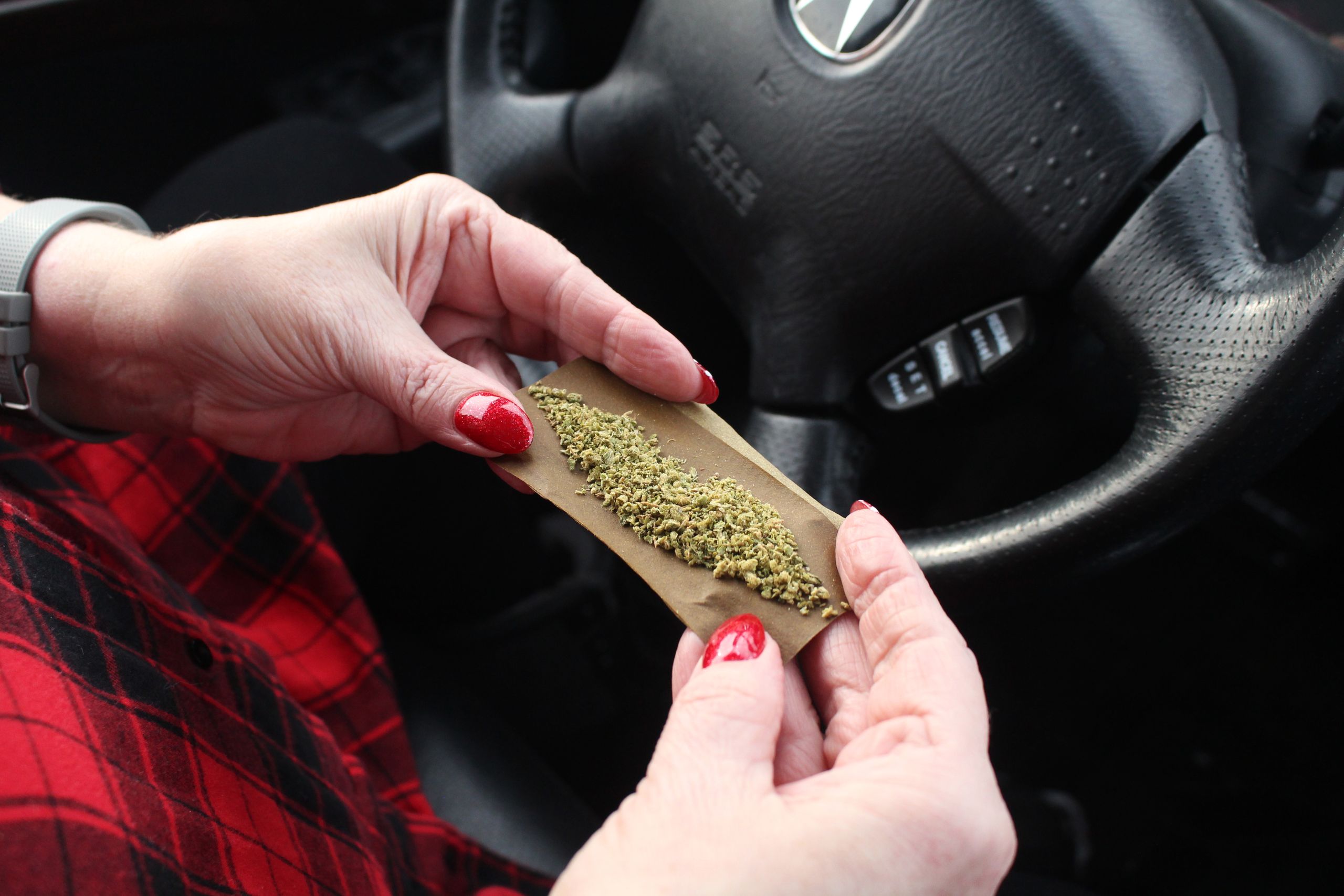
With smoking, the effect depends partly on how much THC actually reaches the bloodstream. Some people puff but do not inhale deeply. Others exhale quickly. Some cough right away and absorb less than they think.
This does not mean anyone should try to force a stronger reaction. It simply explains why two people can use the same product and have different results.
There is also a big difference between smoking, vaping, and eating cannabis. Inhaled cannabis tends to act faster, while edibles can take much longer and may hit later than expected. That delay is one reason people can get into trouble when they assume nothing is happening too soon.
The product type changes everything.
A pre-roll, flower, vape pen, edible, concentrate, drink, and topical product are not the same experience. They can differ in strength, timing, intensity, and duration.
A person may think they are “not feeling weed” when they are really using a product that does not match their expectations. Some products are built for fast effects. Others are slower. Some contain more CBD or other cannabinoids that may change the experience.
Local health information on Boulder marijuana health impacts points out that marijuana can affect people in multiple ways, including respiratory health and mental health. The method matters because the body responds differently depending on how cannabis enters it.
Other substances can confuse the effect.
Alcohol, sedatives, stimulants, certain medications, and even exhaustion can change how cannabis feels. Sometimes they make the effect stronger. Sometimes they blur it so much that a person cannot tell what they are feeling.
This can become risky because cannabis may still affect coordination, judgment, attention, or reaction time even when someone does not feel very high. Feeling normal does not always mean the body is fully sharp.
Colorado transportation officials warn that tolerance, product type, potency, sleep quality, body size, and using multiple substances can all affect impairment. Their drugged driving safety guidance is clear about one point: if cannabis is involved, driving is not something to guess about.
You may be using cannabis too often.
If cannabis has stopped feeling noticeable, the bigger question may not be, “Why am I not high?” It may be, “Has this become too normal?”
Frequent use can change the relationship a person has with weed. What started as occasional curiosity, relaxation, fun, or escape can become routine. Once it becomes routine, the effect may feel dull, but not using it may feel uncomfortable.
That is when the issue becomes less about the high and more about the habit. If someone feels they need cannabis to sleep, eat, relax, socialize, or feel normal, it may be time to pause and think honestly.
Your body may be sending a warning.
Not feeling cannabis is not always a reason to push harder. Sometimes it is a warning sign to slow down.
If the product is unknown, the strength is unclear, the source is questionable, or the body is not reacting normally, adding more can lead to an unpleasant surprise later. Anxiety, panic, dizziness, vomiting, paranoia, confusion, and poor coordination can happen, especially when people try to force a stronger effect.
The smartest move is not to compete with the plant. It is to listen to the body. If nothing feels clear, do not turn it into a challenge.
The real answer may be simple.
Smoking weed and not feeling it can happen for many reasons. Tolerance. Weak product. Body chemistry. Stress. Expectations. Poor absorption. Medication. Fatigue. Product type. Or a brain that has simply adjusted to frequent use.
In a place like Boulder, where cannabis can feel woven into local life, it is easy to treat weed casually. But casual does not mean harmless, and familiar does not mean predictable.
Sometimes the most surprising thing about not feeling weird is what it reveals. The question may not be whether the cannabis is strong enough. The real question may be whether your body is tired of being pushed.