Every shared kitchen has the same scene sooner or later: a sink full of someone else’s pans, a mystery container in the fridge with no name on it, and a pot left bubbling while its owner wanders off down the hall. In a college residence hall, those small annoyances can turn into real roommate tension.
Universities have noticed, and several have put their shared-kitchen rules in writing, complete with penalties. Lincoln University in Missouri sets a $100 fine for residents who ignore its communal kitchen guidelines, and other schools warn that a messy kitchen can be locked or closed. Here are 5 shared-kitchen never-dos drawn from four college housing rulebooks.

Shared floor kitchens are a standard feature of many dormitories and residence halls, where dozens of students may cook in the same room. The rules below come from Occidental College, Lincoln University, Minnesota State University, Mankato, and the University of Southern Indiana, and they translate well to any apartment, office break room or family kitchen with more than one cook.
1. Never Leave Leftovers Unlabeled in the Fridge
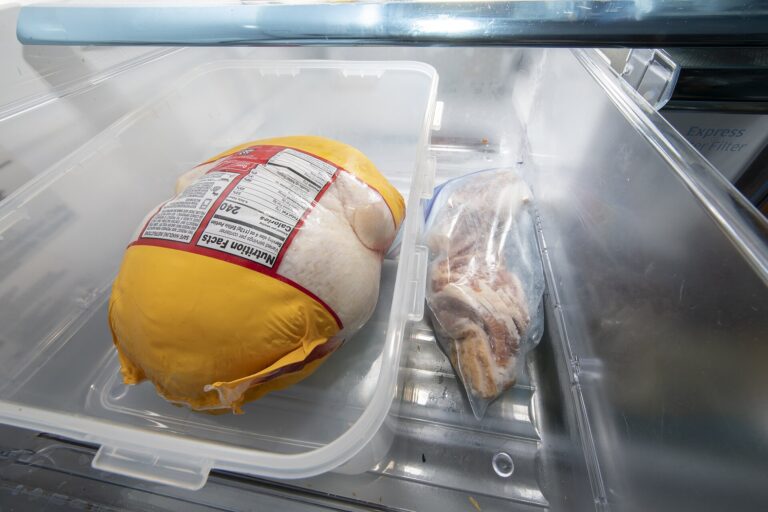
The shared refrigerator is where most kitchen disputes start. Occidental College’s housing rules say all refrigerated food needs to be clearly contained and labeled with the owner’s name. Food that is unlabeled or poorly stored may be removed, and the college says it won’t reimburse anything that gets thrown out.
The University of Southern Indiana’s community kitchen guidelines go a step further, requiring stored food to be labeled with the resident’s full name. Unlabeled, spoiled, improperly stored or abandoned food may be thrown away by university staff.
A roll of masking tape and a marker kept near the fridge solves most of this. Adding the date along with the name also helps everyone know how old a container is. Students trying to stretch a food budget will find that labeled leftovers are far less likely to disappear, one of many simple ways to save money in college.
2. Never Leave Dirty Pans and Dishes in the Sink
A pan left to soak overnight is one of the most common shared-kitchen complaints. Minnesota State University, Mankato says residents should clean and remove their personal belongings, including dishes and pans, after each use. If they don’t, the university’s floor kitchen rules say the kitchen may be closed or its hours limited, which means everyone on the floor loses out.
Southern Indiana’s guidelines are just as direct: wash, dry and put away dishes, utensils, pots and pans immediately after use, and never leave dishes, cookware, food or trash for others to clean. A small dish rack and a personal bin for clean cookware can make it easier to clear out quickly, and a few clever kitchen tricks help keep the cleanup short.
3. Never Walk Away From a Stove That Is On
This rule shows up in every rulebook. Occidental says stoves and ovens must not be left unattended while in use. Mankato says not to leave food cooking unattended in the kitchen. Southern Indiana says that when a stove, oven, induction cooktop or other cooking appliance is running, a resident must remain in the kitchen area.
Lincoln University’s communal kitchen rules add that residents should never leave burners on or appliances running unattended, and should use the equipment only for cooking food. Shared kitchens often have stoves surrounded by paper towels, takeout bags and cereal boxes, so it helps to know the things never to leave within 3 feet of the stove.

4. Never Let Expired Food Sit in the Shared Fridge
Old food takes up space and creates smells that everyone has to live with. Southern Indiana’s guidelines say expired food must be removed within 5 days of its best-used-by date. Leaving expired food, abandoned dishes or extra trash can also lead to cleaning or damage fees under the university’s fee schedule.
Good fridge habits start the moment food comes home or comes off the stove. The U.S. Food and Drug Administration’s safe food handling guidance says to refrigerate or freeze meat, poultry, eggs, seafood and other perishables within 2 hours of cooking or purchasing, or within 1 hour if it is above 90°F outside. The FDA also says the refrigerator should stay at 40°F or below, which an inexpensive appliance thermometer can confirm.
A weekly fridge check, perhaps every Sunday night, keeps the shelves clear. Counters can get crowded too, and the same thinking applies to the items that shouldn’t be displayed on a kitchen counter.
5. Never Skip the Cleanup, Because Everyone Pays for It
The final rule is the one with the sharpest teeth. Lincoln University says residents must clean up immediately after each use, and those who don’t follow the communal kitchen guidelines may face a $100 fine, loss of kitchen privileges, or both.
Occidental takes a group approach. The college asks residents to clean up after themselves as a courtesy, assigns a cleaning fee to whoever left the mess, and splits the cost among all residents of the space if no one can be identified. Hall staff may also lock the kitchen if cleanup keeps getting skipped. Southern Indiana adds that each resident should clean the stove, oven, cooktop and other appliances after every use.
That shared-cost rule is a strong motivator. When one person’s greasy stovetop can show up on everyone’s bill, roommates tend to start holding each other to the standard. Students shopping for their own small appliances for a dorm or first apartment may also want to know which home appliances are worth buying new. Southern Indiana’s list of approved appliances, for example, allows microwave ovens of 800 watts or less.
The rules from all four schools come down to the same idea: a shared kitchen works when each cook leaves it the way they would want to find it. Labeled food, clean pans, an attended stove, a tidy fridge and a quick wipe-down after every meal keep the peace, whether the kitchen is down a dorm hallway or in a crowded family home.
This article was produced with AI assistance and edited for accuracy against the sources linked above.
Image: eimoberg from Changwon, South Korea – CC BY 2.0/Wikimedia Commons