The New Orleans Six Flags redevelopment in New Orleans East has entered a defining phase of uncertainty as a lease dispute between the New Orleans Redevelopment Authority and Bayou Phoenix intensifies. What was once framed as one of the most ambitious post-Katrina redevelopment projects in Louisiana now sits at the center of a structural conflict over deadlines, financing expectations, and public accountability.
The stakes extend far beyond a single property agreement. This site has become a test of whether large-scale urban renewal in post-disaster environments can move from vision to execution without collapsing under legal friction, funding gaps, and institutional mistrust. As the June 30 compliance deadline approaches, both sides are locked in a dispute that reflects deeper tensions in public-private redevelopment models.
For residents of New Orleans East, the implications are immediate and personal. The former amusement park has stood as a visible reminder of unfinished recovery since Hurricane Katrina, and each delay reinforces long-standing concerns about whether the promised transformation will ever fully arrive.
A Landmark Site Caught Between Promise and Structural Friction
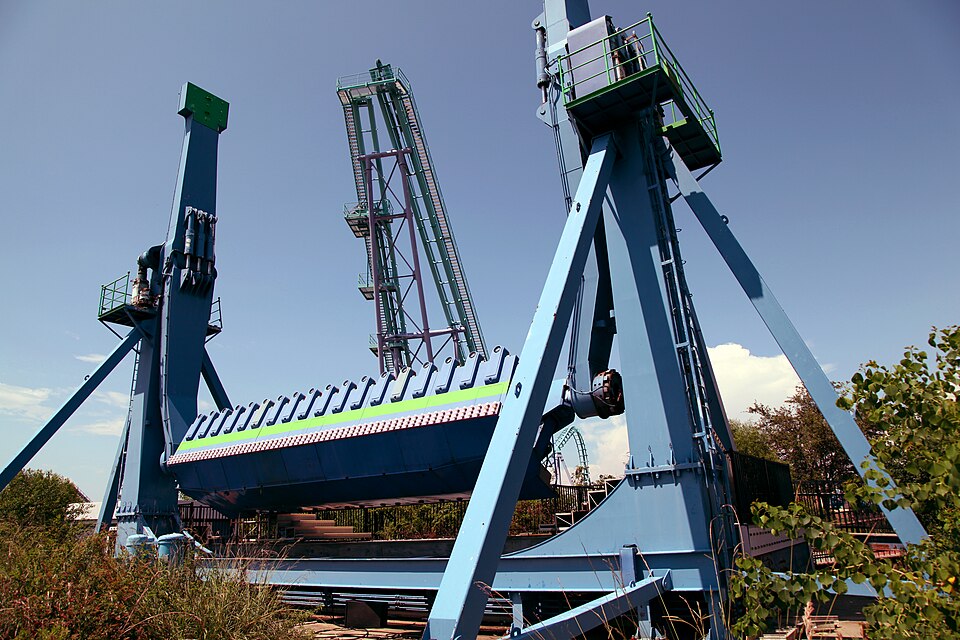
The redevelopment of the former Six Flags New Orleans site, on more than 200 acres in New Orleans East, is still shaped by the economic and physical aftermath of Hurricane Katrina. The site, once a major entertainment destination, closed permanently after severe flooding and has remained largely dormant since.
The current redevelopment plan, led by Bayou Phoenix under a long-term lease with the New Orleans Redevelopment Authority, envisions a mixed-use complex that includes sports facilities, hospitality development, entertainment venues, retail space, and a proposed film production component. On paper, the project represents a multi-sector investment strategy aimed at revitalizing a historically underinvested corridor.
Yet the transformation has not progressed smoothly. Instead, the project has become what urban development analysts often describe as a structurally fragile megaproject, where ambition exceeds coordination capacity. These projects tend to depend on synchronized timing between public approvals, private financing, and phased construction milestones.
The Six Flags site now sits within that fragile intersection. The dispute over lease compliance has shifted the project from development momentum into procedural uncertainty.
The Lease Framework That Created Both Opportunity and Pressure
The lease agreement signed in 2023 was designed to activate long-delayed redevelopment rights while maintaining strict public oversight. It requires Bayou Phoenix to meet specific development milestones, including submission of financing documents, construction contracts, and detailed budget projections.
From NORA’s perspective, these milestones are not administrative preferences. They are enforcement tools intended to ensure that public land transitions into productive use without unnecessary delay or financial ambiguity. The agency has now alleged that several of these requirements were not met within the agreed timeline.
Bayou Phoenix disputes this interpretation. The developer argues that the project was always structured as a phased development with evolving financing conditions. In this view, strict milestone enforcement risks undermining long-term investor negotiations that depend on flexible staging rather than rigid sequencing.
This disagreement reveals a deeper governance tension. Public agencies prioritize accountability and procedural compliance, while private developers prioritize financial adaptability. When both logics collide within a single lease structure, disputes often become the norm rather than the exception.
Deadlines, Default Claims, and the Pressure of June 30
The immediate point of escalation is a June 30 deadline set by NORA for Bayou Phoenix to address what the agency describes as a default. According to the agency’s position, required documents and progress updates were not delivered in line with the lease conditions.
The alleged gaps include financing documentation, formal progress reporting, and approvals for modifications to the master development plan. NORA has emphasized that consistent reporting is essential for evaluating whether the project is advancing in a measurable and accountable way.
Bayou Phoenix rejects the default characterization. The developer maintains that communications and development activity have continued and that the agency’s interpretation does not reflect the realities of phased financing negotiations. It also argues that public statements about noncompliance could disrupt investor confidence at a critical stage.
This divergence matters because deadlines in major redevelopment projects do more than regulate timelines. They shape investor behavior, influence political perception, and determine whether projects accelerate or stall under uncertainty.
A History of Repeated Redevelopment Cycles in New Orleans East
The current dispute cannot be separated from the long redevelopment history of the Six Flags property. Since the park’s closure following Hurricane Katrina in 2005, multiple redevelopment proposals have been announced and later stalled.
Each cycle has followed a similar pattern. A developer introduces a large-scale vision. Public agencies express conditional support. Early planning advances. Financing or execution hurdles emerge. The project then resets or significantly scales back.
This repetition has created what urban policy researchers describe as a “redevelopment fatigue cycle.” Communities begin to expect announcements, but increasingly doubt execution timelines. Over time, this affects public trust and reduces optimism around new proposals.
The Bayou Phoenix plan represents the most advanced attempt since Katrina, but it is still operating within this historical pattern. That legacy shapes how both regulators and residents interpret every milestone and every delay.
Financing Gaps and the Reality Behind Mega-Project Economics
At the center of the dispute lies a structural challenge common to large-scale urban redevelopment: the financing gap between announced plans and secured capital.
Bayou Phoenix has previously outlined a development vision that includes sports infrastructure, hospitality components, entertainment spaces, and a media production facility. The projected scale of investment reportedly reaches into the hundreds of millions of dollars, requiring layered financing arrangements and multiple private-sector partners.
However, large projects rarely fail because of design ambition alone. They fail when financing commitments do not fully align with construction timelines, regulatory approvals, and infrastructure readiness. This creates a gap in which plans exist, but capital remains partially conditional.
From NORA’s perspective, milestone compliance ensures that financial commitments are sufficiently advanced to justify the continued exercise of development rights. From Bayou Phoenix’s perspective, financing cannot fully close until site readiness and development certainty are established.
This circular dependency is one of the defining challenges of modern public-private redevelopment.
Public Funds, Site Preparation, and Competing Accountability Narratives
Another key dimension of the dispute concerns the use of public funding for site assessment and preparation. Bayou Phoenix has raised concerns about how certain funds were managed, while NORA maintains that assessment work was completed and delivered.
This disagreement reflects a broader issue in redevelopment governance. Public agencies are often responsible for initial site readiness, including environmental assessments, infrastructure planning, and feasibility studies. Developers rely on this work to finalize investment decisions.
When interpretations differ over whether these responsibilities were fully completed, disputes over accountability emerge. In complex redevelopment environments, the question is not only what was done, but also whether it is sufficient to unlock private investment.
The absence of alignment on this question has contributed to the current impasse.
Mediation as a Strategic Turning Point, Not a Procedural Step
Both parties have referenced mediation as a potential next step, but its role in this dispute extends beyond standard conflict resolution. In high-value redevelopment projects, mediation often serves as a strategic phase in which legal positioning and narrative framing are established before formal litigation.
Bayou Phoenix has requested mediation and proposed potential mediators. NORA has responded with alternative suggestions and raised questions about the necessity and cost allocation. These differences highlight that even the process of negotiation is contested.
Mediation will determine more than procedural progress. It may shape how future investors, policymakers, and courts interpret the credibility and responsibility of each party.
In this sense, mediation is not simply a step toward resolution. It is part of the broader struggle over control of the project’s trajectory.
The “Zombie Megaproject” Reality of Modern Urban Redevelopment
Urban development experts increasingly describe stalled large-scale projects as “zombie megaprojects.” These are developments that remain legally active, publicly visible, and politically relevant, yet struggle to convert plans into physical construction.
The Six Flags redevelopment fits this category with precision. It is not abandoned. It is not fully active. It exists in a prolonged intermediate state shaped by legal agreements, financing uncertainty, and governance tension.
Such projects are common in post-disaster cities where expectations are high, and conditions are complex. They often require sustained coordination across public agencies, private investors, and community stakeholders over long time horizons.
The challenge is that each delay increases complexity. Each dispute adds friction. Each missed milestone raises new questions about feasibility.
Community Expectations and the Weight of Long-Term Delay
For New Orleans East, the site carries more than financial or legal significance. It represents a long-standing expectation of renewal tied to economic opportunity, infrastructure improvement, and cultural revival.
The closure of the amusement park after Hurricane Katrina left a visible gap in the local landscape. Over time, redevelopment proposals have become symbols of broader recovery efforts in the region.
Each stalled attempt reinforces a difficult question for residents. When does a vision become reality, and how many cycles of delay can a community absorb before expectation turns into skepticism?
The current dispute does not provide a clear answer. Instead, it reinforces the uncertainty that has shaped the site for nearly two decades.
A Defining Moment for Public-Private Redevelopment in New Orleans
The outcome of the New Orleans Six Flags redevelopment dispute will have implications beyond a single lease agreement. It will influence how future large-scale projects are structured, monitored, and financed in the region.
If resolved, the project could demonstrate that complex public-private partnerships can survive legal friction and move toward execution. If it collapses or enters prolonged litigation, it may reinforce caution among future investors and public agencies.
At its core, the dispute reflects a fundamental question in urban redevelopment. Can long-term visionary projects survive the short-term pressures of financing timelines, regulatory enforcement, and institutional trust deficits?
The answer will shape not only the future of this site, but the broader approach to redevelopment in post-disaster urban environments.
The former Six Flags site stands as more than vacant land. It represents the tension between what cities promise and what systems can deliver. Whether this moment becomes a turning point or another pause in a long cycle of delay will depend not only on legal outcomes but on whether both public and private actors can align vision with execution in a way that finally transforms expectation into reality.