Shake Shack says a technical malfunction caused milkshake prices to rise at a self-service kiosk after a customer selected “No Tip” at Salt Lake City International Airport. The company said Aug. 10 that the problem was unrelated to gratuities and has been corrected.
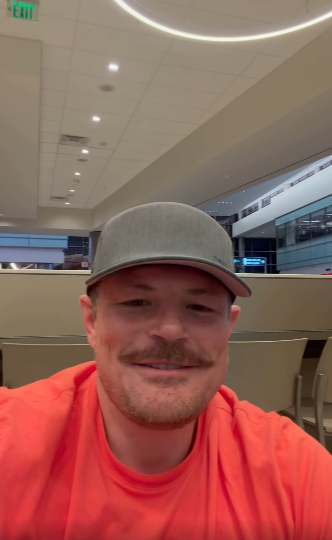
Brian “B.D.” Powell recorded the transaction as he and his wife tested a concern she had about the restaurant’s checkout system. “My wife says that if you don’t tip at Shake Shack, they make it more expensive per item,” Powell said. “So, we’re about to find out.”
What happened next made the suspicion look unusually convincing.
Prices changed moments after ‘No Tip’
Powell and his wife used a touchscreen kiosk to order three Classic Shakes. The restaurant is inside Salt Lake City International Airport, in Concourse A Plaza’s food court. The basic shakes appeared at $5.99 each. One shake included an additional charge for whipped cream, bringing the subtotal to $18.46 before taxes and other fees.
Then came the tipping screen. The kiosk displayed suggested gratuities of 15%, 18%, and 20%, along with a “No Tip” option. Powell selected “No Tip.”
A message appeared saying one or more items had received a pricing update. When the cart returned, the shakes had increased by 50 cents each. “Everything just went up 50 cents,” Powell said while recording the screen. “Every item went up by 50 cents.”
The video showing the kiosk sequence captures the price change after the “No Tip” selection. That sequence does not establish that declining the gratuity caused the increase, but it explains why the incident gained such attention.
For a customer looking at the screen, the sequence was difficult to miss: one price before the tip decision, another immediately afterward.
Shake Shack denies a no-tip penalty.
Shake Shack rejected the idea that customers pay higher menu prices when they decline a gratuity.
The company said neither its restaurants nor its licensees use such a policy. After reviewing the incident, the airport restaurant’s operator concluded that the company blamed a kiosk error, not Powell’s decision to leave no tip.
HMSHost operates the Salt Lake City location under a licensing agreement. Shake Shack said HMSHost investigated the transaction and traced the increase to a kiosk technology error. The company said it resolved the malfunction.
Shake Shack did not publicly provide a detailed technical explanation for why the price update occurred immediately after Powell selected “No Tip.” Its statement was clear, however, that the timing did not reflect a pricing policy tied to tipping.
No confirmed evidence shows Powell was intentionally charged extra for declining a gratuity.
Tipping screens are wearing consumers down.
The technical explanation settles one part of the dispute. The public response points to a separate problem for restaurants: many Americans already dislike the expansion of tipping prompts.
Digital checkout systems have pushed gratuity requests into transactions that once involved little debate. Customers can now see suggested tips while buying coffee, picking up takeout, or placing their own fast-food orders.
That change has blurred the traditional connection between tipping and personal service. A national survey found 72% of U.S. adults believed tipping was expected in more places than five years earlier. Only 34% said it was extremely or very easy to know when they should tip.
The divide becomes clearer when you compare different restaurant formats. About 92% of people who eat at sit-down restaurants said they always or often leave a tip. Only 12% said the same about fast-casual restaurants.
Forty percent also opposed businesses suggesting specific tip amounts on bills or checkout screens. Just 24% favored the practice. Those findings suggest consumers have not rejected tipping itself. They are far less enthusiastic when the request moves from traditional table service to a screen at the counter.
The ‘No Tip’ button can feel loaded.
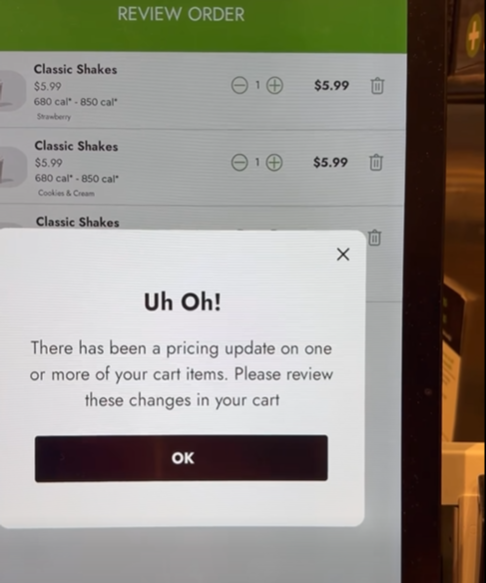
A self-service kiosk makes that transaction especially awkward. Customers select their own items, enter modifications, and submit their own orders. Before payment, the machine may still present suggested percentages that can reach 20% or higher.
The customer must then actively choose whether to add the money. Recent polling found that Americans increasingly dislike tipping prompts. Sixty-three percent expressed at least one negative view about tipping in 2025, up from 59% a year earlier.
Forty-one percent said businesses should pay employees better instead of relying heavily on customer tips. Another 41% said tipping culture had become excessive.
Digital screens may even work against businesses seeking larger gratuities. Twenty-seven percent said pre-entered tip screens caused them to tip less or not at all. That frustration helps explain why a $1.50 price change at an airport kiosk traveled far beyond Utah.
The video appeared to show the scenario many tip-weary consumers would find most troubling: saying no to an optional gratuity and seeing the bill increase anyway. Shake Shack says that appearance was false.
The kiosk error has been fixed.
The confirmed facts leave two separate stories. Powell recorded prices increasing immediately after selecting “No Tip.” Shake Shack says the two events were not connected.
The company has not identified a policy that penalizes customers who decline gratuities, and no evidence has established one. Instead, HMSHost found a technical problem affecting the kiosk at its licensed airport location.
Shake Shack said the error has been corrected and that it will continue working with licensed partners to provide consistent service. For consumers tired of encountering gratuity screens in increasingly routine purchases, however, the incident illustrated how quickly trust can disappear during digital checkout.
The machine asked for a tip. Powell said no. The prices rose seconds later. The operator’s latest confirmed finding is that the sequence resulted from a technology error, and Shake Shack says that error is now fixed.