A federal judge in Chicago has rejected McDonald’s request to dismiss an entire lawsuit over the McRib’s marketing, allowing claims that its name and rib-shaped patty misled customers to proceed while dismissing five other claims.
U.S. District Judge April M. Perry issued the October 30, 2026, decision in the Northern District of Illinois. The ruling keeps consumer-deception and several fraud-related claims alive but does not find McDonald’s advertising unlawful.
McDonald’s disputes the allegations and says it has been transparent about the sandwich’s ingredients. It also specifically denies the plaintiffs’ allegations that the McRib contains hearts, tripe, or stomach.
The dispute centers on what the sandwich’s presentation communicates: whether customers could reasonably understand its name, appearance, and advertising as a representation that it contains pork rib meat.
What the Judge Decided
In her October 30 opinion and order, Perry allowed seven consumer-deception claims under California, New York, Illinois, and District of Columbia law to continue.
She also declined to dismiss claims for fraudulent concealment, fraudulent misrepresentation, fraud, and unjust enrichment.
The decision followed McDonald’s motion challenging whether the amended complaint stated legally sufficient claims. At that stage, the court accepts well-pleaded factual allegations as true and draws reasonable inferences in the plaintiffs’ favor. That standard differs from deciding whether the evidence ultimately proves those allegations.
The result was a partial victory for each side: the plaintiffs retained their central deception theories, while McDonald’s secured dismissal of other claims.
What Customers Say the McRib Promises
The four plaintiffs, Peter Le, Charles Lynch, Dorien Baker and Darrick Wilson, allege that they bought McRibs in late 2024 believing the sandwiches contained rib meat.
According to the allegations summarized in the opinion, they would not have purchased the sandwiches, or would have paid substantially less, had they understood otherwise.
Their argument combines the McRib name, its rib-shaped patty, advertising, limited availability, and what they characterize as a premium price. They contend that those features reinforce an expectation of a particular pork cut, rather than simply a pork sandwich.
The complaint also cites two consumer surveys supporting the plaintiffs’ interpretation. McDonald’s challenged aspects of those surveys, but Perry concluded that disputes over their merits were not appropriate to resolve on the dismissal motion. Their evidentiary value remains open to challenge.
Why the Name and Shape Matter
McDonald’s argued that it never represented the sandwich as containing pork rib meat and truthfully described it as boneless pork.
Perry concluded that literal accuracy did not necessarily settle whether the overall presentation could mislead consumers.
“Plaintiffs’ proffered understanding of ‘McRib’ is not unreasonable or fanciful,” she wrote.
The judge considered the name alongside the patty’s shape and the surrounding marketing. She also rejected the argument that the McRib’s trademarked name necessarily protected it from a consumer-deception challenge.
McDonald’s pointed to ingredient information on its website and public reporting about the sandwich. Perry reasoned that customers are not required to investigate publicly available material before buying a fast-food item.
On the fraud claims, she found the allegations sufficient to continue, while expressly noting that more would be required to prove fraudulent intent.
McDonald’s Disputes the Ingredient Allegations
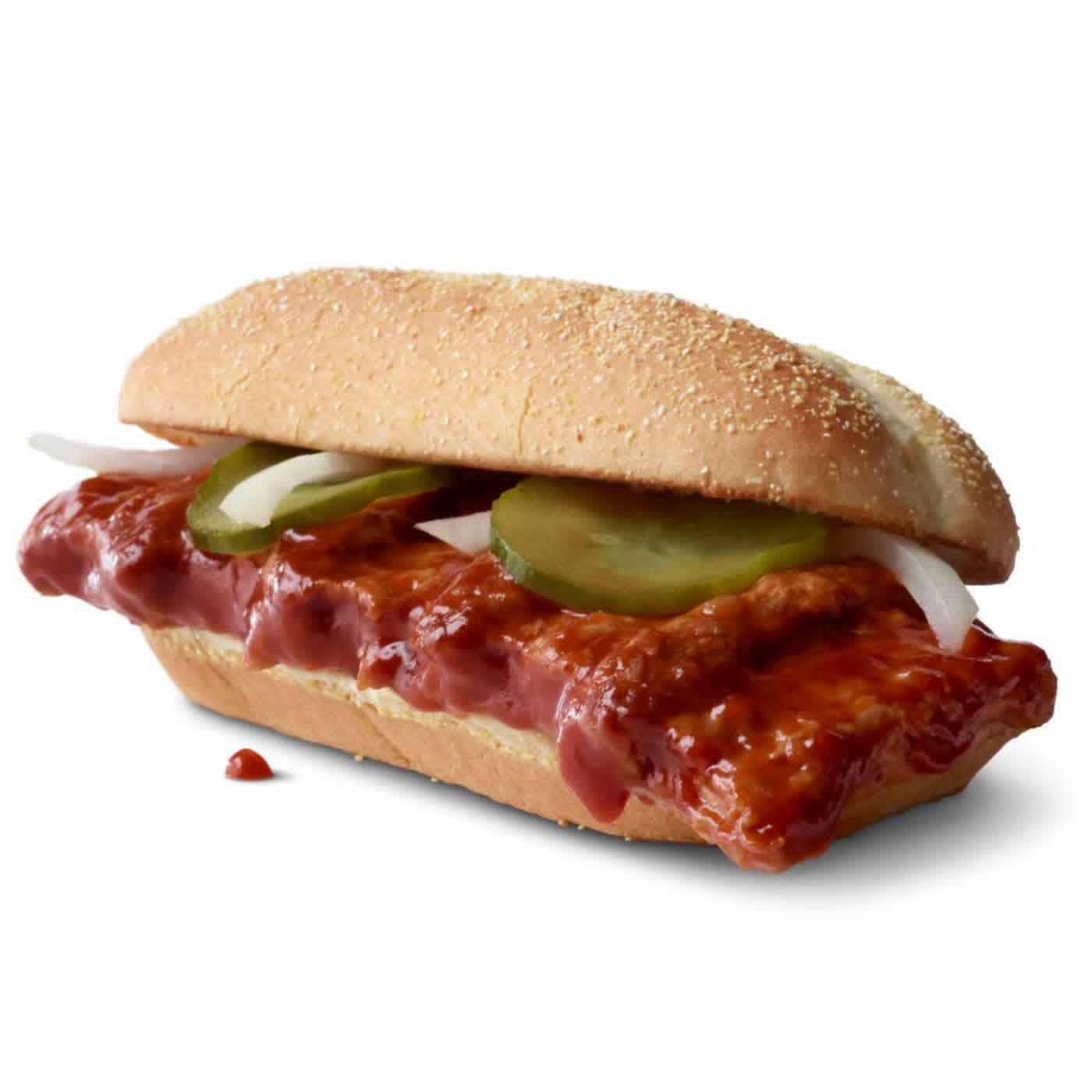
In its response reported by Reuters, McDonald’s said it does not use hearts, tripe, or stomach in the McRib and has always been transparent about its ingredients.
“This lawsuit distorts the facts and the claims are meritless,” the company said.
McDonald’s also argued that customers’ preference for a particular cut of pork does not turn truthful marketing into consumer fraud.
Its official McRib product page describes seasoned boneless pork dipped in barbecue sauce, topped with slivered onions and pickles, and served on a toasted homestyle bun.
The plaintiffs challenge what they say the broader presentation implies. McDonald’s disputes that interpretation. The ruling does not establish the plaintiffs’ contested account of the sandwich’s composition.
Which Claims Were Dismissed
Perry dismissed five claims without prejudice:
- Negligent misrepresentation.
- Breach of the implied warranty of fitness for a particular purpose.
- Breach of express warranty.
- Breach of contract.
- Breach of the duty of good faith and fair dealing.
For negligent misrepresentation, she applied Illinois law limiting recovery for purely economic losses. McDonald’s sells a tangible product, food, rather than supplying information for others’ business transactions, she explained.
The four contract-based claims failed because the plaintiffs had not adequately developed their legal arguments. Perry permitted amendment, subject to supporting legal authority. “Without prejudice” leaves room to address deficiencies; it does not automatically revive a dismissed claim.
What the Ruling Does Not Mean
Perry also dismissed requests for prospective injunctive relief, an order directed at future conduct. She concluded that the plaintiffs had not plausibly alleged a future injury because they now understood the issue they were challenging.
The order does not award damages, approve a settlement, or certify a class. The case remains a proposed class action, and the decision does not create a compensation program for McRib customers.
What Happens Next
The October 30 docket entry directs McDonald’s to answer the complaint by November 20, 2026. That deadline concerns the company’s response, not a trial or a liability decision.
For now, the remaining claims move forward with the parties’ competing positions unresolved. The food question behind them is straightforward: When a sandwich’s name and appearance suggest a particular ingredient, what information would help you order with confidence?