The crust gives way first. Then comes the filling: fried shrimp, oysters, roast beef and gravy, or perhaps nothing more elaborate than French fries.
A New Orleans po’ boy can be generous, messy, and surprisingly different from the one ordered at the next table. Its identity does not depend on a single filling. It comes from the relationship between the bread, the food inside, and the neighborhood businesses that bring them together.
That flexibility helps explain its staying power. The sandwich can accommodate a seafood lunch, a roast-beef craving, or a modest potato filling without losing its connection to the city.
Its best-known origin story begins with workers supporting workers. But the po’ boy’s larger history also belongs to bakers, immigrant communities, and restaurants that made a local sandwich part of everyday life.
A Sandwich Linked to the Streetcar Strike
The story most often associated with the po’ boy centers on Bennie and Clovis Martin, former streetcar workers who operated a restaurant near New Orleans’ French Market.
During the 1929 streetcar strike, the brothers fed striking workers. According to the familiar account, the sandwiches became associated with those “poor boys,” giving the food its enduring name.
That story connects the sandwich to a specific act of solidarity rather than a luxury dining room or an elaborate culinary invention.
Still, naming a food and inventing every element of it are different things. French-bread sandwiches existed before the strike, and the po’ boy developed within a city that already had bakers, sandwich sellers, and customers looking for substantial meals.
The Martins’ place in the story is important without requiring the claim that nobody had previously put meat or seafood inside a loaf.
Neighborhood Businesses Carried the Idea Forward
Other food businesses helped turn the sandwich into a neighborhood staple.
According to the restaurant’s history, owner Henry Timothy Sr. began serving poor boys at Parkway Bakery & Tavern in 1929. The business says he also gave striking workers French-fry versions for free.
Parkway describes selling sandwiches to workers at the nearby American Can Company.
Those details show how the food could move beyond the circumstance of the strike.s. A sandwich associated with supporting workers also appealed to people buying a meal on an ordinary workday.
Parkway began as a bakery in 1911, founded by German baker Charles Goering Sr. Timothy purchased it in 1922.
That progression matters: breadmaking and sandwich making were closely connected businesses, not separate chapters in the city’s food culture.
Related: 7 Foods You Should Never Store in the Fridge Door, According to Food Safety Experts
Why the Bread Is More Than a Wrapper
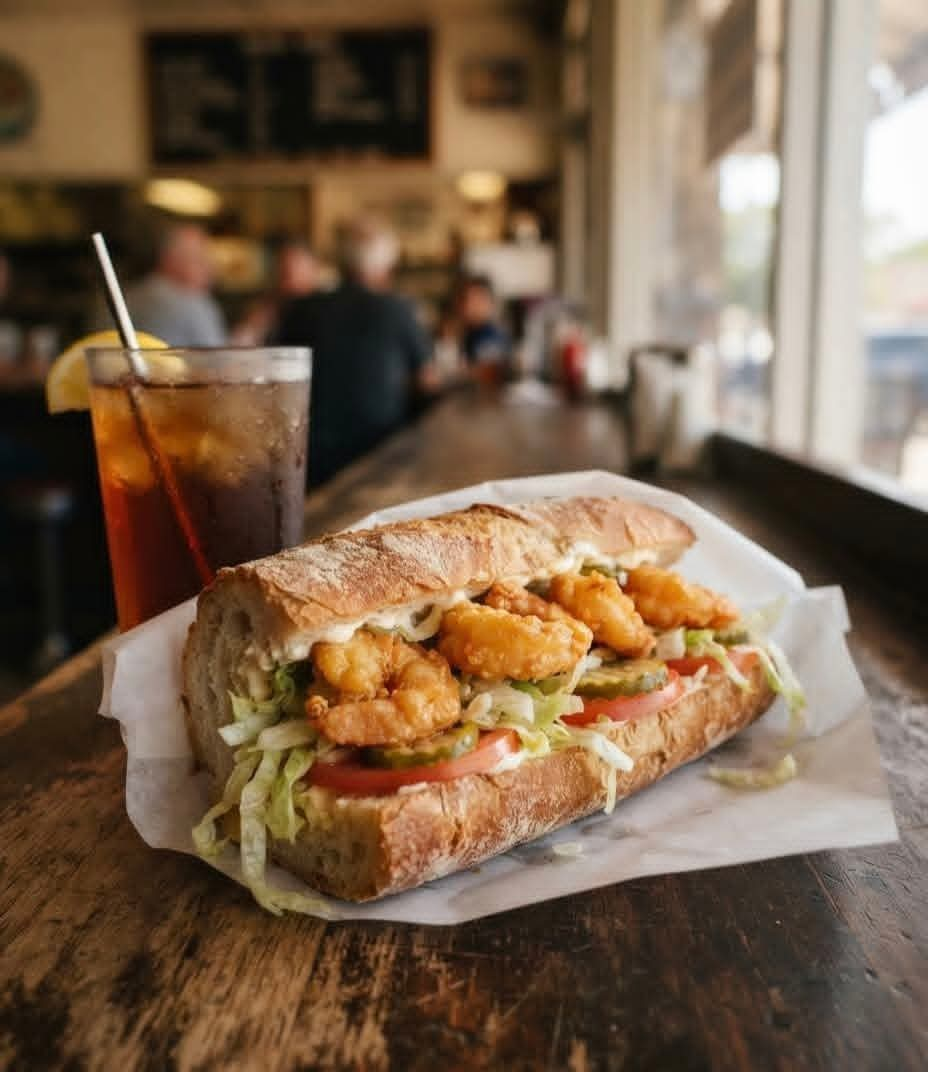
A po’ boy loaf needs to do several jobs at once. Its crust provides contrast, its interior leaves room for the filling, and its shape makes the sandwich practical to portion.
New Orleans French bread is known for a crisp exterior and an airy interior. A dense loaf would create a different balance, particularly around fried seafood or roast beef with gravy.
The bread’s history is also more complicated than its name suggests. According to NOLA.com, New Orleans French bread developed through French traditions and the work of German and Austrian immigrant bakers. Italian bakers added another chapter. John Gendusa Bakery supplied the Martin brothers and, according to the same history, helped develop a loaf with more consistent dimensions.s.
The result was local adaptation, not simply a French baguette transplanted unchanged.
A Practical Loaf Helped Shape a Lasting Tradition
Bread with a wide middle and narrow ends creates uneven sandwiches when cut into portions.
John Gendusa’s grandson told NOLA.com that the Martin brothers wanted bread that would yield similarly sized sandwiches no matter where the loaf was sliced.
The solution was a more uniformly plump shape with short ends.
It was a practical adjustment, but practical decisions often explain why a food becomes repeatable. A loaf designed for sandwich service helped bakers and restaurants produce something customers could recognize.
The bread’s importance also shows how many people stand behind one order. The person filling the sandwich depends on the baker who shaped the loaf.
The po’ boy became distinctive through that relationship between production and preparation.
One Name, Many Fillings
The sandwich’s range is part of its character.
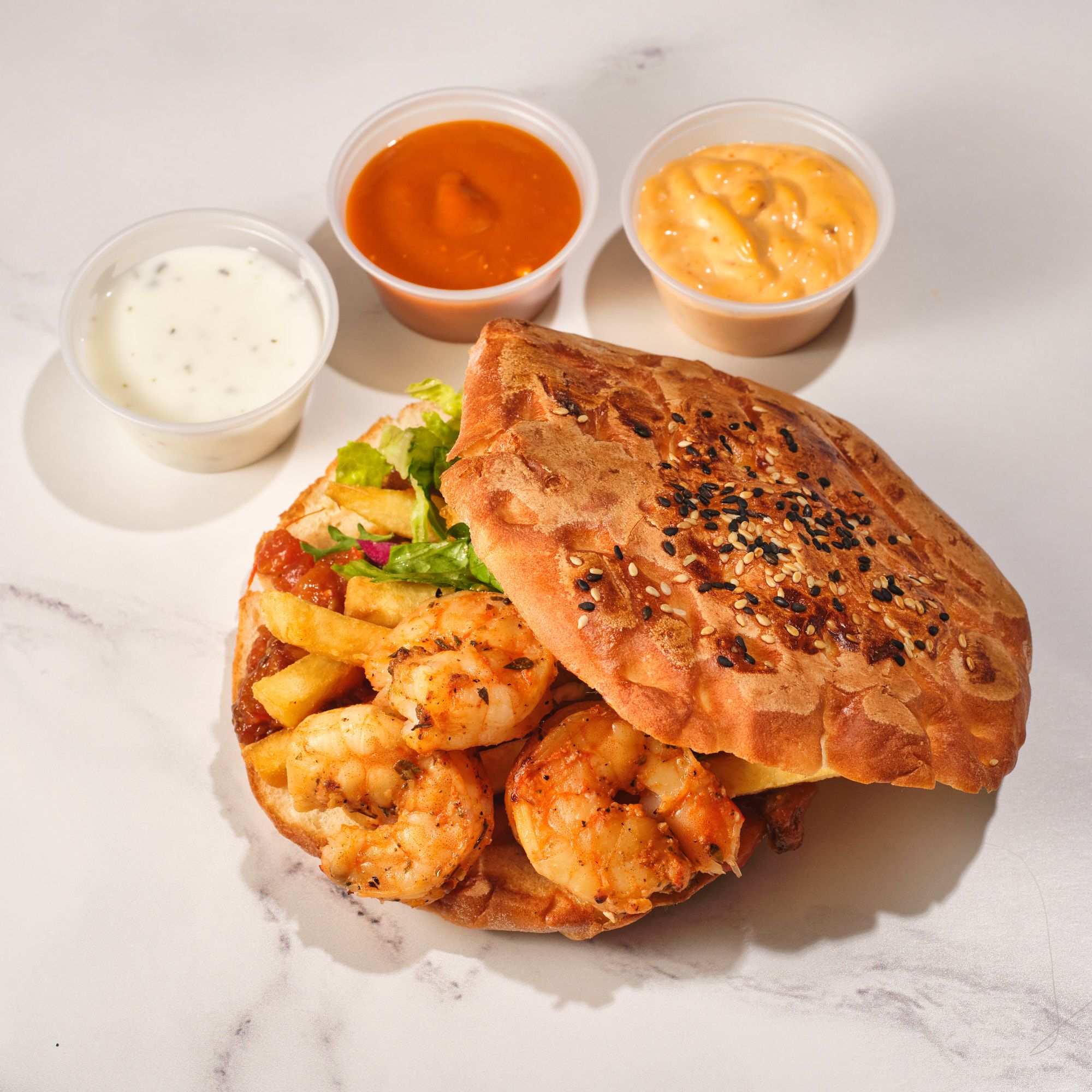
Roast beef Leidenheimer Baking Company describes roast beef with gravy, fried oysters, shrimp, soft-shell crab, catfish, hot sausage, meatballs, and French fries as po’ boy fillings. It traces its beginnings to 1896, when German immigrant George Leidenheimer founded the bakery. It remains family-owned, according to its history.
The fillings do not all deliver the same experience. Fried seafood contrasts a crisp coating with soft bread. Roast beef introduces gravy and a different kind of mess.
French fries show that the format doesn’t depenThe loaf and the sandwich’s recognizable assembly tie these choices together. The loaf and the sandwich’s recognizable assembly tie these choices together. The filling gives each version its personality without erasing the shared form.
What “Dressed” Means at the Counter
Ordering a po’ boy involves more than choosing a filling.
In New Orleans sandwich terminology, “dressed” generally means adding lettuce, tomato, and mayonnaise. Those additions change the balance without changing the sandwich’s basic identity.
A customer who wants something different can ask, rather than assume every shop assembles every version identically.
The vocabulary is part of the local connection. It turns a short ordering exchange into shared knowledge between customer and counter.
So does the name itself. “Po’ boy” and “poor boy” both appear in the city’s food businesses and histories. Parkway deliberately uses “poor boy” to reference the workers in the origin story.
Neither spelling requires reducing the sandwich to one approved filling.
Why the Tradition Endures
The po’ boy’s history is not preserved only in a story about 1929. It continues through bakery deliveries, restaurant counters, and decisions about what goes inside the bread. Parkway says it began buying Leidenheimer bread in 1978 after previously operating its own bakery. That connection shows how one longstanding business can help another carry a food tradition forward.d.
The sandwich allows change while retaining familiar features. Fillings can vary, but the bread and local ordering language provide continuity.
That combination makes the po’ boy more than a fixed recipe. It lets different cooks and customers participate in the same food culture.
Its reputation rests on a network: workers who needed meals, bakers who adapted their loaves, and neighborhood businesses that kept serving them.
When you order a po’ boy, what makes it memorable: the filling, the bread, or the place that made it yours?