Ever looked at the meal tray handed to you on a flight and wondered how much the airline actually paid for it? That small serving of chicken, rice, vegetables, bread, and dessert might not look particularly expensive, but preparing and delivering food thousands of feet above the ground involves far more than buying ingredients at a supermarket.
Airline meals are part of a multibillion-dollar catering operation. From economy-class sandwiches to elaborate first-class dining experiences, airlines spend different amounts depending on the route, cabin class, menu, and service level.
And here is the interesting part: the meal that looks the most expensive is not necessarily the biggest expense once everything involved in getting it onto your tray is considered.
Economy-Class Meals Can Cost Less Than You Think
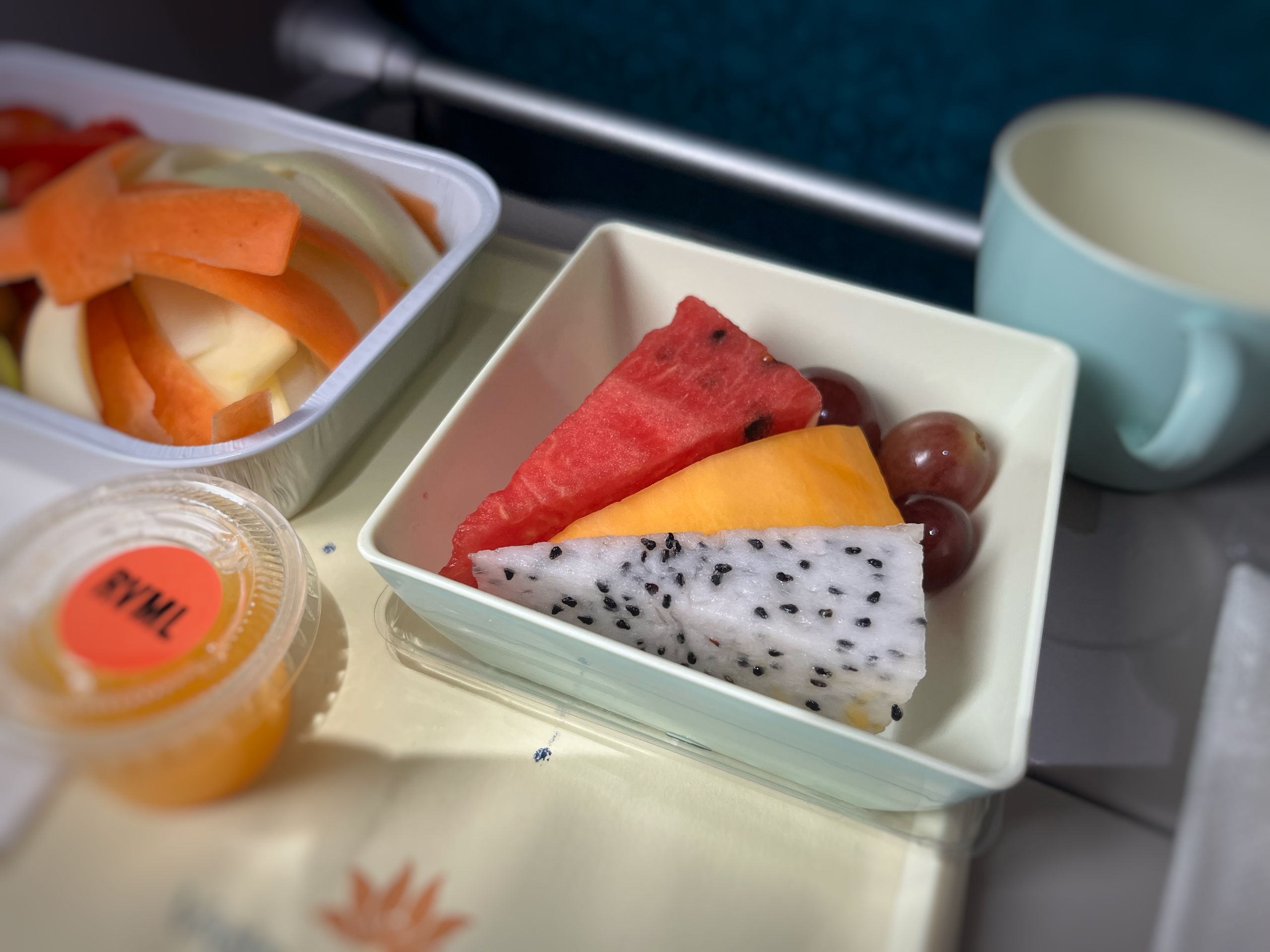
Economy-class passengers generally receive the simplest meals, particularly on short-haul flights. Depending on the airline and journey, that might mean a sandwich, a snack box, a cold meal, or a hot dish served with a small dessert.
According to industry figures reported by The Points Guy, an economy-class meal can cost an airline as little as $4 per passenger. More recent estimates published by Aerospace Global News put typical economy meal production costs at approximately $5 to $15 per passenger.
That difference reflects how much airline catering can vary. A short domestic flight offering a basic snack is not comparable to a long international journey serving several courses.
For airlines, keeping economy meals affordable matters because these cabins usually carry the most passengers. Even a small increase in the cost of each meal can add up quickly when multiplied across hundreds of seats and multiple daily flights.
Business-Class Food Comes With a Much Bigger Budget
The difference becomes more noticeable when passengers move into business class.
Instead of receiving a standard tray, business-class travelers may enjoy several courses, better presentation, larger portions, and a wider selection of drinks. Some airlines also offer restaurant-style menus, premium desserts, and meals designed by well-known chefs.
According to Aerospace Global News, business-class meals can cost airlines approximately $30 to $50 per passenger.
That is several times the estimated cost of an economy-class meal.
The higher budget is not just about putting more expensive ingredients on the plate. Airlines also have to consider the number of courses, presentation, serving equipment, and the expectations of passengers paying considerably more for their seats.
First-class dining takes things even further. A four-course meal can cost an airline more than $100 per passenger, according to the same aviation industry report.
That means a first-class passenger could receive a meal that costs more to prepare than some travelers spend on an entire restaurant dinner.
United Airlines Has a Surprisingly Large Food Budget
One example of how expensive airline catering can become comes from United Airlines.
In a June 2025 episode of The Economics of Everyday Things, published by Freakonomics, Chris Kinsella, chief commercial officer for North America at airline catering company Gategroup, discussed the money airlines spend on onboard food.
He explained that United had an annual food budget of approximately $2 billion to provide around 60 million meals to premium passengers.
That works out to roughly $33 per meal.
It is an eye-catching figure, especially when compared with the cost of an ordinary economy-class meal. However, this example reflects United’s premium passenger catering budget, not the cost of every meal served across the airline.
Kinsella also explained that airlines pay close attention to small expenses. Ingredients such as lemons, limes, olives, and tomatoes might seem insignificant, but their costs become substantial when purchased in enormous quantities.
For an airline serving millions of passengers, saving a few cents on an individual ingredient can translate into considerable savings over time.
Emirates Spends Billions Keeping Passengers Fed
Another example comes from Emirates, an airline known for investing heavily in its passenger experience.
According to Gulf News, Emirates spent approximately AED 5.316 billion on inflight catering and services during the financial year ending March 31, 2026.
That was a 12% increase compared with the AED 4.746 billion recorded in the previous financial year.
This amounts to about AED 443 million per month, or AED 14.6 million per day.
However, there is an important distinction. The airline’s financial statements classify the expense as inflight catering and services. This includes more than the food and drinks passengers consume.
The expense represented approximately 4.9% of Emirates’ total operating costs for the financial year.
Emirates carried 53.2 million passengers during that period, illustrating the enormous scale of the operation required to serve travelers across its international network.
The figures also show why catering is a major airline expense, even though passengers may see only a relatively small meal tray during their journey.
Preparing Airline Food Is More Complicated Than Cooking at Home
Airline meals do not simply come out of a kitchen and go straight onto an aircraft.
According to Freakonomics’ investigation into airplane food, large catering companies prepare meals in industrial kitchens, often near airports.
The process involves designing recipes, purchasing ingredients, preparing food, cooling it, arranging it on trays, and transporting it to aircraft.
The meals are generally cooked before being chilled and loaded onto the aircraft. Once onboard, they are reheated using convection ovens before being served.
This process creates challenges that ordinary restaurants do not face.
A dish must survive preparation, cooling, transportation, storage, and reheating while still looking and tasting appealing.
There are also strict timing requirements. Food must reach the aircraft on time, and catering teams must coordinate deliveries with airline schedules.
Large catering providers such as Gategourmet handle operations across multiple countries and airports, making the business much bigger than a single airline kitchen.
That logistical work is another reason an airline meal’s cost can’t be measured by ingredients alone.
Why Airline Meals Are Not Always Delicious
If airlines spend millions or even billions on catering, why do passengers still complain about airplane food?
Part of the answer is that preparing food for an aircraft is different from preparing it for a restaurant.
The Freakonomics report explains that cabin conditions can affect how passengers experience flavors. Changes in air pressure and low humidity can reduce sensitivity to certain tastes.
This creates an additional challenge for airline chefs who must develop recipes that remain appealing in the cabin environment.
Reheating is another issue. Some dishes that taste excellent when freshly prepared may dry out or lose texture after cooling, transport, and reheating.
Airline chefs therefore have to choose ingredients and cooking methods carefully.
A meal that looks impressive in a restaurant might not perform as well after several hours of preparation and transportation.
Cost is another consideration. Airlines need meals that appeal to large groups of passengers without making catering expenses unnecessarily high.
The result is a balancing act between quality, convenience, presentation, and affordability.
Airlines Must Also Avoid Loading Too Much Food
One of the biggest challenges in airline catering is knowing exactly how much food to prepare.
Airlines cannot simply load hundreds of extra meals onto every aircraft just in case passengers become hungry. Preparing too much food creates waste, while preparing too little can disappoint passengers.
According to Aerospace Global News, airlines use passenger bookings, historical consumption patterns, flight duration, and route information to estimate how much food and drink they need.
For example, a long-haul international flight requires a different catering plan from a short domestic journey.
Airlines also consider special meal requests. Passengers who request vegetarian, vegan, halal, or other specific meals need to be accounted for before departure.
Cabin crew feedback is another useful part of the process. Reports on which meals were popular, which items went untouched, and which drinks ran out can help catering teams make better decisions for future flights.
There is also a financial reason to avoid unnecessary food.
Every additional item loaded onto an aircraft adds weight. According to Aerospace Global News, airlines must balance passenger demand against the cost of carrying unnecessary supplies, including the extra fuel tied to added weight.
Why Your Airline Meal Might Be Worth More Than You Realize
The next time a flight attendant places a meal tray in front of you, remember its price includes much more than the chicken, rice, or sandwich on it.
Behind that simple serving is a network of chefs, catering companies, suppliers, transportation teams, and airline employees working together to get food onto an aircraft at precisely the right time.
An economy meal might cost an airline just a few dollars, while premium dining can run into tens or even hundreds of dollars per passenger.
The real surprise is that feeding passengers at 35,000 feet is an enormous business, and even the smallest ingredient can make a difference when millions of meals are involved.