A years-old video of San Diego Islamic preacher Uthman Ibn Farooq has returned to social media, reigniting an emotionally charged argument over religious freedom, national loyalty and who has the right to call the United States home.
The renewed controversy centers on a 2023 religious clip in which Farooq rejected calls to prevent Muslims from entering the country. The recording, now being presented to new audiences, has drawn criticism from viewers who see his language as dismissive of American sovereignty and support from those who interpret it as a defense of Muslim Americans’ place in the country.
The clip’s return matters because many viewers encountering it today may not realize that it is old. The footage was publicly available more than three years before the clip’s latest circulation, making its original timeline essential to understanding the dispute.
The Words Driving Backlash
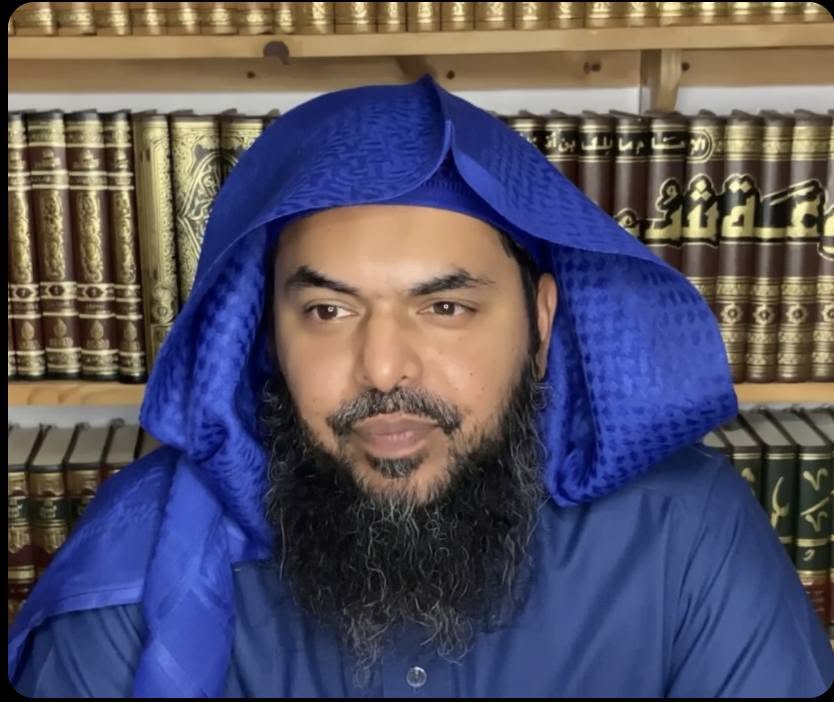
Farooq speaks forcefully in the short recording about proposals to ban Muslims from the United States. “This isn’t your country to ban,” he says. “This is the land of Allah, as every land is the land of Allah.”
Those lines have become the center of the backlash. To critics, telling someone that America is “not your country” sounds like a rejection of the nation’s political authority and the shared identity of its citizens.
The second part of Farooq’s statement adds an important layer. He describes every country, not only the United States, as belonging to Allah. Within that religious framing, his words can be understood as a theological claim that all land ultimately belongs to God.
That explanation does not remove the confrontational character of the statement. It does, however, make the message more complicated than the brief phrase “land of Allah” may appear when circulated without surrounding context.
Farooq also argues that Islam cannot be removed from America and presents Muslims as people who already belong within the country. His message appears directed at political efforts to exclude an entire religious group rather than at ordinary Americans as a whole.
Still, public speakers remain responsible for how their words sound beyond their immediate audiences. Language intended to energize supporters can alarm other communities when it appears to question their citizenship, authority, or connection to their own country.
The Original Context Matters
The footage appeared under the title “Are You Ready to Do Da’wah,” with da’wah referring to the practice of inviting others to learn about Islam. That description suggests the remarks were connected to religious outreach rather than issued as a formal political declaration.
However, the available information leaves several important questions unanswered. It does not clearly establish the exact date or location where Farooq originally delivered the remarks. It also does not confirm whether he spoke during a formal sermon, a lecture, a class, or another religious gathering.
The distinction matters because the video has widely been described as a sermon. That label may be accurate, but the available clip and accompanying information do not fully establish the original setting.
The recording is also brief. Viewers hear Farooq’s strongest statements, but they do not receive the complete discussion that came before or after them.
A longer recording could clarify the specific proposal he was addressing, the audience he had in mind, and how he explained the relationship between religious belief and American civic life. Without that material, both supporters and critics risk placing more meaning into the excerpt than it can independently prove.
A Local Preacher Reaches National Audiences
Farooq has an established connection to a San Diego religious community. The mosque’s official website identifies him as a speaker associated with Masjid Ribat and lists past classes and religious events featuring him.
The mosque operates on Saranac Street, where the San Diego address appears alongside contact information for its religious and educational services. Its website also directs visitors to recorded classes and lectures offered through its online channels.
Farooq is also connected to the One Message Foundation, an Islamic outreach organization that publishes religious material and directs visitors to educational videos. The foundation’s public mission emphasizes inviting people toward Islam and explaining the religion’s teachings.
That background helps explain why Farooq’s remarks focus on Islam’s continued presence and the responsibility of Muslims to speak publicly about their faith.
It does not answer the political questions raised by his wording. A religious outreach mission and a message about political belonging can overlap, particularly when a speaker addresses government proposals affecting members of that faith.
The internet removes the boundaries that once separated a local lecture from a national political debate. A statement delivered to a religious audience in San Diego can reach millions of people who know nothing about the speaker, the mosque or the original occasion.
What the Clip Does Not Show
The circulating excerpt does not contain an explicit instruction to attack anyone, break the law or commit violence. Farooq’s language is defiant, but the available portion focuses on religious presence, political exclusion and the right of Muslims to remain in America.
That distinction is important because provocative speech is not automatically unlawful speech.
The First Amendment text protects freedom of religion and speech from government interference. Americans may strongly condemn a religious leader’s language without treating every controversial statement as a criminal threat.
The Supreme Court’s current incitement legal standard generally requires advocacy to be directed toward producing imminent unlawful conduct and likely to produce that conduct before the government may punish it as incitement.
Courts also distinguish heated rhetoric from legally punishable threats. Under the true-threats legal framework, the context, the target of the words, and the speaker’s awareness that the communication could be viewed as threatening can all matter.
Nothing in the available information indicates that Farooq has been charged with a crime over the recording. The controversy is currently a public debate over meaning, responsibility, and belonging rather than a criminal case.
An Old Video Creates New Consequences
The video’s age does not make Farooq’s words irrelevant. Public statements can remain open to criticism long after they were delivered, especially when they involve religion, immigration and national identity.
The timeline still changes the story. An old clip resurfacing during a new political moment is different from a preacher issuing a fresh statement in direct response to today’s events. Readers deserve to know that difference before drawing conclusions.
The controversy also raises a broader accountability issue for the people who share viral political content. Reposting an authentic video without its original date can create a false sense of urgency even when no one has altered the speaker’s words.
Context should not become an excuse to ignore language that deserves examination. It should help the public examine that language accurately.
Farooq’s statement can reasonably be described as confrontational. His critics can question why he framed American belonging in terms that appeared to deny another person’s claim to the country. His supporters can argue that he was rejecting religious exclusion rather than rejecting America itself.
The short clip cannot settle that disagreement.
Why the Dispute Matters Now
The argument surrounding Farooq’s words reflects a larger American struggle over how religious identity fits within national identity.
Muslim Americans have the same constitutional right to live, worship, and speak publicly as members of every other faith. At the same time, religious leaders who enter political debates should expect their words to face scrutiny from people inside and outside their communities.
The strongest response does not require exaggeration. The available clip is real. Its language is forceful and polarizing. It was online years before the current backlash, and the complete original setting remains unclear.
Those facts leave readers with a responsibility that social media rarely encourages: separate what the video actually shows from what people claim it proves.
One preacher’s statement cannot define an entire faith community. It can, however, reveal how quickly questions about religion and belonging can divide Americans when a few seconds of old footage return without a complete timeline.