Meatloaf on a weeknight, a refrigerator stacked with saved containers and a freezer that holds a little of everything: those are among the food habits Gen X and baby boomers still keep, and that younger generations often find strange. A YourTango list published Oct. 31, 2026, rounds up 7 of them.
The list, written by Haley Van Horn, frames the habits as a generational divide at the family table. Many of them come down to thrift and routine, and several are making a quiet comeback.

Habits 1 to 3: Meatloaf, Big Portions and Every Leftover
1. Cooking homestyle dishes like meatloaf. According to the YourTango list, older generations still lean on dishes such as meatloaf, a staple that younger diners may see as old-fashioned. The meatloaf became a fixture of American home cooking in the 20th century, especially during years when stretching ground meat with bread or crackers made a family dinner go further. Many of those same dishes appear on lists of foods from the ’60s most boomers loved.
2. Serving huge portions. The list notes that many Gen X and boomer cooks put out big helpings and expect guests to come back for seconds. For cooks raised to show care through food, an overflowing plate is part of the welcome. Younger diners who grew up with smaller restaurant plates and grazing-style meals may see it differently.
3. Saving every leftover. Older cooks are known for wrapping up even a spoonful of mashed potatoes, turning leftovers into the next day’s lunch. YourTango cites reporting that younger shoppers are more likely to skip leftovers entirely. The habit traces back to households where wasting food was simply not an option, a mindset that shows up across lists of boomer habits making a comeback.
That thrift extends beyond the plate. The slang of the era, gathered in lists like groovy words from the swinging ’60s, has faded faster than the kitchen habits that came with it. The same instinct to keep a full pantry showed up recently when Americans stockpiled canned food and water during tech outages.
Habits 4 and 5: Same Meals and Fridge Clean-Out Dinners
4. Eating the same meals every day. Many older home cooks rely on a steady rotation, such as the same breakfast every morning or a set dinner for each night of the week. Younger diners used to endless choice on delivery apps may find the routine dull, but it keeps shopping lists short and predictable. A fixed rotation, such as soup on Mondays or a roast on Sundays, also makes it easier to buy in bulk and plan around sales, which is part of why the habit has lasted in so many older households.
5. Throwing meals together with whatever is in the fridge. Rather than ordering in, many Gen X and boomer cooks build dinner from what is already on hand: half an onion, a few eggs, the end of a block of cheese. YourTango contrasts the habit with younger generations’ heavier use of delivery. The clean-out dinner is also one of the simplest ways to cut grocery waste.
Handwritten family recipes from that era still carry real value, and even Marilyn Monroe’s Thanksgiving stuffing recipe, which calls for 18 ingredients and sold for $16,000, came from a home kitchen.

Habits 6 and 7: The Freezer and a Light Hand With Seasoning
6. Freezing food before it goes bad. Older cooks routinely freeze bread, meat and cooked dishes before they spoil. YourTango points to the U.S. Department of Agriculture’s guidance on freezing and food safety, which says food kept at 0 degrees Fahrenheit stays safe indefinitely, though quality can decline over long storage. Labeling each package with the date makes it easier to use the oldest items first.
7. Not seasoning meals heavily. The list says many older cooks keep seasoning simple, a style it ties to mid-century American cooking and the food supply of the years after World War II. Younger cooks who grew up with global flavors and hot sauce on every table often reach for more. The difference shows up quickly at shared meals, where one relative’s mild casserole sits next to another’s spice-heavy side, and both cooks wonder why the other dish tastes the way it does.
Why the Generational Divide Shows Up at the Table
Most of the 7 habits come back to the same idea: older generations learned to cook in kitchens where money was tight and nothing was wasted. Leftovers, freezer meals and clean-out dinners are all ways to stretch a grocery budget, and they make more sense now than they have in years.
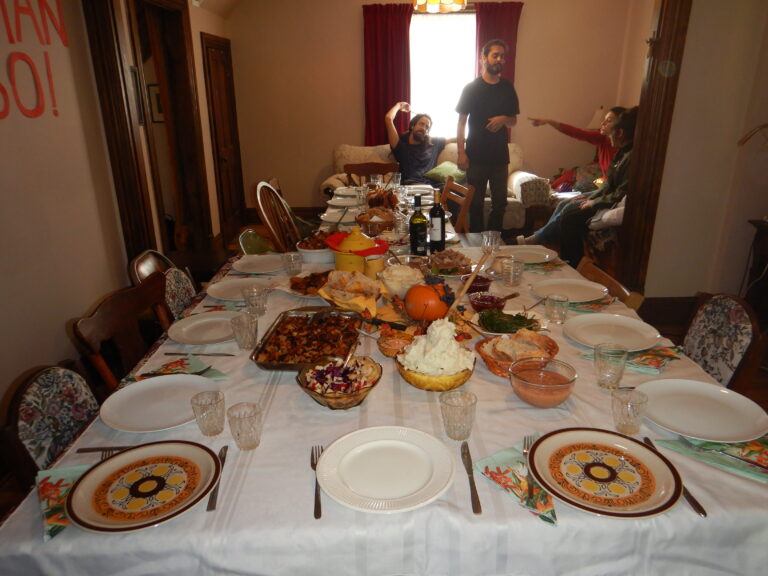
Younger cooks, meanwhile, grew up with more convenience, more variety and easy delivery, which changes what feels normal at dinner. Neither approach is wrong, and the holiday table is often where the two meet: one relative wrapping up turkey for three more meals, another wondering why the stuffing has no fresh herbs.
Several of the habits also line up with practical kitchen advice. Saving and freezing leftovers, cooking from what is already in the refrigerator and repeating reliable meals all cut down on food that ends up in the trash. Younger cooks who roll their eyes at a freezer full of labeled containers may find themselves adopting the same system once they start paying for their own groceries.
For families gathering this week, the list offers an easy conversation starter. Asking an older relative about the meatloaf recipe or the freezer system can say more about a family’s history than a photo album, and it might save a few leftovers from the trash.
This article was produced with AI assistance and edited for accuracy against the sources linked above.