A broken wall in Gaza became a canvas, a message and, unexpectedly, a bridge to Madrid. Eleven-year-old Palestinian artist Layan al-Gugha appeared beside a mural of Spanish Prime Minister Pedro Sánchez amid the ruins of Gaza City, never imagining that the image would reach the man whose face it depicted.
It did. Within days, Sánchez responded with a personal video message, thanking Layan and the local artists who created the mural. He told Gaza’s children that Spanish society “hears you, sees you, cares about you, and does not forget you.” For children living through destruction and displacement, the recognition carried far more meaning than a simple social media exchange. It offered proof that a message created among Gaza’s shattered buildings could still cross borders and reach one of Europe’s most powerful political offices.
A message painted where ordinary life once stood
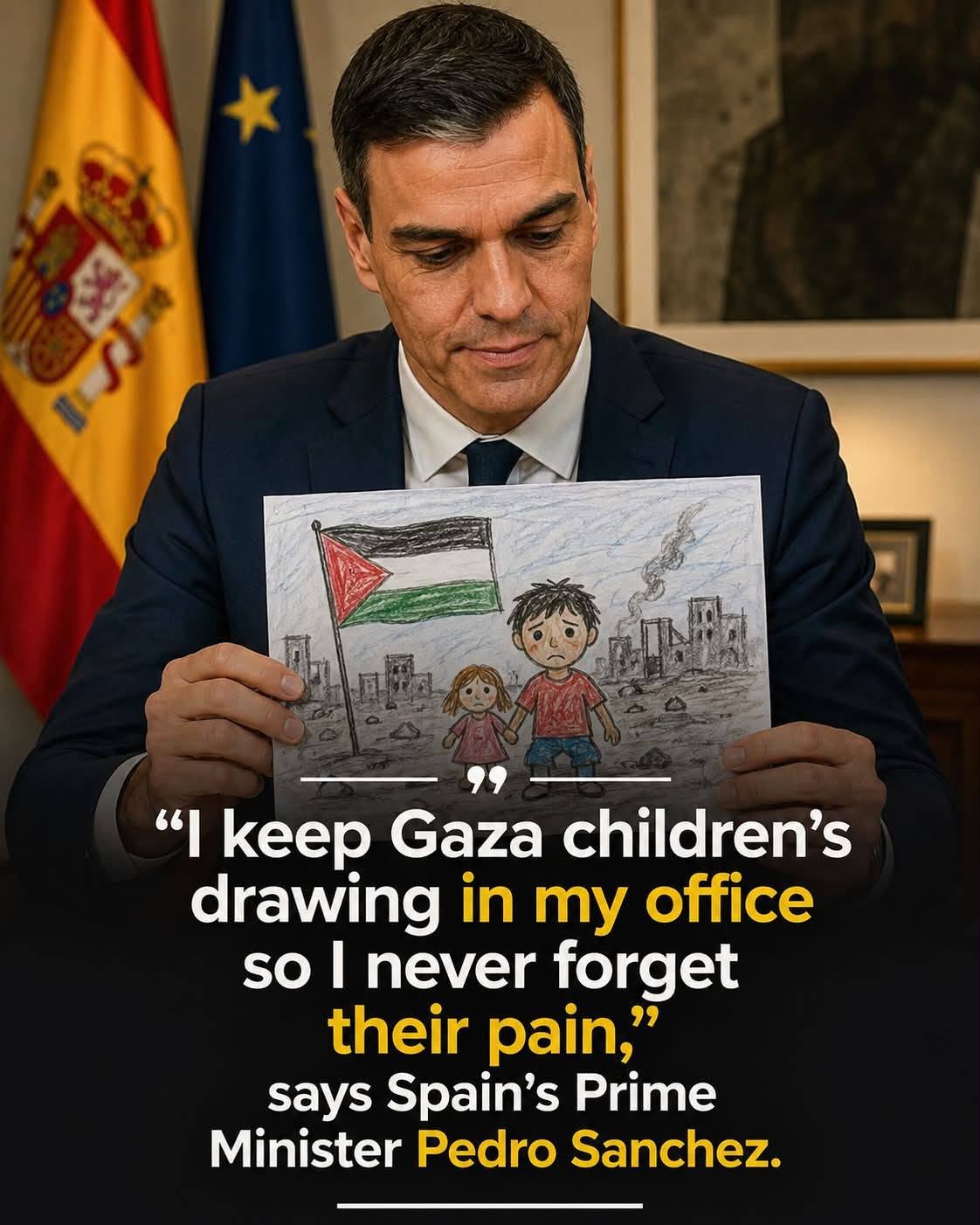
The mural showed Sánchez on a damaged wall surrounded by broken concrete. Anadolu reported that Layan and other local artists presented the tribute as a gesture of gratitude toward Spain for supporting Palestinian statehood and calling for an end to the fighting in Gaza. The action made the artwork inseparable from the devastation around it. Homes, schools and public spaces across Gaza have suffered extensive damage during the war.
UNICEF reported in April 2026 that about 700,000 children between four and 17 had missed formal in-person schooling for almost three academic years. Nearly 98 percent of Gaza’s school buildings had been damaged, while more than 93 percent required major rehabilitation or complete reconstruction. Drawing has become a way to communicate beyond the physical boundaries surrounding her. She told Anadolu that she wanted her artwork to challenge the injustice and suffering experienced by people in Gaza.
She also described art as a source of hope. Drawing allows her to express what children have witnessed and to send their stories into a world that can sometimes appear distant from their suffering.
Sánchez answers a child by name
Sánchez’s response transformed the mural into an international story. In his video, he thanked Layan, the artists and Palestinians who had expressed friendship toward Spain.
The Spanish leader said he was moved that people living amid such pain had still found time to send kindness across borders. He expressed hope that Gaza’s children would eventually return to their schools, paint without fear and experience a peaceful future. sion to address Layan by name made the response feel personal rather than ceremonial. What began as a political portrait became a direct conversation between a European prime minister and a Palestinian child living among the consequences of war.
Layan said she was “shocked and incredibly happy” after discovering that Sánchez had seen the mural. She had never expected a prime minister to record a response or mention her personally.
The moment, she explained, gave her confidence that “our voices can reach the world.” e exists alongside a severe humanitarian emergency. UNICEF reported on July 17, 2026, that 1.9 million of Gaza’s estimated 2.1 million residents remained displaced. Access to health care, clean water, sanitation, and child protection services also remained seriously disrupted. Spain’s response carried political weight
The mural was not a random portrait of a foreign leader. Spain officially recognized the State of Palestine on May 28, 2024, joining Ireland and Norway in a coordinated diplomatic move.
Sánchez described recognition as a matter of historical justice and an urgent step toward achieving peace through a two-state solution. Spain said it supported a viable Palestinian state existing alongside Israel in peace and security. official position also condemned the Hamas-led attacks of October 7, 2023, demanded the release of Israeli hostages and rejected Hamas as an opponent of the two-state solution. That context matters because Madrid presented its recognition of Palestine as support for diplomacy rather than hostility toward the Israeli people. has since remained an outspoken European voice on Palestinian rights, humanitarian access and Gaza’s reconstruction. His message to Layan did not rebuild a school, provide food or stop military operations. Yet recognition still matters when children fear that the outside world has stopped listening.
A young artist refuses to surrender her future
Layan’s ambitions extend beyond the mural. She told Anadolu that she dreams of living like children elsewhere and establishing an art academy where young people can draw, express themselves and cope with the fear they have experienced. She does not suggest that art alone can repair Gaza. A painting cannot replace food, shelter, medical treatment, education or meaningful political action. But it can preserve a child’s identity and voice when nearly everything around her has been damaged.
The broken wall carried Layan’s message from Gaza to Madrid. Sánchez’s response then traveled back to the young girl who helped send it.
For one extraordinary moment, an 11-year-old received proof that someone beyond the rubble had noticed her. Her mural will not end the conflict, but it leaves world leaders with an uncomfortable question: After hearing Gaza’s children, what will those with power actually do?