Herbert Leon Kimble, a federal fraud defendant accused of helping run a $1.2 billion Medicare billing scheme, is back in U.S. custody after his arrest in the Philippines, officials said.
The victims were thousands of Medicare beneficiaries, many of them elderly. Kimble, 60, was arrested in Pasig City after allegedly fleeing before sentencing in a South Carolina federal case.
Kimble Returned to U.S. Custody
Kimble arrived in the United States after Philippine immigration agents tracked him for months. The Philippine Bureau of Immigration said agents captured him in Pasig at a casino before he was deported.
Philippine officials said the arrest happened on June 11. He was deported on June 18 and placed on the country’s immigration blacklist.
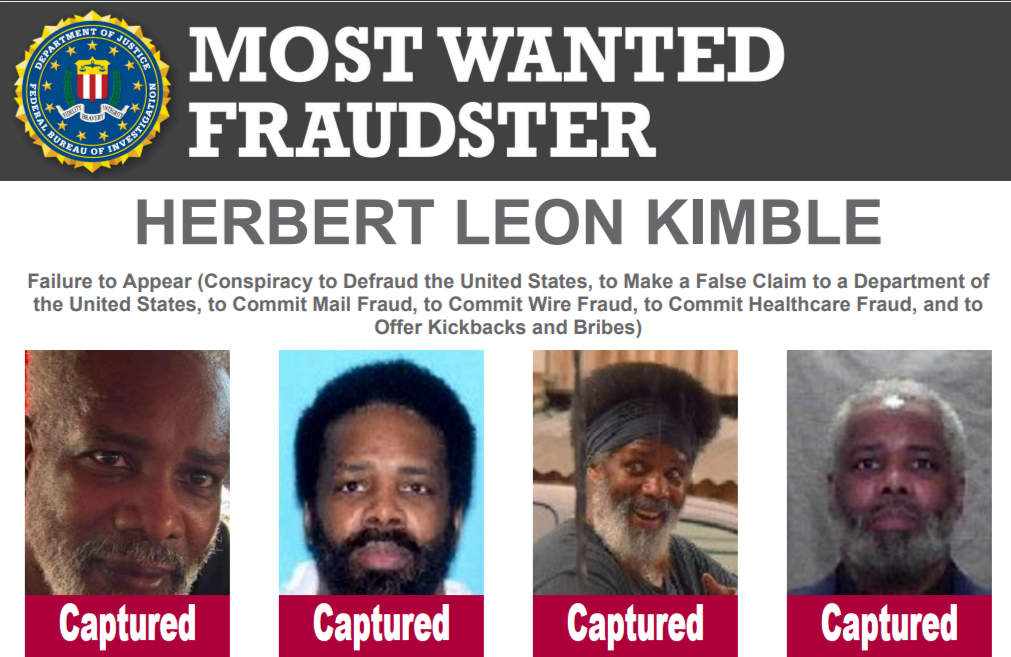
U.S. officials said Kimble had been wanted since August 2024. He failed to appear for sentencing after pleading guilty in a major healthcare fraud case. His arrest made him the second person taken into custody from the FBI’s new Most Wanted Fraudsters list.
South Carolina Case Stalled After Missed Sentencing
Kimble pleaded guilty on April 4, 2019, in the U.S. District Court for the District of South Carolina. His case was handled in the Columbia Division.
The FBI’s wanted page for Kimble lists charges tied to conspiracy, healthcare fraud, mail fraud, wire fraud, false claims, and kickbacks. Federal officials said Kimble failed to appear for a scheduled sentencing hearing on Aug. 27, 2024. A federal arrest warrant was issued the same day.
The FBI listed several aliases for him, including Herbert L. Kimble, Herbert Lee Kimble, Herb Kimble, and Herbert Kimble. Bureau records identify him as a Chicago-born man who worked as a telemarketer and movie producer.
The arrest now returns the case to federal court after months of delay.
Call Centers Pushed Brace Orders
Investigators said Kimble operated a call-center-based healthcare fraud operation from 2014 through March 2019. The scheme allegedly targeted Medicare beneficiaries through orthopedic brace marketing. The braces included back, shoulder, wrist, and knee devices.
The Department of Health and Human Services Office of Inspector General said Kimble’s fugitive profile involved an offshore call center that marketed braces through television and online ads.
Callers allegedly directed Medicare patients to request braces for pain relief. Some patients were reportedly pushed toward extra braces after the first contact.
Investigators said the call centers then worked with telemedicine companies. Doctors connected to those companies allegedly wrote prescriptions without proper medical exams.
Durable medical equipment companies bought those prescriptions, shipped the braces, and billed Medicare.
Medicare Charges Reached $1.2 Billion.
Federal officials said the scheme generated more than $1.2 billion in Medicare charges. Investigators said the operation affected thousands of beneficiaries across the country. Many were elderly patients who received calls about medical equipment that appeared to be covered by Medicare.
The alleged setup moved through several steps. Call centers found patients. Telemedicine firms produced orders. Equipment suppliers submitted claims. Medicare paid for braces that investigators said were often unnecessary.
The system used real patient information and medical billing codes. That made the claims appear legitimate before investigators identified the pattern.
Kimble’s guilty plea placed him among the defendants tied to one of the largest healthcare fraud enforcement actions in U.S. history.
Operation Brace Yourself Targeted National Network
Kimble’s case was part of a broader federal crackdown known as Operation Brace Yourself. The Justice Department’s 2019 national enforcement action targeted telemedicine companies, durable medical equipment suppliers, call centers, and medical professionals.
Federal prosecutors charged 24 defendants in that operation. Agents also executed more than 80 search warrants across 17 federal districts.
Medicare officials took administrative action against 130 durable medical equipment companies. Those companies had submitted more than $1.7 billion in claims and received more than $900 million.
The operation showed how call centers and telemedicine firms allegedly helped turn patient contact into federal billing claims.
Investigators said some networks used call centers in the Philippines and Latin America to reach elderly and disabled Medicare patients.
Elderly Patients Were Key Targets
Federal officials said elderly Medicare beneficiaries were the primary targets of the brace scheme.
Many patients were contacted by phone and offered braces for pain. The pitch often involved quick approval and insurance coverage.
Investigators said some patients did not receive meaningful medical reviews before brace orders were signed. Others allegedly received equipment tied to billing needs rather than medical necessity.
That made the fraud harder to spot. A patient might receive a brace in the mail and assume it was properly approved.
The Medicare program then received claims connected to those orders. Federal investigators said the claims helped drive the billion-dollar total.
New Fraud List Gets Second Arrest
Kimble’s capture gives early results to the FBI’s new Most Wanted Fraudsters list. The Justice Department announced the list in June as part of a broader fraud enforcement effort. The DOJ said the new list of fraudsters was created to publicly identify fugitives in major fraud cases.
Abdullahi Ereg was the first person on the list taken into custody. He was wanted in a separate wire fraud and money laundering case tied to the Feeding Our Future investigation in Minnesota.
Kimble became the second arrest from the list within weeks. FBI Director Kash Patel said Kimble had been on the run since 2024. Vice President JD Vance credited the list and task force work with helping authorities locate him.
Acting Attorney General Todd Blanche said fleeing the United States did not allow Kimble to avoid prosecution.
Philippines Arrest Ends Fugitive Search
Philippine immigration officials said Kimble was arrested after agents confirmed his location in Pasig City.
The Bureau of Immigration said he would not be allowed to return to the Philippines after deportation. Officials there described him as an undesirable alien because of the U.S. fugitive case.
The arrest required cooperation between U.S. officials and Philippine authorities. It also showed how federal fraud cases can follow defendants beyond U.S. borders.
Kimble’s next court steps will center on sentencing and any issues tied to his failure to appear. For now, the man accused in a $1.2 billion Medicare fraud case is no longer a fugitive. The South Carolina prosecution can resume after his return to U.S. custody.