The death of 18-year-old Daniel Erving was initially classified as an accidental drowning. Three months later, however, allegations involving discarded clothing, a thrown cellphone and deleted communications have pushed the Lake Ray Hubbard case into a far more complicated legal chapter.
We now know that two teenagers who were reportedly with Erving during his final hours have been arrested on evidence-tampering charges. Yet Erving’s family says those arrests represent only “partial justice,” arguing that investigators and prosecutors must determine whether the alleged concealment points to something more serious.
Civil rights attorney Ben Crump has joined the family’s legal team as relatives demand a complete account of what happened at the North Texas lake on April 13, 2026. No one has been charged with causing Erving’s death, and the medical examiner’s accidental-drowning ruling remains unchanged. Still, the family says the conduct described in the arrest affidavit has created questions that cannot be dismissed.
What Happened to Daniel Erving at Lake Ray Hubbard?
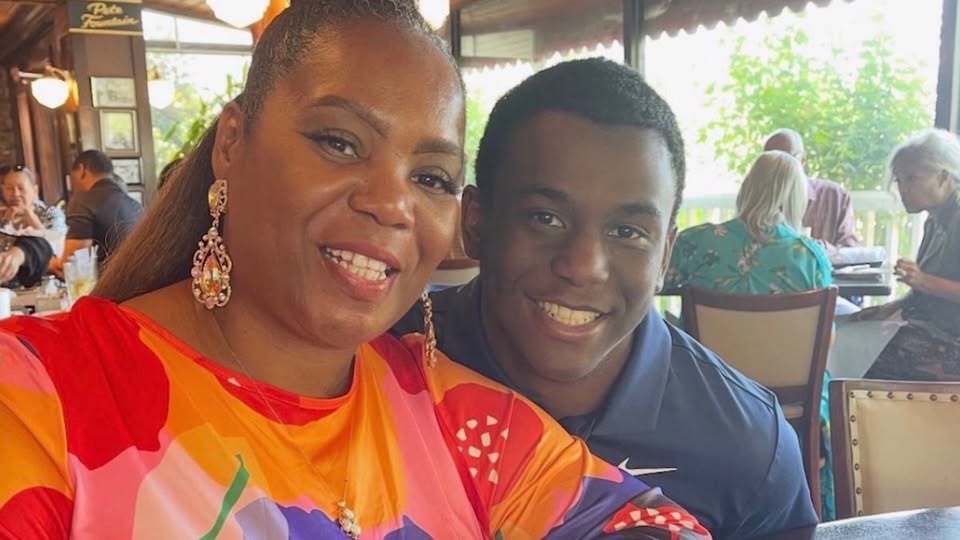
Daniel Erving, who was also known by the name Mike, left his home on April 13 and reportedly traveled to Lake Ray Hubbard with 19-year-old Lucas Roper and a 17-year-old juvenile. Investigators allege that all three entered the water after jumping from a railroad bridge near the 6300 block of Miller Road.
Erving did not return home. His mother filed a missing-person report after she was unable to contact him, and police later issued a public alert noting that he had disappeared without several personal belongings. His body was recovered from Lake Ray Hubbard on April 17, four days after he was last seen.
The Dallas County Medical Examiner’s Office determined that Erving died by drowning and classified the manner of death as accidental. Dallas police said detectives conducted interviews, collected evidence, and coordinated with the medical examiner during the investigation.
That official ruling is important. An accidental classification means the available medical evidence did not establish homicide, suicide, or another legally defined manner of death. It does not, however, answer every question about what witnesses did before, during, or after the drowning.
Evidence-Tampering Arrests Changed the Direction of the Case
On July 9, authorities arrested Roper and the unnamed 17-year-old. Each was charged with tampering with physical evidence, which police identified as a third-degree felony.
The charge does not accuse either teenager of killing Erving. Instead, it focuses on allegations that evidence connected to the death was concealed, discarded, or deleted after Erving entered the water.
Investigators allege that Roper and the juvenile left the area without reporting the incident. The affidavit further claims that Roper threw Erving’s clothing into a tree line near the bridge. The juvenile allegedly threw Erving’s cellphone from the vehicle after being instructed to do so.
Authorities later recovered the cellphone and some of the clothing after the juvenile reportedly showed detectives where the items had been discarded. The recovery may allow investigators to examine physical and digital evidence that could help reconstruct Erving’s final hours.
Under Texas law, a person can face an evidence-tampering charge for altering, destroying, concealing, or removing evidence with the intent to affect its availability in an investigation. A third-degree felony conviction can carry a prison sentence of between two and 10 years, along with a possible fine.
The allegations have not been proven in court. Roper and the juvenile are presumed innocent unless prosecutors establish guilt beyond a reasonable doubt.
Deleted Communications Raise Additional Questions
The physical items were not the only evidence investigators examined. During a voluntary interview, Roper allegedly told detectives that he panicked after Erving drowned and left the scene with the juvenile.
The affidavit states that Roper admitted deleting his communications with Erving because he expected an investigation and did not want to get into trouble. Detectives later examined his phone and reportedly confirmed that the communications had been deleted.
Deleted messages do not automatically prove involvement in another person’s death. People sometimes erase information because they fear embarrassment, discipline, criminal scrutiny, or public attention. Prosecutors would still need evidence connecting any suspect to a specific criminal offense.
Even so, deletion becomes legally significant when authorities believe it was done to prevent evidence from being used in an investigation. The timing, content, and recoverability of the communications could therefore become central issues as the evidence-tampering cases move forward.
Digital forensic specialists can sometimes recover deleted records, metadata, cloud backups, or information preserved by service providers. Investigators may also compare phone data with vehicle movements, witness accounts, search histories, and location records to test whether the statements given by those involved are consistent.
Why Daniel Erving’s Family Rejects “Partial Justice”
Erving’s mother, Tameka Erving, described her son as an outstanding young man who stayed out of trouble. She said he preferred to be called Mike and framed the family’s campaign as a “fight for Mike.”
Her central question is direct: Why would people who witnessed an accident allegedly discard his belongings, delete communications, and leave without immediately informing his family or calling for help?
That question does not establish homicide, but it explains why the family remains dissatisfied. Their concern is rooted less in the medical finding of drowning than in the alleged behavior that followed it.
Crump said the family is seeking “whole justice,” not a limited resolution focused only on the handling of evidence. The family wants investigators to determine whether the current charges fully account for what occurred at the lake.
Another family attorney, Sean Daredia, has called for an independent investigation. He has pointed to Erving’s background as an honor-roll student, high school swimmer and healthy young athlete while questioning whether the available explanation fully accounts for his death.
Being a strong swimmer does not make drowning impossible. Cold-water shock, exhaustion, underwater hazards, injury, panic, currents and the height of a jump can place even experienced swimmers at risk. However, the family believes Erving’s swimming experience strengthens the need for a detailed reconstruction rather than a quick assumption about what happened.
Why Dallas Police Took Over the Investigation
The case involved more than one North Texas police agency because Erving was initially reported missing through the Rowlett Police Department, but authorities determined that his death occurred within Dallas city limits.
Dallas police became the lead investigative agency, with Rowlett police providing assistance when requested. Dallas officials have said the matter remains an active criminal investigation and is pending prosecution, limiting how much additional information they can publicly release.
Jurisdictional transfers can complicate public understanding of a case. Families may communicate with one department during a missing-person search and another after evidence establishes where a death occurred.
Erving’s relatives and supporting advocacy groups have criticized what they describe as delays and insufficient communication during the early stages of the search. Police have declined to discuss many of those concerns publicly because the investigation remains open.
Evidence Tampering Is Serious, but It Does Not Automatically Prove Murder
The emotional force of this case comes from an apparent contradiction. Authorities have classified Erving’s death as accidental, yet investigators allege that the people who were with him took deliberate steps to hide or remove evidence.
Those two findings can coexist legally. A person may panic after witnessing an accident and then commit a separate crime by concealing evidence. Evidence tampering can also obstruct investigators from confidently determining whether a death was accidental or criminal.
We must therefore separate three questions.
First, what caused Erving to drown? Second, did anyone have criminal responsibility for placing him in danger or failing to act? Third, did anyone intentionally conceal evidence after the incident?
The present charges address only the third question. Prosecutors would need additional evidence before pursuing homicide, manslaughter or another offense connected directly to Erving’s death.
What Investigators and Prosecutors May Examine Next
Investigators may continue to compare the suspects’ statements with physical evidence, phone records, and the location where Erving entered the water. They may also examine whether anyone attempted a rescue, how quickly the group left, what was said afterward, and when authorities first learned what had happened.
The recovered cellphone could be particularly important. Its messages, photographs, videos, location history and call data may help establish the group’s plans before arriving at the lake and their actions afterward.
Prosecutors will also decide whether the available evidence supports the current charges and whether a grand jury should consider any additional offenses. The family’s demand for murder charges does not mean such charges will be filed. That decision rests with prosecutors and must be supported by admissible evidence.
An independent investigation commissioned by the family could involve reviewing police records, consulting forensic experts, interviewing witnesses and examining whether the official timeline contains unresolved gaps. It cannot replace the criminal investigation, but it could identify information for attorneys to present to law enforcement or prosecutors.
The Search for Whole Justice Continues
Daniel Erving’s death remains, officially, an accidental drowning. Lucas Roper and the juvenile currently face allegations related to what happened after he disappeared beneath the water, not charges accusing them of causing his death.
Yet the reported disposal of clothing, the discarded phone, the deleted communications and the alleged failure to immediately report the drowning have left Erving’s family unwilling to accept that the story has been fully told.
As the criminal cases proceed, the challenge will be to pursue every credible lead without replacing evidence with assumption. The suspects deserve due process, and Erving’s family deserves a careful, transparent investigation capable of explaining both his death and the conduct that followed it.
For a grieving mother, the case is no longer only about how her son entered Lake Ray Hubbard. It is about why he was left there, why his belongings were allegedly hidden, and whether the justice system will uncover the complete truth about his final hours.