Americans have heard this kind of promise before. Washington announces a sweeping foreign agreement; officials call it historic; corporations anticipate billions in business; and the public is told that stronger alliances will make the country safer. Then the fine print emerges.
The Trump administration’s nuclear agreement with Saudi Arabia could give American companies access to a lucrative new market. It could also weaken nuclear safeguards, intensify confrontation with Iran, and pressure other Middle Eastern governments to demand the same sensitive technology.
For families already watching Washington spend heavily on overseas conflicts while electricity bills, housing costs, and insurance premiums climb at home, the timing is difficult to ignore. The administration is asking Americans to trust a 30-year nuclear arrangement even though its full text, financing structure, and most important inspection provisions have not been publicly disclosed.
Washington signed the Saudi nuclear deal before Americans saw the details.

On July 22, 2026, U.S. Energy Secretary Chris Wright and Saudi Energy Minister Prince Abdulaziz bin Salman signed a civilian nuclear cooperation agreement under Section 123 of the Atomic Energy Act. The Department of Energy called it a decades-long, multibillion-dollar partnership that would support American workers, expand nuclear exports, and strengthen regional security.
Those are attractive promises. They are also broad claims attached to an agreement the public has not been allowed to examine. The department did not initially publish the full agreement, its technical annexes, or the accompanying bilateral safeguards framework. Americans therefore received a polished list of benefits without enough information to evaluate the risks.
Americans are being asked to accept another foreign-policy blank check.
The political language surrounding the Saudi nuclear agreement should sound familiar to Americans. Officials say the United States needs partners. They argue that refusing cooperation would push Saudi Arabia toward China or Russia. They promise that American involvement will create leverage, improve oversight, and bring stability to a volatile region.
Every part of that argument deserves examination. None of it deserves automatic acceptance. The United States has repeatedly entered foreign commitments on the assumption that influence today will guarantee control tomorrow. Governments change. Alliances weaken. Regional wars reshape priorities. Technology transferred during a friendly period can remain in place after the relationship deteriorates.
A nuclear agreement reportedly designed to last 30 years will survive multiple American administrations. It could remain active through changes in Saudi leadership, new wars, oil shocks, and disagreements Washington cannot currently predict. We should not confuse access with control.
American companies operating inside Saudi Arabia may give Washington visibility, but visibility is not the same as permanent authority over sovereign Saudi decisions. Once nuclear infrastructure, technical expertise, and fuel-cycle knowledge exist, they cannot simply be recalled like defective consumer products.
Uranium enrichment is the detail Americans cannot afford to ignore
The administration describes the Saudi program as peaceful. That distinction is important, but it does not eliminate the central danger. Commercial nuclear reactors use low-enriched uranium. Nuclear weapons require much higher enrichment levels. The same broad technological process can serve both purposes, depending on equipment, configuration, time, and political intent.
A country with enrichment infrastructure does not automatically possess a nuclear weapon. It does, however, move closer to having the technical capacity required to produce weapons-grade material. Saudi Arabia has not publicly made the permanent commitment accepted by the United Arab Emirates to renounce domestic uranium enrichment and spent-fuel reprocessing.
Reports indicate that the agreement may provide for a joint study into the commercial need for enrichment inside Saudi Arabia. One reported possibility would involve a facility built and operated by American companies, with sensitive technology kept away from Saudi personnel. That arrangement has been described as a “black box” system.
The phrase sounds reassuring until we ask what happens outside ideal conditions. What happens if Saudi Arabia demands greater control five years later? What happens if American personnel are expelled during a diplomatic dispute? What happens if equipment is copied, modified, or supplemented by technology acquired elsewhere?
What happens if a regional emergency is used to restrict inspector access? President Trump later said there would be no enrichment. That statement directly conflicts with reports describing a possible future pathway.
The agreement appears weaker than the UAE nuclear standard.
The United Arab Emirates accepted strict conditions when it signed its nuclear cooperation agreement with the United States in 2009. Abu Dhabi legally renounced domestic uranium enrichment and spent-fuel reprocessing. That commitment became known as the “gold standard” for civilian nuclear cooperation. Saudi Arabia has resisted accepting the same restrictions.
Riyadh argues that it should retain the peaceful nuclear rights available to other members of the Nuclear Non-Proliferation Treaty. The argument creates an obvious regional problem. If Washington grants Saudi Arabia more flexibility than it granted the UAE, why should future American partners accept the stricter model?
Saudi Arabia has a comprehensive safeguards agreement with the International Atomic Energy Agency. However, it has not brought the IAEA Additional Protocol into force. The IAEA’s Additional Protocol provides broader declarations, access, and verification tools for detecting possible undeclared nuclear activities.
It does not prohibit enrichment, but it gives inspectors stronger tools to determine whether a country is hiding nuclear material or facilities. Without those expanded inspection powers, officials may be able to account for declared nuclear material while possessing less authority to investigate what has not been declared. That is precisely where dangerous nuclear programs can begin.
Democrats warn Trump’s Saudi deal could trigger an arms race.
Representative Gregory Meeks of New York has warned that allowing Saudi Arabia to enrich uranium without the strongest safeguards could encourage Egypt and other governments to seek similar capabilities. Representative Jamie Raskin of Maryland has called the proposal outrageous. He has also raised questions about the Trump family’s financial relationships in Saudi Arabia.
Those financial relationships do not prove that private interests influenced the agreement. They do create an appearance problem severe enough to demand full disclosure and independent congressional scrutiny. The wider proliferation concern is harder to dismiss. Crown Prince Mohammed bin Salman has previously said Saudi Arabia would pursue a nuclear weapon if Iran acquired one.
Riyadh continues to describe its current program as peaceful, but that statement revealed how Saudi leaders connect nuclear decisions to their rivalry with Tehran. If Iran advances, Saudi Arabia may respond. If Saudi Arabia expands its capabilities, Egypt and Turkey may reconsider their positions. If multiple governments begin developing nuclear hedges, Israel may adopt a more aggressive security posture.
A nuclear arms race does not begin with several governments announcing that they are building bombs. It can start when each country seeks enough infrastructure and expertise to ensure it could build one later.
The Iran double standard could make Americans less safe.
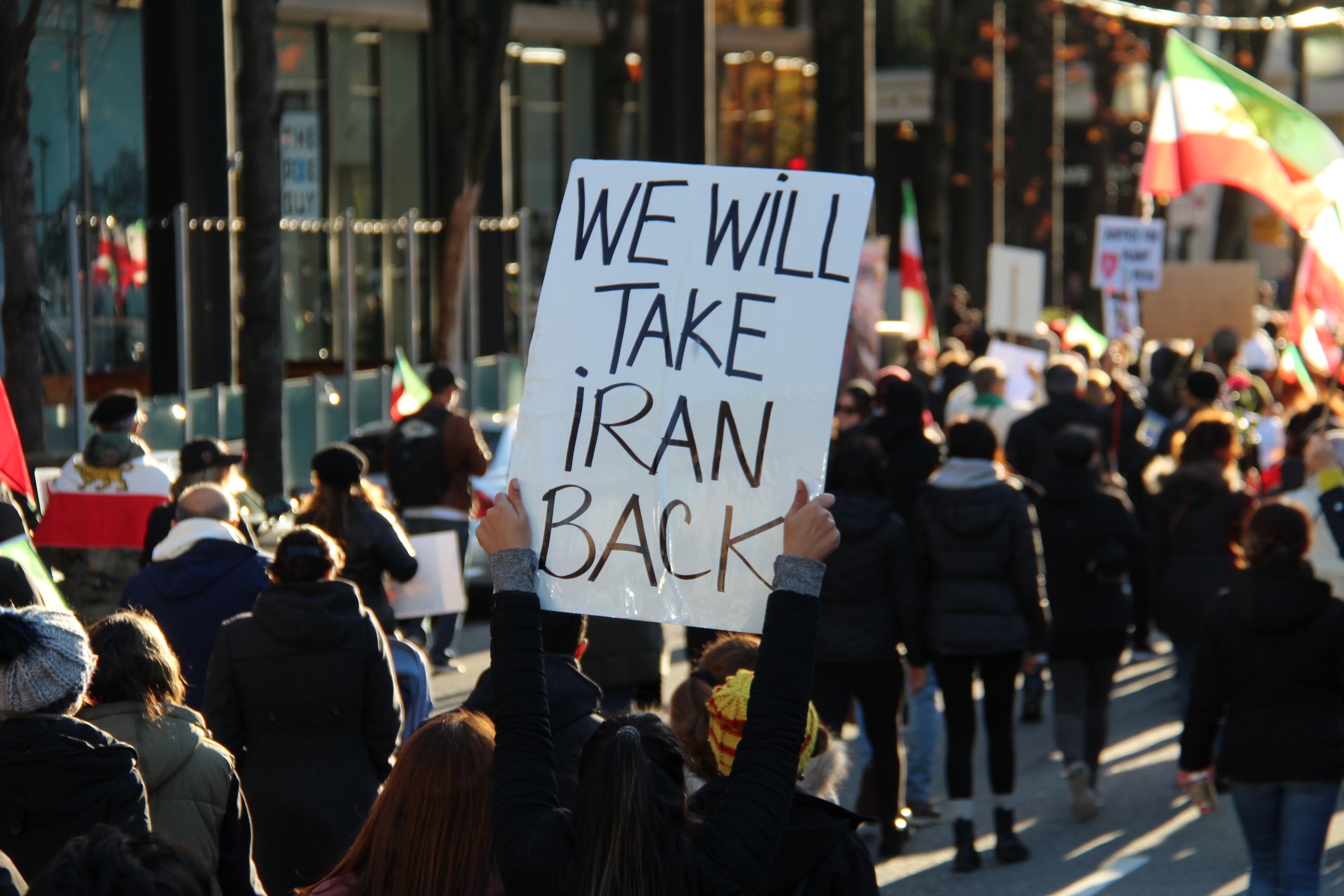
Washington has spent years arguing that Iran must not be allowed to develop an unrestricted enrichment capability. American service members, military assets, and taxpayers have carried the consequences of that policy. The Saudi agreement now creates a damaging question: Why should Tehran accept limits that Washington appears reluctant to impose on Riyadh?
Saudi Arabia and Iran are not identical cases. They have different relationships with the United States, different records, and different strategic positions. Nuclear technology, however, does not become harmless because it belongs to an American partner.
If Washington treats enrichment as intolerably dangerous in Iran but potentially manageable in Saudi Arabia, Iranian officials will accuse the United States of applying political rules rather than universal nonproliferation standards.
That perception could undermine future negotiations. It could give Iranian hardliners an argument for maintaining sensitive nuclear capabilities. It could also make diplomatic settlements harder to defend before the Iranian public.
Americans could then face the consequences through higher defense spending, increased threats to U.S. forces, disrupted oil markets, and another prolonged Middle Eastern confrontation.
Republicans say America needs Saudi Arabia, but partnership is not protection.
Republican lawmakers have emphasized the strategic importance of working with Riyadh. Representative Tim Burchett of Tennessee said the United States needs allies as long as their activities can be verified. Representative Mark Alford of Missouri argued that Saudi cooperation remains valuable during the conflict with Iran, while also supporting a congressional role in reviewing the agreement.
The strategic case is understandable. Saudi Arabia influences global energy markets, controls critical territory near major shipping routes, and remains an important counterweight to Iran. But calling Saudi Arabia a partner does not eliminate the need for enforceable restrictions. Saudi and American interests overlap in some areas and diverge in others.
Riyadh makes decisions based on the survival and ambitions of the Saudi state, not on the financial security of American families or the safety of U.S. troops. Washington therefore needs more than friendly assurances. It needs inspection rights, fuel controls, termination clauses, and permanent restrictions that remain effective during periods of disagreement.
The promise of American jobs may conceal public financial risk.
The administration says the agreement could support high-paying American jobs and revive the domestic nuclear industry. American reactor companies, engineers, fuel suppliers, and construction firms could benefit. Westinghouse is considered a possible reactor supplier, although Saudi Arabia has not publicly announced a final award.
The jobs argument will resonate with communities that have watched manufacturing opportunities move overseas. Yet Americans should ask who carries the financial risk if projects stall, costs explode, or political conditions change.
Nuclear plants are among the most expensive and complicated infrastructure projects in the world. They can require years of planning, licensing, construction, and workforce development before producing electricity. The administration’s broader nuclear-export strategy discusses leveraging agencies such as the Export-Import Bank and the U.S.
International Development Finance Corporation. No complete Saudi financing package has been announced, but Congress should determine whether federal loans, guarantees, insurance, or other public support will eventually be requested.
If private companies receive the contracts while public agencies absorb substantial risks, Americans could end up backing a foreign nuclear program without sharing proportionately in its profits.
Trump’s Israel condition makes the agreement look improvised.
President Trump complicated the deal one day after its announcement by saying Saudi Arabia must join the Abraham Accords and normalize relations with Israel before nuclear cooperation proceeds. The condition was not mentioned in the Energy Department’s original announcement. Trump later said it had always been understood, although he acknowledged that he had not discussed it with Secretary Wright before the agreement was signed.
That sequence raises disturbing questions about coordination inside the administration. Did American negotiators sign a nuclear agreement without confirming the president’s most important political condition? Did Saudi officials understand normalization to be mandatory? Is the requirement legally written into the agreement, contained in a side letter, or merely attached through a presidential statement?
Saudi Arabia insists that it will not recognize Israel without an irreversible path toward Palestinian statehood. Israel’s current political leadership has resisted such a commitment. The administration may therefore have attached the nuclear deal to a diplomatic condition that cannot presently be satisfied.
If Riyadh rejects the requirement, the agreement could stall. Saudi Arabia could then turn to China or Russia, giving Washington less influence over the program the deal was supposed to control. That is not strategic clarity. It is a dangerous level of uncertainty surrounding nuclear technology.
Americans deserve safeguards, not another Washington sales pitch.
Saudi Arabia has legitimate reasons to seek nuclear power. It wants reliable electricity, greater energy diversification, and more oil available for export. American companies have legitimate reasons to compete for that business. None of those interests requires Washington to accept weaker safeguards. The danger is not that Saudi Arabia will build a nuclear weapon tomorrow.
The danger is that the United States could help create the infrastructure, expertise, and political precedent that make a future weapons decision easier. Americans could bear the consequences through larger defense budgets, volatile energy prices, threats to U.S. troops, and another Middle Eastern crisis that Washington insists nobody could have predicted.