A routine city commission meeting in Florida turned into a heated religious confrontation after Christian protesters began loudly reciting the Lord’s Prayer while a Muslim imam attempted to deliver the opening invocation.
The dramatic scene unfolded on Monday, November 16, 2026, inside Bartow City Hall in Polk County, Florida. What should have been a brief opening prayer became several minutes of shouting, religious chants, police intervention, and a debate over religious freedom.
Some attendees reportedly shouted “Christ is King,” while others repeatedly recited the Lord’s Prayer as Imam Sajid R. Bhuiya stood at the podium.
Videos of the incident quickly spread online, attracting attention far beyond the small Florida city.
But some viral posts leave out an important detail. Despite the interruptions, the imam eventually completed his prayer.
Florida’s Voice+2
A City Meeting Takes an Unexpected Turn
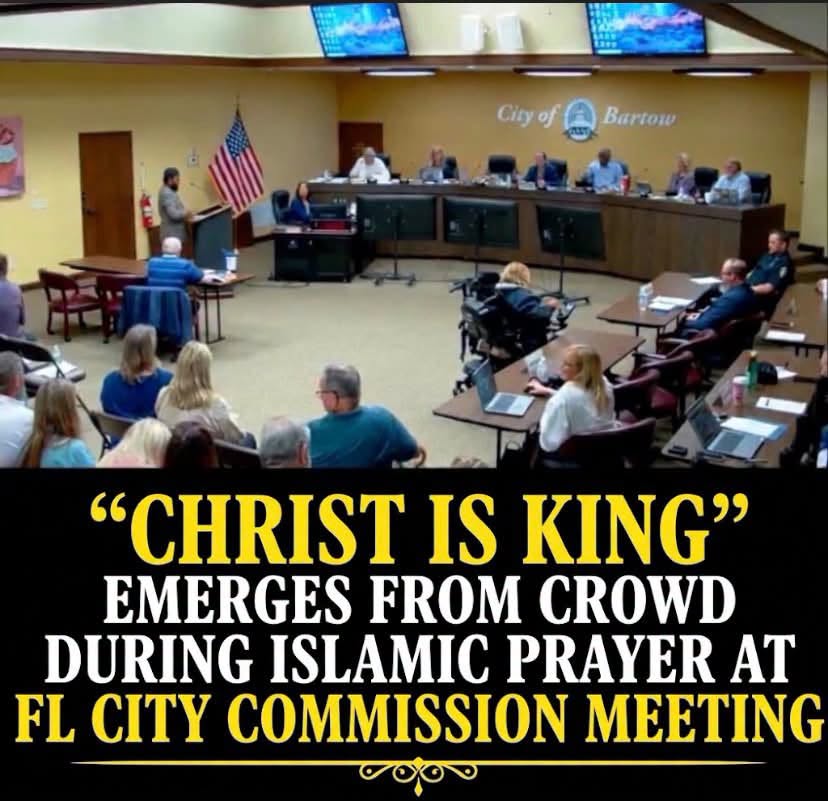
The Bartow City Commission had scheduled its regular meeting for 6 p.m. at City Hall, located at 450 North Wilson Avenue.
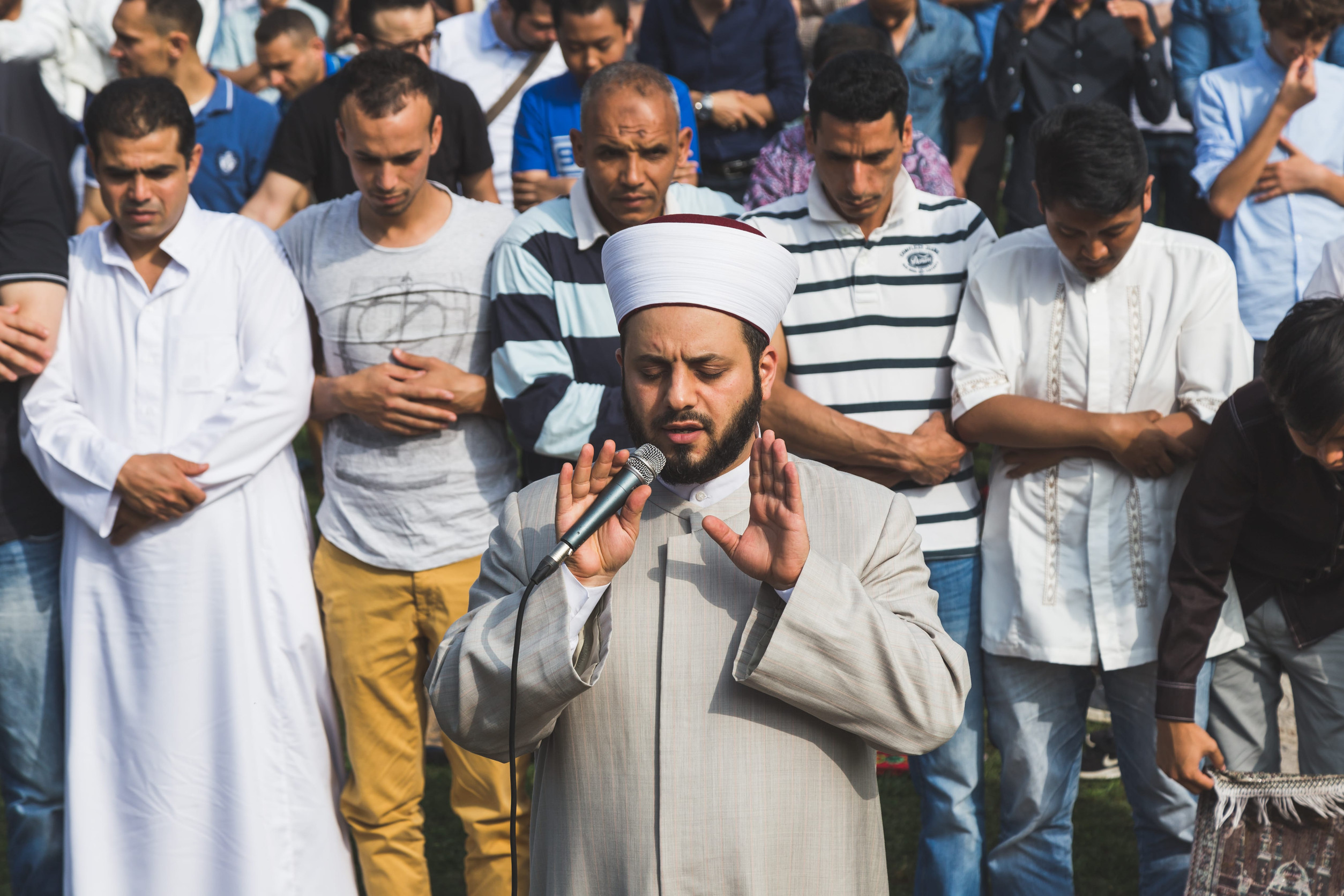
Imam Sajid R. Bhuiya, a religious leader associated with Bartow’s Masjid Al Nur Mosque, was assigned the opening invocation.
However, the decision to include a Muslim religious leader had already generated controversy before the meeting began.
According to local reporting, news of the planned invocation circulated on social media, prompting objections from people who opposed having an Islamic prayer at the government gathering.
By 5:16 p.m. on the day of the meeting, Commissioner Trish Pfeiffer said city officials had received 214 emails concerning the invocation.
That number reflected the level of public attention, although it did not establish how many messages supported or opposed the decision.
When Bhuiya approached the podium, the tension became impossible to ignore.
Audience members began reciting the Lord’s Prayer before he could properly begin his invocation.
Even when the room briefly quieted, the interruptions resumed as he attempted to speak.
Fox News+1
Protesters Chant as Police Step In
The confrontation continued for several minutes, with attendees repeating Christian prayers and shouting religious declarations.
Florida’s Voice reported that some protesters shouted “Christ is King,” while other accounts described chants of “Jesus is King” and “USA.”
At one point, someone in the audience reportedly shouted, “Go back where you came from.”
City officials repeatedly asked attendees to remain respectful and allow the meeting to continue.
But the interruptions persisted.
Bartow police eventually escorted some disruptive attendees from the commission chambers.
City communications director Laurie Hayes later explained that those who refused to remain silent were removed peacefully.
No arrests were reported.
Estimates of the disruption’s duration varied, with local accounts placing it at about eight to ten minutes before the imam could proceed.
The confrontation was certainly unusual for a government meeting. Yet the incident also raised a question that extends beyond Bartow: Where does the right to religious expression end when it interferes with someone else’s opportunity to speak?
christianpost.com+1
Why Was a Muslim Imam Invited?
One of the biggest questions surrounding the controversy involved how Bhuiya became the scheduled invocation speaker.
Bartow City Attorney Sean Parker explained that the situation developed after a representative of a local Hindu temple expressed interest in delivering an invocation.
Parker subsequently suggested contacting Bartow’s mosque.
The city has traditionally opened commission meetings with Christian-rooted prayers. However, officials maintained that the opportunity was available to religious leaders from different faiths.
In a statement following the incident, city officials emphasized that opening invocations were not restricted to Christians.
They said allowing different religious traditions to participate was consistent with the Constitution.
Vice Mayor Laura Simpson also explained that excluding one religion could ultimately threaten the opportunity for Christian prayers.
For city officials, the issue was not necessarily about replacing Christian traditions. It was about whether a government meeting offering religious invocations could fairly exclude certain faiths.
AOL+2
Christian Organization Explains Why Protesters Attended
Robert Goodman, southeast regional director of Citizens Defending Freedom, confirmed that his organization participated in the gathering.
Speaking with Fox News, Goodman estimated that approximately 100 people from different groups attended.
However, that figure was his estimate rather than an independently verified attendance count.
Goodman said his organization believed Christian voices deserved to be heard on issues affecting local communities, families, and freedoms.
He also distanced the organization from insulting remarks made during the confrontation.
His explanation highlighted an important distinction between peacefully expressing religious objections and verbally attacking another individual.
The meeting also revealed that Christians themselves were not united in their reactions.
Some attendees opposed the Islamic invocation, while others defended the city’s decision to allow different religious traditions to participate.
Fox News+1
The Imam Responds With a Message of Respect
Despite the disruptions, Bhuiya eventually delivered his invocation.
His message focused on dignity, kindness, and respect between people from different backgrounds.
Rather than responding to the shouting with another confrontation, he used his opportunity to emphasize shared humanity.
In a subsequent interview with Tampa Bay 28, Bhuiya said the invitation had been an honor.
He also explained that his message was intended for people of every background, regardless of their language or culture.
Interestingly, the imam reported receiving supportive messages from pastors, rabbis, and residents following the incident.
One Bartow resident who witnessed the confrontation also criticized the disrespectful behavior, explaining that she found it troubling as a Christian.
These reactions showed that the public response was more complicated than a simple disagreement between Christianity and Islam.
Tampa Bay 28 (WFTS)
Religious Freedom Debate Reaches Beyond Bartow
The controversy has also attracted attention from the Freedom From Religion Foundation, which urged Bartow officials to discontinue opening commission meetings with religious invocations.
In a letter dated November 18, the organization condemned the disruption while arguing that removing government-sponsored prayers could prevent similar disputes.
However, existing Supreme Court precedent permits certain legislative prayer practices.
In its 2014 decision in Town of Greece v. Galloway, the Supreme Court upheld a town’s legislative prayer tradition while emphasizing the importance of nondiscrimination.
That means government bodies may allow religious invocations without restricting participation exclusively to one faith.
At the same time, Florida law allows public bodies to maintain order during official meetings.
The practical distinction is straightforward: people can express disagreement, but public participation does not automatically include a right to prevent scheduled speakers from being heard.
Freedom From Religion Foundation
What Happens Next?
As of November 21, no confirmed lawsuit or official change to Bartow’s invocation policy had emerged from the available reporting.
The incident has nevertheless become part of a wider conversation about faith, public meetings, and the responsibilities that come with religious freedom.
For some protesters, the gathering represented a public defense of Christian beliefs. For others, the interruption demonstrated why government institutions must protect equal participation.
And perhaps the most memorable part of the entire confrontation was what happened after the shouting.
The imam still delivered his prayer.
What began as an attempt to stop one religious leader from speaking ultimately brought national attention to the very principles of religious liberty, respect, and fairness that his invocation emphasized.