A New Jersey mother of four is drawing attention with an unusual domestic decision: she says she is giving up her bed until marriage and plans to turn her bedroom into a war room for prayer. The announcement brings two private subjects, marriage and faith, into the same physical space. A bed carries associations with rest, intimacy and family life; a prayer room signals a deliberate change in how a room will be used.
The plan is attributed to TikTok creator @jesuslovesjasleen in the creator’s TikTok post.
The bedroom is becoming part of the declaration
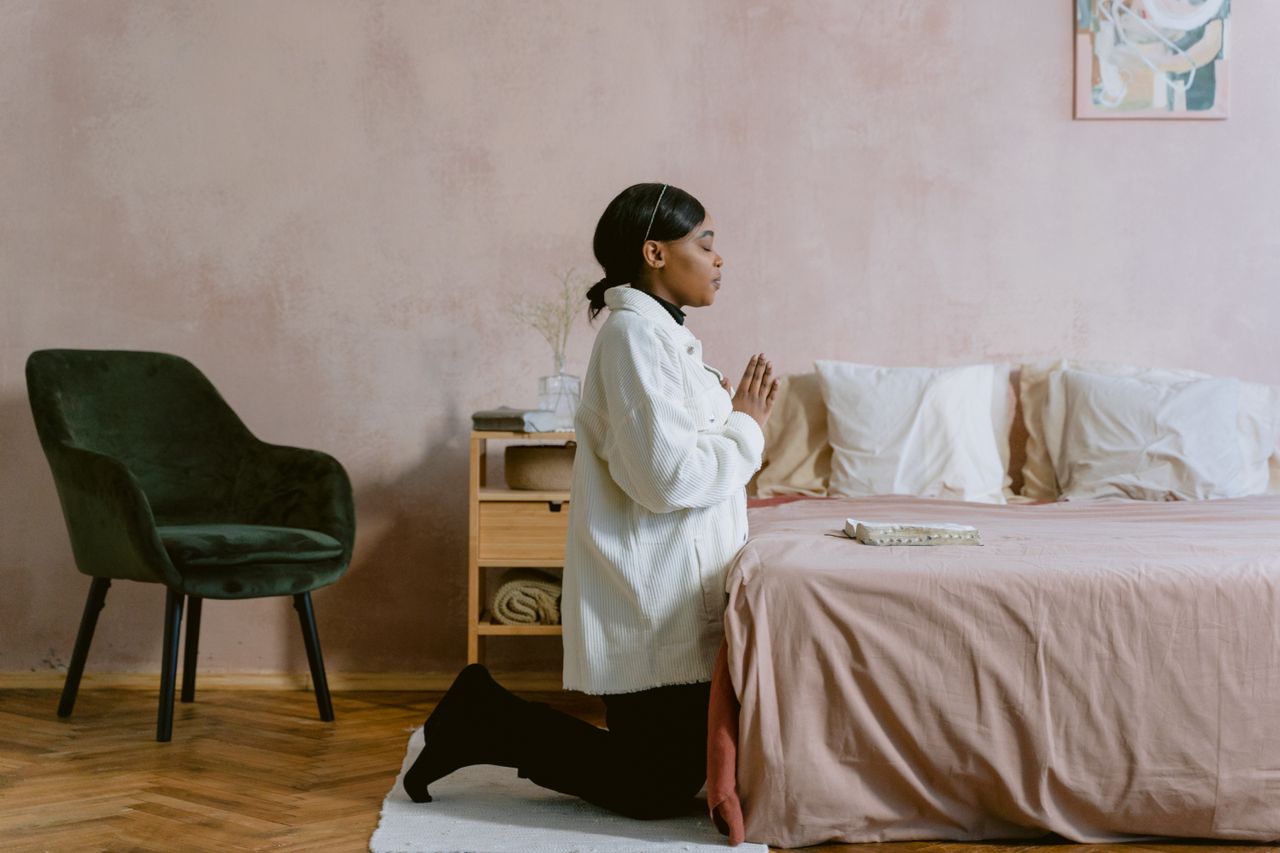
Giving up a bed until marriage is a personal boundary with a visible consequence inside the home. The mother is linking that conviction to a room she intends to devote to prayer. Her stated plan gives the bedroom a second identity, built around religious practice and a condition attached to marriage.
Bedrooms serve practical needs such as sleep, privacy and daily routines. A prayer-focused room adds another purpose. A bed can carry symbolic weight, yet it cannot certify a person’s character or predict the success of a future marriage.
The public details do not explain whether the room will contain a bed, whether another family member will use it, or what the children will be allowed to do there. Assumptions about her relationship status or household rules would go beyond the available information.
Marriage still shapes American households, even as it happens later
The decision arrives in a country where first marriages are taking place at older ages than they did several generations ago. U.S. Census Bureau data show that the median age at first marriage rose from 22.5 for men and 20.3 for women in 1960 to 30.8 for men and 28.4 for women in 2025. The Census marriage-age chart tracks the long climb across more than six decades.
The figures offer national context, not details about this household. They cannot establish how long the creator intends to keep her rule or what marriage means in her personal life. They do show how much later the milestone now arrives for many Americans.
Marriage remains a major household arrangement. Census Bureau data for 2024 counted about 61.98 million married-couple households and 9.59 million cohabiting-couple households. The Census household estimates show that American households include both formal marriages and couples living together outside marriage, with married couples still substantially more numerous.
The figures place her decision within a country where marriage remains common and nonmarital partnerships are established parts of family life.
Americans do not agree that marriage defines a successful life
A 2023 Pew Research Center survey of 5,073 U.S. adults found that only 23% considered being married extremely or very important to living a fulfilling life. Having children received a similar response from 26% of adults. Job satisfaction ranked much higher at 71%, followed by having close friends at 61%.
The Pew family survey also found that nine in ten adults considered a married husband and wife raising children together completely acceptable. Six in ten said the same about a single parent raising children alone. The findings reveal broad acceptance of married parenting, alongside a smaller share who regard marriage as essential to personal fulfillment.
The New Jersey mother appears to be setting a standard for her own life and bedroom. The available information does not show her telling other women, couples or parents to follow it. A private religious commitment can be deeply meaningful even when the wider public gives marriage a different place in its priorities.
Prayer remains meaningful to millions of Americans
Religious practice offers another part of the context. Pew Research Center’s 2023-24 Religious Landscape Study found that 62% of U.S. adults identify as Christian, while 29% identify as religiously unaffiliated. The study also found that 44% of adults pray at least once a day, down from 58% in 2007.
Women reported daily prayer more often than men, at 50% compared with 37%. Prayer remains a regular practice for a sizeable share of the country, although it is far from universal. The Pew religion findings show how widely religious identity and habits differ across the United States.
The plan sits within a recognizable American religious culture and represents an individual expression of it. A dedicated prayer space is a domestic choice whose meaning comes from the commitment she has stated.
The unanswered questions are practical
Turning a bedroom into a prayer space can become complicated in a busy household. Four children mean a home has competing needs for privacy, storage, rest and shared space. The available description does not say how the mother will balance those demands or whether the room will be used exclusively for prayer.
The public has not been given enough information to know whether giving up the bed means sleeping elsewhere, removing it or changing how the room is used. Those are materially different arrangements and should not be presented as fact without the creator explaining them.