Every family has that one dish. It shows up every November in the same baking pan, gets passed around the table with polite smiles, and somehow the pan always comes back empty.
A reader told Slate’s parenting advice column Care and Feeding on Nov. 23, 2026, that the whole family has pretended for years to love an aunt’s green bean casserole, and even makes sure to eat all of it so there are no leftovers. The writer called the dish “a mushy, over-salted mess” and asked whether there is a gentle way out.

The Letter: A Sweet Aunt and a Casserole Nobody Likes
In the Care and Feeding letter, answered by columnist Arionne Nettles, the writer describes a “sweet aunt” who makes green bean casserole for Thanksgiving every year. The trouble is the casserole itself. The writer says it is “not very good” and “kind of gross,” yet the family always tells the aunt they love it.
The family goes further than a polite compliment. According to the letter, relatives clean out the dish every year so there are no leftovers to give the game away, a charade the writer says has run for years. The writer asked whether there is a gentle way to get the aunt to change her recipe or stop bringing the casserole, and whether “some things” are “worth tolerating for the sake of family.”
The Kids Are the Only Honest Ones
The funniest line in the letter belongs to the children. The writer says the only honest people in the family are the kids, who often deny taking any casserole at all. Their parents, the writer says, “demurely chalk up” that refusal to the kids being “picky eaters.”
It is a familiar scene, and it sits right alongside the strange Thanksgiving traditions everyone pretends are not weird. Holiday tables run on small fibs like this, and the green bean casserole may be the most famous dish to carry one. It belongs on the list of odd American traditions that confuse the rest of the world, too: a side made from canned soup and crispy onions that families defend with real feeling.
Families have argued over far less, as the list of things families argue about at Thanksgiving dinner shows. Keeping the peace over one casserole is, in its way, part of a slower approach to the pace of the holidays.
Why This Casserole Carries So Much Weight
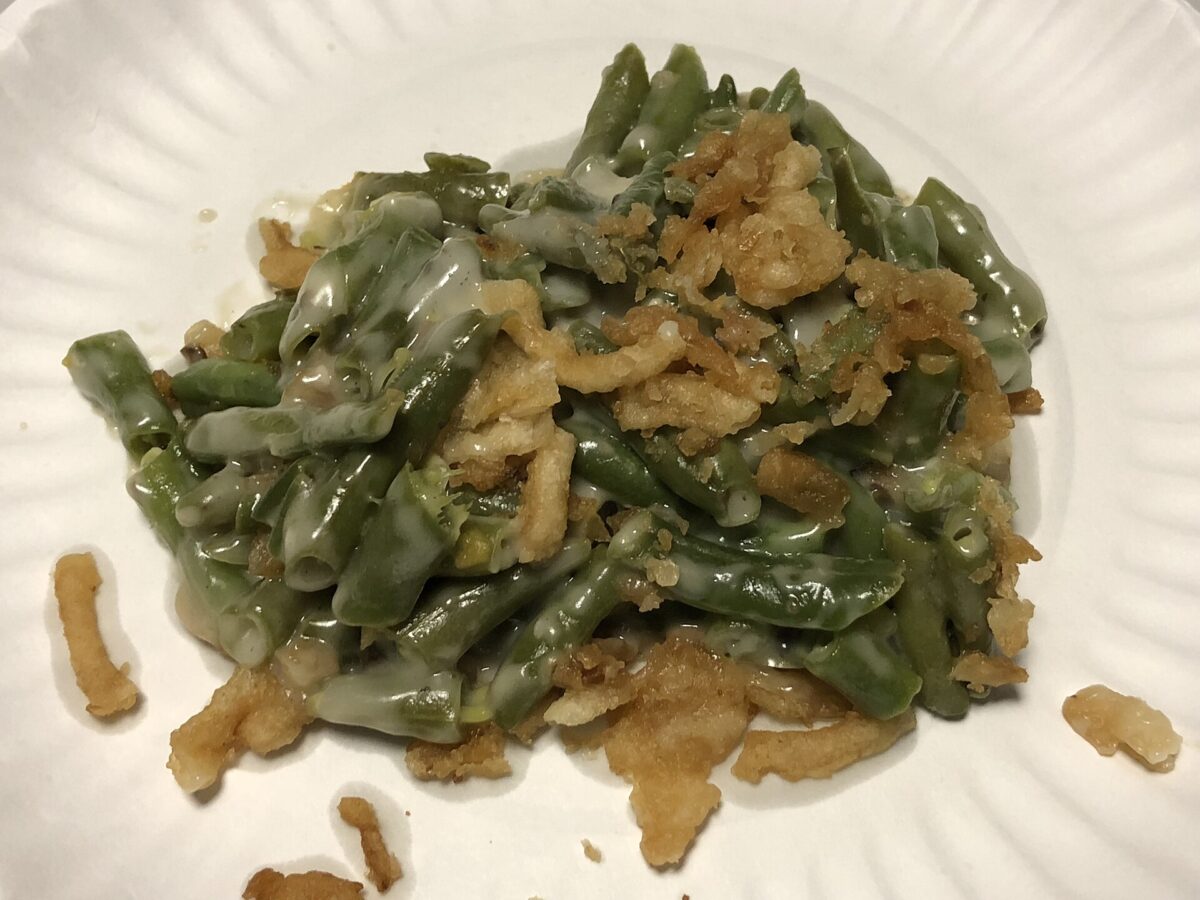
Few side dishes come with this much history. Green bean casserole is built on green beans, cream of mushroom soup and crisp fried onions, and it spread across the country from a recipe printed on soup cans starting in the 1950s. Campbell’s estimated in 2020 that it was served at 20 million Thanksgiving dinners each year. Cooks who prefer fresh beans to canned ones can even freeze fresh green beans ahead of the holiday.
The recipe was created in 1955 by Dorcas Reilly in Campbell’s test kitchen, and she was later nicknamed the “Grandmother of the Green Bean Bake.” Smithsonian noted that the dish was first called “Green Bean Bake” when it appeared on the cans. More on that story appears in four facts about the 1955 Campbell’s casserole and in this site’s look at how 2 Thanksgiving casseroles became family classics.
A recipe that old tends to become a family signature, which is exactly why a relative may not take kindly to a request to change it. The holiday rush rarely leaves room for a delicate recipe conversation, either, which may be why this family kept smiling and passing the dish.
What Care and Feeding Advised
Nettles took the aunt’s side, gently. She wrote that the aunt seems to enjoy being part of the celebration by contributing, and that it probably makes her happy to bring something she thinks the family enjoys. “There’s really no harm in allowing her to keep up the tradition,” she wrote.
She also offered a way to redirect the aunt’s effort. If the aunt has a better recipe, Nettles suggested praising that one instead, using a pound cake as the example, and asking her to bring it because the table is short on sweets and the kids would love it. Another option: invite the aunt to help cook the meal itself, since an extra pair of hands on Thanksgiving is rarely turned down.
If neither idea works, the columnist’s last word was simple: let her bring the casserole. “No one’s getting hurt,” Nettles wrote, adding that the family could quietly dispose of it bit by bit and the aunt would still feel proud of her contribution.
A Few Kitchen Notes for Thanksgiving Week
For families who do end up with leftover casserole this year, the USDA’s Food Safety and Inspection Service says cooked leftovers should go into the refrigerator within 2 hours and be eaten within 3 to 4 days, or frozen for longer storage.
And for anyone uneasy about the columnist’s suggestion to quietly toss some of it, the EPA’s food management guidance ranks feeding people and composting well above sending food to a landfill. A small scoop on each plate, rather than a heaping one, is one easy way to keep less of it from going to waste.
In the end, the letter is less about green beans than about family. The aunt gets to feel useful, the family gets a peaceful dinner, and the kids keep telling the truth. With Thanksgiving falling on Thursday, Nov. 26, the same quiet choice is coming to holiday tables this week: smile, redirect or simply pass the pan down the table.
This article was produced with AI assistance and edited for accuracy against the sources linked above.