TikTok creator @hannuhbug says a person she knows reported that nine-year-old boys are performing a seal slap, a hit to a classmate’s private parts, and that girls are dreading the school day because of it. She adds that the school has done nothing, which is the part that lit the fuse.
She names no school, district or student, and a search for independent reporting on this specific trend turns up nothing.
If the account is true, a child is being touched without consent at recess. If it is exaggerated, parents are about to spend a week panicking over a rumor, and history says that happens more than anyone admits.
What the creator is claiming, and what she is leaving unproven
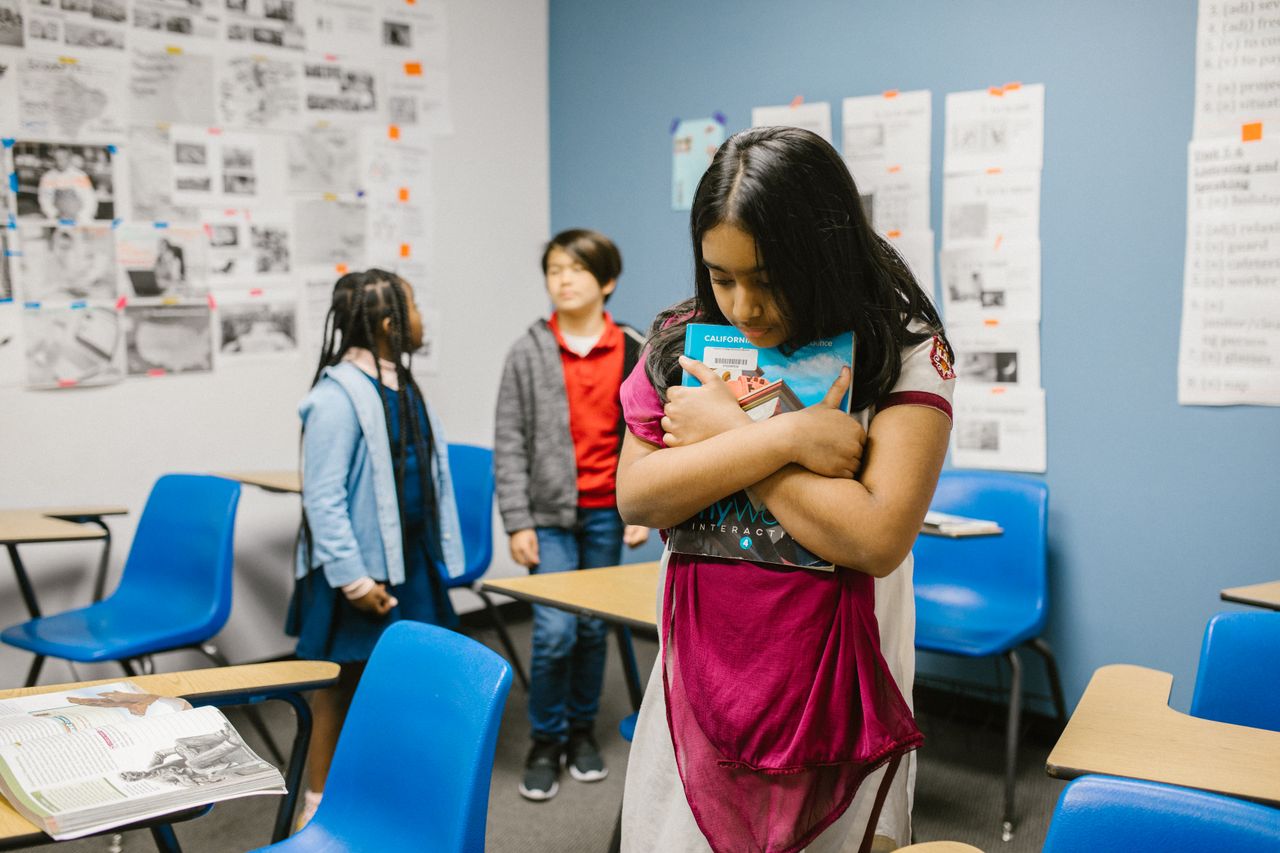
Image Credit: RDNE Stock project/Pexels
Her video makes four claims. Boys are doing it repeatedly, girls are anxious enough to avoid class, administrators are ignoring it, and the behavior is copied from something children watch online. She also calls it grooming and says it is how rape culture starts.
Only the first three are things a school could confirm or deny. The online-origin theory has no evidence behind it yet, and I would be careful with it. Children invent cruel playground games without help from a screen, and adults have blamed new media for old behavior for a very long time.
Her sharpest line is aimed at parents rather than the school. She says the responsibility to teach body boundaries sits at home. That is half right, and the half that is wrong gets its own section below.
The panic playbook is older than TikTok
In fall 2021, school districts across the country warned families about a ‘slap a teacher’ challenge supposedly spreading on TikTok. Researcher Jazilah Salam at Harvard’s Shorenstein Center later looked at the coverage and told Insider that not one article she reviewed cited direct evidence of the challenge on the platform.
Warning letters went home anyway. One real incident at a South Carolina elementary school got folded into a trend that, by every later account, did not exist in the form described.
None of that proves the seal slap story is false. It proves that a vivid claim about children, repeated by worried adults, can travel faster than anyone can check it. Parents should hold two thoughts at once: act on the behavior, and slow down on the label.
Nearly half of older students report harassment, and most never tell an adult
The best national numbers cover older kids, not nine-year-olds, so treat them as context rather than proof. The American Association of University Women surveyed 1,965 students in grades 7 through 12 for its Crossing the Line report and found that 48 percent had experienced sexual harassment during the 2010-11 school year.
Girls took the brunt, with 56 percent of girls reporting at least one incident compared with 40 percent of boys. Physical contact was less common than comments or texts. Thirteen percent of girls and 3 percent of boys said they had been touched in an unwelcome sexual way.
The reporting numbers are the ugliest part. Only 9 percent of targeted students told a teacher, counselor or other school adult, which means the typical principal hears about a small slice of what happens in the hallway.
Why a kid hits, and why the answer is rarely malice
The same survey asked students who admitted harassing someone why they did it. 44% said it was no big deal, and 39% said they were trying to be funny.
That is the most useful and least comfortable finding for this story. The behavior often does not feel like harm to the person doing it, and the person receiving it does not get a vote. A nine-year-old who thinks a stunt is hilarious can still leave a classmate wanting to stay home, and that outcome is what matters at the school office.
The ‘boys will be boys’ defense collapses right here. It treats intent as the only thing worth measuring, and it asks the girl to absorb the cost of a joke she never agreed to.
What child development experts say counts as a problem
Most adults assume any sexual behavior in a young child signals abuse, and the research is more careful than that. The National Child Traumatic Stress Network says ordinary childhood curiosity tends to be spontaneous, infrequent, voluntary and easy to redirect when an adult explains the rules.
Behavior crosses the line when it involves threats, force or aggression or provokes strong reactions like anger or anxiety in the child on the receiving end. A repeated ambush that leaves girls dreading school fits that second description on its face, if it happened as described.
The network’s guidance also complicates the grooming label. Children with sexual behavior problems do not always have an abuse history, and some have no known trauma at all. Jumping from a playground hit to a predator pipeline is a leap the evidence does not support, however satisfying it feels to say.
What to do in the first five minutes
The Child and Parent Resource Institute in Ontario, whose sexual behaviours team publishes guidance for caregivers of children under 12, gives a plain sequence. Stay calm, stop the behavior and separate the children so everyone is safe.
It also warns that adults tend to either minimize or overreact, depending on their own values. Both mistakes are common and both are costly. A shrug teaches the child nothing, and a meltdown teaches the child to hide it next time.
My take is blunter. If your son is doing this, the conversation should be short, specific and boring in tone: nobody touches another person’s private parts, ever, and a laugh is not permission. If your daughter is on the receiving end, believe her the first time and write down dates before you call the school.
The school cannot hide behind the parents
The creator tells parents the problem is theirs and not the school’s. Federal law disagrees. Title IX covers sexual harassment as a form of sex discrimination, and AAUW notes that it applies to all education programs, K-12 included.
Schools also have a documented habit of undercounting. AAUW’s analysis of federal civil rights data found that 79 percent of schools with grades 7 through 12 reported zero incidents of sexual harassment. Either those campuses are remarkably safe or the reporting systems are failing, and the survey numbers above point to the second explanation.
Parents who want a paper trail should send the complaint in writing and name the conduct plainly. A vague email about some kids being mean gives an administrator room to do nothing, and a dated message about repeated unwanted touching does not.
The police report advice is a harder call
The creator urged students who are being hit, and whose school is not acting, to file a police report. Her anger is understandable, and I would still slow down on the instruction for a nine-year-old defendant.
A 2007 Oregon case shows how quickly this goes sideways. Two 13-year-old boys in McMinnville were arrested for slapping girls on the rear at school, and court papers said they faced possible juvenile detention and sex offender registration, even though some girls said it was a game. Many people reading that story concluded the punishment outran the conduct, while others thought the girls who were uncomfortable got lost in the shuffle.
Both reactions point to the same lesson. Criminal charges are a blunt tool against children, and the first demand should be a documented school response with consequences, a safety plan for the girls and counseling for the boys. If that fails, a police report becomes a reasonable next step, and a parent can take it knowing exactly why.
What works better than a viral warning
Schools are not helpless once they decide to act. In a Department of Justice-funded trial of a program called Shifting Boundaries across 30 New York City middle schools, schools that adopted it saw 26 to 34 percent fewer instances of sexual harassment after six months. The program works by mapping the spots where students feel least safe and changing how adults patrol them.
For one family on one evening, the checklist is shorter. Ask your child directly whether anyone touches classmates without asking, and listen for the answer that sounds like a joke. Then ask what the teacher did the last time it happened, because the reply will tell you more about your school than any handbook.