A 5:30 p.m. dinner reservation is routine in many American towns, but Spain keeps a later clock. Visitors who plan meals around a U.S. schedule can arrive at a restaurant long before the dining room is ready for them.
According to spain.info, Spain’s official tourism site, restaurants tend to serve lunch between 1 and 4 p.m. and dinner between 8 and 11:30 p.m. A table requested at 5:30 p.m. falls outside both windows, and the rest of the site’s page shows how the day around those meals is arranged.
Lunch Is Served From 1 to 4 p.m.
The tourism board describes lunch as a three-hour window that opens at 1 p.m. and closes at 4 p.m. For an American used to a noon sandwich, that puts the main meal of the day well into the afternoon.
Wikipedia’s entry on Spanish cuisine describes the same pattern from the table side. The large midday meal, it says, starts around 2 or 2:30 p.m. and ends around 3 or 3:30 p.m., and it is often followed by sobremesa, the custom of staying at the table for conversation after the meal. Wikipedia adds that coffee, tea or a small liqueur often accompanies it. Set side by side, the two sources describe a lunch that belongs to the early afternoon rather than to noon.
The practical effect is a long, unhurried midday. A diner who walks in at 1 p.m. is early by one description and right on time by another, and either way the kitchen is working through a window that stays open for three hours. Arriving at 12 p.m. means arriving before lunch service is expected to begin.
Breakfast is the flexible meal. Spain’s tourism site says it is usually available at any time between 7 a.m. and noon, so a slow start does not cost a visitor a morning meal.
Anyone packing for the trip may want to read craftingyourhome.com’s list of 6 things never to post on social media before a holiday trip and its 8 things never to do before leaving home for Thanksgiving travel. The tourism site’s hours are typical ones, and individual restaurants set their own, so a posted sign always settles the question for that door.
Tapas Fill the Hour Before Lunch
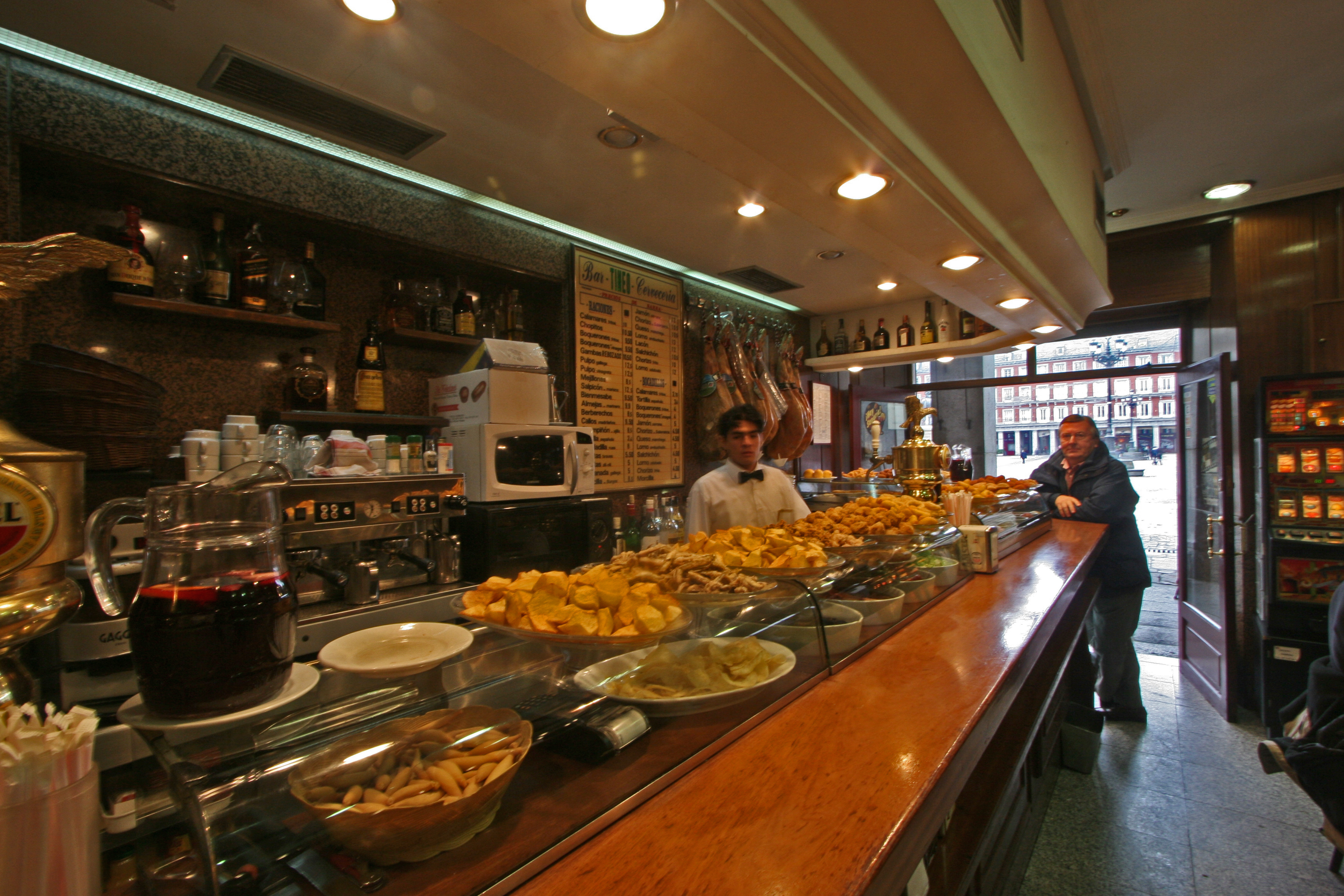
Between noon and 2 p.m., spain.info says, it is very typical to go for a drink or have tapas with friends before eating. The word has a simple origin. Wikipedia’s page on tapas says it comes from the Spanish verb tapar, meaning to cover, and that a single small plate is called a tapa. Tapas can be served hot or cold and can be combined into a full meal.
For a hungry traveler, that makes the late morning the practical time for a first bite. Frenz Hub has a post on laws and rules about food in other countries, a reminder that table customs change quickly from one border to the next.
Dinner Runs From 8 to 11:30 p.m.
Spain’s tourism site puts dinner between 8 and 11:30 p.m. and adds that in big cities and during the summer it is normal for dinner to be served until 11:30 p.m. Wikipedia’s Spanish cuisine entry gives a similar range for cena, the evening meal, between 8:30 and 11 p.m., usually one course followed by dessert.
The gap between lunch and dinner has its own custom. Wikipedia describes merienda, an afternoon snack at about 6 p.m. that resembles afternoon tea, with coffee, something sweet, a sandwich or fruit. That snack is the practical answer for anyone whose stomach is still running on a 5:30 p.m. dinner habit.

Anyone building a first trip around those hours can browse Frenz Hub’s list of top-rated Europe city breaks, and Frenz Hub’s post on dining etiquette mistakes Americans commonly make covers the manners side of the table.
The late dinner window matters most for travelers with young children or early flights. A family that normally eats at 6 p.m. faces a gap of about two hours before the dinner window opens at 8 p.m., and by custom the merienda snack fills that gap. Planning a substantial lunch inside the 1 to 4 p.m. window, then a light snack around 6 p.m., matches the schedule the sources describe, and it leaves the late dinner as a smaller affair that starts when the restaurants start serving. Hotel front desks and local menus posted at the door confirm the exact hours for any single restaurant.
Shops Keep Their Own Hours Too
The tourism page also covers retail. The norm, it says, is for shops to open continuously from 10 a.m. to 9 p.m., though some close between 2 and 5 p.m., especially in summer, and Sunday is the normal day for shops and businesses to close.
Wikipedia’s article on the siesta notes that Spain’s midday break is thought to have started with farm workers avoiding summer heat, and that lunch breaks for many workers typically run from about 1 to 5 or 6 p.m., with afternoon work continuing until about 9 p.m. Outsiders, the article says, often misread this as Spaniards not working after lunch.
A Day Built Around the Spanish Clock
Put together, the board’s hours make a simple outline for an American visitor. Coffee and toast come any time from 7 a.m. to noon, tapas and a drink fit between noon and 2 p.m., lunch runs from 1 to 4 p.m., a small merienda carries the afternoon, and dinner begins at 8 p.m.
This article was produced with AI assistance and edited for accuracy against the sources linked above.
Image: Takeaway – CC BY-SA 3.0/Wikimedia Commons