Remember when ordering your favorite meal at a restaurant felt like a familiar ritual? You knew exactly what you wanted, whether it was a crispy potato side, a special burger, or a dessert you looked forward to after dinner. But restaurant menus rarely stay the same forever.
Across America, popular restaurant chains have quietly retired foods that once attracted loyal customers. Some disappeared because restaurants wanted simpler menus, while others required more prep time or didn’t fit changing business plans. A few have even returned for limited periods, giving longtime customers a brief chance to enjoy them again.
The interesting part is that some of these foods are still remembered years after their final appearance. Here are 10 once-popular foods that have largely disappeared from American restaurant menus.
McDonald’s McPizza
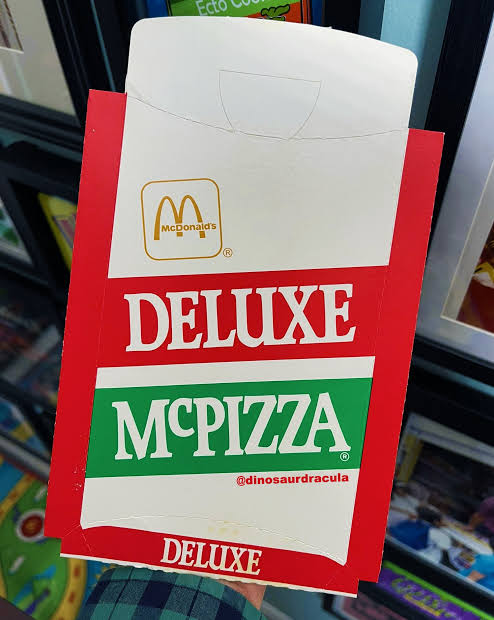
McDonald’s is famous for burgers, fries, chicken nuggets, and breakfast sandwiches. However, the fast-food giant once wanted to compete in the pizza business.
McDonald’s introduced the McPizza in the late 1980s, and it became one of the chain’s most unusual menu experiments. Customers could order personal-sized pizzas and, at selected locations, larger versions designed for sharing.
It seemed like an interesting idea. After all, pizza was already a popular American food, and McDonald’s had an established customer base.
Unfortunately, the product created an operational challenge. Unlike burgers and fries, which could be prepared relatively quickly, pizzas took considerably longer to make. This also created problems for the chain’s drive-through service, where speed was important.
McDonald’s eventually abandoned its nationwide McPizza experiment by 2000. A couple of restaurants continued serving it for several more years, with the last known holdouts ending sales in 2017.
Today, McPizza remains one of the most unusual discontinued items in the company’s history.
Popeyes Cajun Rice
For customers who wanted something different from fries or mashed potatoes, Popeyes Cajun Rice was once a familiar side dish.
The food had a distinctive Louisiana-inspired flavor, combining rice with ground beef, minced chicken gizzards, peppers, onions, and Cajun and Creole seasonings.
Unlike ordinary steamed rice, it was designed to be a flavorful accompaniment to Popeyes’ famous fried chicken. It also reflected the restaurant’s connection to Louisiana-style cooking.
Cajun Rice had been part of Popeyes’ menu since the chain’s early days in 1972. However, the restaurant eventually removed it in 2021 as part of an effort to simplify its offerings.
The decision disappointed customers who had grown accustomed to ordering it alongside their chicken.
In 2022, Popeyes briefly brought Cajun Rice back to celebrate its 50th anniversary. Unfortunately, the return was temporary.
For customers who enjoyed the original side dish, its disappearance remains one of the more memorable fast-food menu changes.
Wendy’s Fresh Stuffed Pitas
Wendy’s has built much of its identity around burgers, chicken sandwiches, fries, and its famous Frosty desserts. However, during the 1990s, the restaurant experimented with something a little different.
The Fresh Stuffed Pitas offered customers a convenient alternative to traditional sandwiches. They featured soft pita bread filled with chicken, vegetables, and different dressings.
One particularly memorable option was the Chicken Caesar Pita. It combined chicken, lettuce, Parmesan cheese, and Caesar dressing inside warm pita bread.
The idea gave customers another way to enjoy a quick meal without ordering a traditional burger.
Unfortunately, the Fresh Stuffed Pitas eventually disappeared from Wendy’s menus around the early 2000s. The restaurant moved on to other menu concepts and left the pita sandwiches behind.
Their disappearance is especially interesting because wraps and pita-style sandwiches are now familiar options at many restaurants. What once seemed like an unusual fast-food experiment might not look so unusual today.
Taco Bell Bell Beefer
Taco Bell is known for tacos, burritos, quesadillas, and other Mexican-inspired fast-food creations. But the restaurant once had a menu item that looked more like a traditional American sandwich.
It was called the Bell Beefer.
The sandwich featured Taco Bell’s seasoned ground beef served on a hamburger-style bun, creating something similar to a sloppy Joe. It was an unusual combination for a restaurant that had built its identity around tacos.
The Bell Beefer evolved from earlier versions of Taco Bell’s beef sandwiches and remained on the menu through different periods.
However, it eventually disappeared during the 1990s. Its removal was not welcomed by every customer. Some devoted fans reportedly organized restaurant sit-ins to protest the decision.
Although the sandwich briefly resurfaced in later years, it never returned as a permanent nationwide menu item.
The Bell Beefer reminds us that fast-food restaurants sometimes experiment with foods outside their usual categories. It also shows that customers can become surprisingly attached to products that a restaurant might consider secondary offerings.
McDonald’s Southwest Salad
For customers who wanted something other than a burger, McDonald’s once offered a selection of salads.
One of the most memorable options was the Southwest Salad, which brought together several ingredients associated with Southwestern-style cooking.
The salad included lettuce, black beans, roasted corn, tomatoes, shredded cheese, tortilla strips, and creamy Southwestern dressing. Customers could also choose grilled or crispy chicken.
It offered a different combination of textures and flavors from the traditional side salads commonly found at fast-food restaurants.
However, McDonald’s eventually removed its entire salad category from U.S. restaurants in 2020. The decision came as the company simplified restaurant operations and adjusted its menu.
For customers who regularly ordered the Southwest Salad, the change meant losing an option that differed from the chain’s usual burgers and sandwiches.
The salad’s disappearance also demonstrated how quickly restaurant menus can change, even when certain items have developed a loyal customer base.
McDonald’s McDLT
The McDLT was not just another burger. It came with an unusual serving concept that made customers assemble part of their meal themselves.
Introduced in 1984, the McDLT was designed to keep its ingredients at different temperatures. The hot beef patty and bottom bun sat in one section of the container, while the lettuce, tomato, cheese, and top bun were kept separate.
Customers would bring the two halves together before eating.
The idea was simple: keep the vegetables cool and the burger warm until assembly.
Although the concept attracted attention, its packaging became a major part of the product’s story. The burger came in a bulky polystyrene container, which became harder to justify as environmental concerns about such packaging grew.
The McDLT disappeared from McDonald’s menus around 1990.
Its unusual packaging and assembly method have since made it one of the company’s most recognizable discontinued products.
Burger King’s Cini-Minis
Not every discontinued restaurant favorite was a burger or sandwich. Some customers still remember a small breakfast treat from Burger King called Cini-Minis.
These bite-sized cinnamon rolls were served warm with icing. Instead of ordering a full-sized cinnamon roll, customers could enjoy several smaller pieces in one serving.
The product became a memorable breakfast option after its 1998 introduction. Its convenient size and sweet cinnamon flavor made it different from the usual breakfast sandwiches and hash browns.
However, Cini-Minis eventually disappeared from the regular menu in 2012.
The good news for longtime fans is that Burger King has occasionally brought the idea back. The cinnamon rolls received a limited nationwide revival in 2025, giving customers another opportunity to enjoy them.
Still, a temporary return is not the same as having a favorite breakfast item available whenever you want it.
Cini-Minis show how even relatively simple menu items can build a following that lasts long after their original run.
Dunkin’ Bagel Twists
Dunkin’ has spent years offering customers a variety of breakfast foods, from donuts and bagels to sandwiches and coffee.
One product that no longer has a regular place on its menu is the Bagel Twist.
Introduced in 2010, these products gave traditional bagels a different shape. Instead of the familiar circular form, they were twisted into portable snacks customers could enjoy on the go.
They came in different flavors, including chocolate chip and sour cream and onion. The cheddar-topped version was particularly memorable among customers who preferred savory breakfast options.
The idea was convenient for people looking for something different from a standard bagel or donut.
However, the Bagel Twists eventually disappeared as Dunkin’ continued to change and simplify its food offerings.
Their disappearance left some longtime customers wishing the restaurant would bring the product back.
It is another example of how a relatively small menu item can become a nostalgic favorite, even when a restaurant has plenty of other breakfast options.
McDonald’s McSalad Shakers
McDonald’s once came up with an unusual way to serve salads: instead of placing everything in a traditional bowl, the restaurant put the ingredients inside a tall plastic cup.
The product was called McSalad Shakers.
Introduced in 2000, the salads came in varieties such as Garden, Chef, and Grilled Chicken Caesar. Customers could add dressing, close the container, and shake everything together before eating.
The concept was designed to make salads easier to carry and mix, particularly for customers who wanted something convenient while traveling or eating on the go.
It was certainly different from the usual salad presentation.
However, McSalad Shakers didn’t stay on the menu for long. They disappeared around 2003 as McDonald’s moved toward a different selection of premium salads.
Although the product was relatively short-lived, it remains an interesting example of how restaurants try to make familiar foods feel new through different packaging and presentation.
McDonald’s Fried Apple Pies
For many longtime McDonald’s customers, the original apple pie was different from the version commonly served today.
When McDonald’s first introduced its apple pies in 1968, they were deep-fried. This gave the pastry a crisp, golden exterior surrounding a warm apple filling.
The fried version became a recognizable dessert for customers who wanted something sweet after their burgers and fries.
However, McDonald’s began replacing fried apple pies with baked versions across most U.S. locations in 1992.
The change meant customers no longer received the same crispy pastry they had become accustomed to ordering.
The baked version eventually became the familiar standard, but the original fried pie never completely disappeared from people’s memories.
Interestingly, the original version has occasionally returned. In June 2026, McDonald’s brought back its fried apple pie nationwide for a limited time as part of its America 250 celebrations.
That return demonstrated that an old menu item can still attract attention decades after its original replacement.
KFC Potato Wedges
For years, KFC customers could choose between different sides to accompany their fried chicken. Among the most recognizable were the restaurant’s thick, seasoned potato wedges.
Unlike ordinary thin fries, these wedges had a substantial potato center surrounded by a crispy, seasoned exterior.
They became a familiar part of the KFC meal experience for customers who preferred them over traditional fries.
However, in 2020, KFC replaced the long-running potato wedges with its Secret Recipe Fries.
The change meant customers who had ordered wedges for years had to choose something different.
The decision attracted attention from longtime fans, many of whom continued asking for the original side to return.
KFC eventually brought the potato wedges back for a limited period in 2025. However, the return did not mean they had permanently reclaimed their place on the regular menu.
For customers who remember ordering them alongside a bucket of chicken, the wedges remain one of the chain’s most recognizable retired sides.
Why Do Restaurants Discontinue Popular Foods?
A food item doesn’t have to be unpopular to disappear from a restaurant menu.
Restaurants regularly review their offerings to decide which products are practical to prepare, profitable to sell, and aligned with their current business strategy.
Some foods require extra ingredients, specialized equipment, or additional preparation time. Others may not sell enough to justify the space they occupy on the menu.
Operational changes can also influence decisions. McDonald’s McPizza, for example, required more preparation time than the burgers and fries that made the chain famous.
In other cases, restaurants want to introduce new products and give customers different choices.
That means a food can have loyal customers and still lose its place on the menu.
The next time a restaurant announces a menu change, it might be worth ordering an old favorite one more time. After all, some foods disappear before customers realize how much they enjoyed having them around.