Rotisserie chicken is one of those grocery store shortcuts that make dinner feel almost effortless. Grab a warm chicken, add some mashed potatoes or vegetables, and dinner is ready without spending an hour in the kitchen. But a 2026 Consumer Reports investigation has raised questions about what might be hiding inside this popular ready-to-eat meal.
After testing rotisserie chickens from 10 major grocery retailers, Consumer Reports found plastic-related chemicals called phthalates in the meat from nine. Costco and Walmart had the highest levels of one chemical that particularly concerned researchers.
Consumer Reports
What Consumer Reports Found in the Chicken
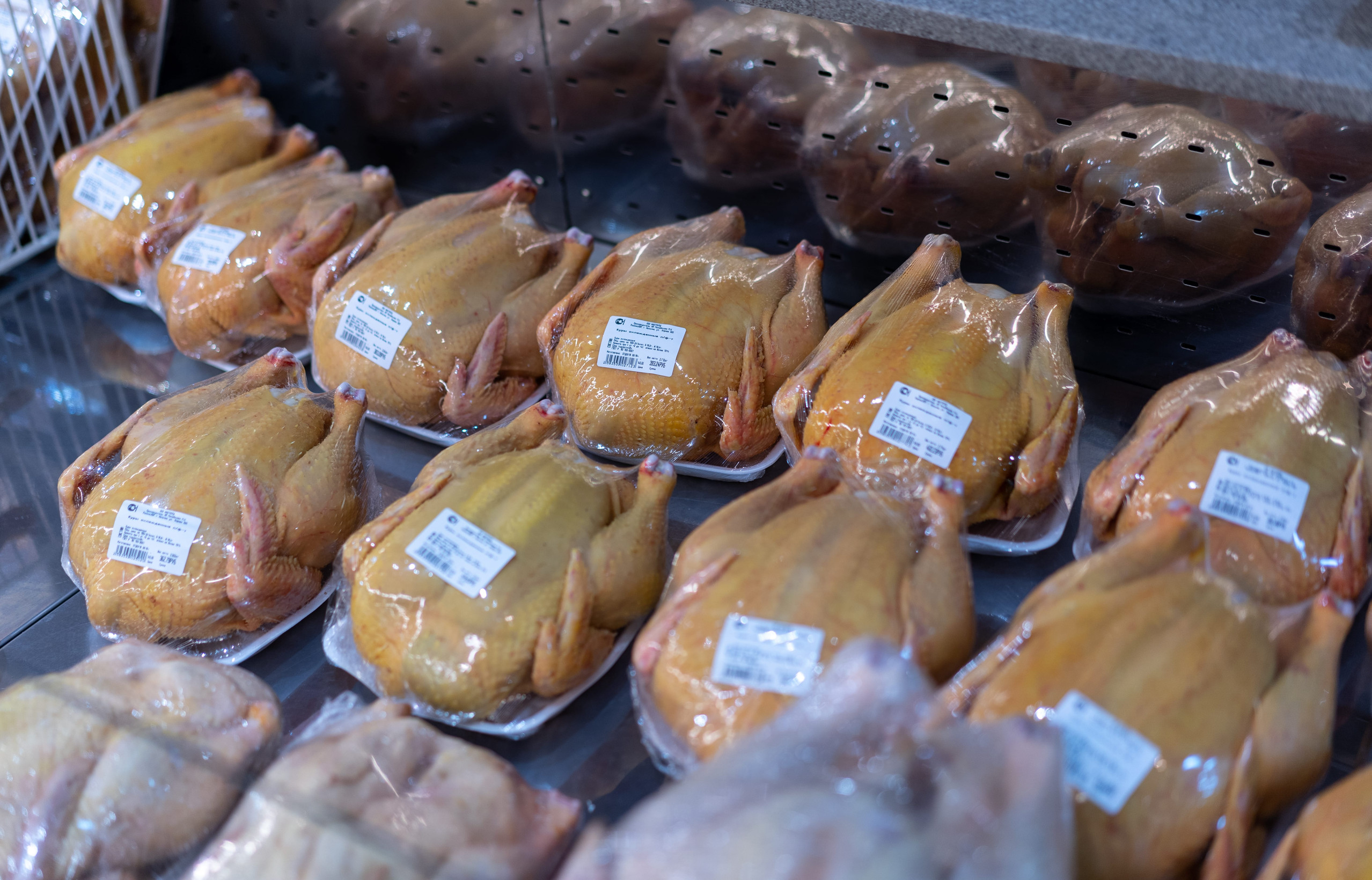
The investigation, updated June 23, 2026, examined rotisserie chickens from Costco, Sam’s Club, Walmart, Whole Foods Market, Wegmans, Stop & Shop, BJ’s Wholesale Club, Hannaford, ShopRite, and The Fresh Market.
Researchers tested both the chicken meat and its packaging for chemicals associated with plastics.
The biggest finding involved phthalates, chemicals commonly used to make certain plastics softer and more flexible.
According to Consumer Reports, phthalates appeared in the packaging from all 10 retailers and in the meat from nine of them.
ShopRite was the only retailer whose tested chicken meat had no detectable phthalates.
However, this doesn’t mean every chicken sold at the other nine stores contains the same chemicals or concentrations. The investigation examined selected samples, not every chicken sold nationwide.
Costco and Walmart Had the Highest Levels
Two familiar grocery favorites stood out for reasons shoppers might not expect.
Consumer Reports found that chicken samples from Costco and Walmart had the highest concentrations of DEHP, a type of phthalate that has been studied for its potential effects on human health.
The investigation reported 978 nanograms of DEHP per three-ounce serving in the samples discussed.
For perspective, Consumer Reports uses a daily limit of 600 nanograms for young children in its assessment.
The organization recommended that adults eat no more than six ounces per day of chicken from either retailer. For children, it suggested a maximum of 12½ ounces per week.
These are Consumer Reports’ own risk-based recommendations, not government serving limits or evidence that eating a single portion will cause illness.
Consumer Reports
What Exactly Are Phthalates?

You have probably heard about microplastics, but phthalates are a little different.
They are chemicals used in manufacturing certain flexible plastic products. They may also be associated with materials used in food processing, packaging, and storage.
The U.S. Food and Drug Administration explains that some phthalates have historically been authorized for specific food-contact applications, including components of adhesives and sealants.
Scientists study certain phthalates because of concerns about their potential effects on hormones and reproductive development.
However, finding a chemical in food doesn’t automatically mean that eating the food will cause harm. The amount, frequency, and total exposure from different sources all matter.
FDA
ShopRite Was the One Exception
Among the 10 stores investigated, ShopRite produced an interesting result.
Consumer Reports did not detect phthalates in its tested chicken meat, although the retailer’s packaging contained phthalates.
That distinction matters.
It suggests that finding chemicals in packaging doesn’t necessarily mean researchers will detect them in the food inside.
However, a nondetectable result doesn’t prove the chicken was completely free of every plastic-related chemical. It simply means the tested compounds weren’t detected in the meat under the laboratory’s testing conditions.
And because results can vary between samples, shoppers shouldn’t assume every ShopRite chicken will produce identical findings.
Researchers Also Checked for Other Plastic Chemicals
Consumer Reports didn’t stop at phthalates.
The organization also tested for PFAS, sometimes called forever chemicals, and bisphenols, including BPA.
There was some encouraging news.
Researchers didn’t detect PFAS in any of the tested chicken meat or packaging. They also found no bisphenols in the meat.
However, bisphenols appeared in packaging from five retailers.
Some of that packaging was advertised as BPA-free, raising questions about what those labels mean and how packaging materials are tested.
The findings highlight an important difference between chemicals detected in packaging and chemicals actually detected in food.
Consumer Reports
Does This Mean You Should Stop Buying Rotisserie Chicken?
Not necessarily.
Consumer Reports found that phthalate levels in the chicken meat were below its level of concern in eight of the 10 retailers tested.
Even the Costco and Walmart findings came with important context.
The organization explained that the detected amounts would generally become a concern for adults under its assessment only with particularly high consumption, exceeding approximately 45 ounces per week.
It also noted that the DEHP concentrations in those chickens were considerably lower than levels found in some other foods it previously tested.
Rather than suggesting shoppers abandon rotisserie chicken altogether, the findings support paying closer attention to repeated exposure and food packaging.
Simple Ways to Handle Rotisserie Chicken at Home
The good news is that a few everyday habits can help you handle your grocery store chicken more carefully.
First, avoid reheating chicken in its original plastic packaging, even when the package indicates reheating is permitted. Consumer Reports recommends transferring it to appropriate cookware or another suitable container.
If you’re saving dinner for later, move the chicken into a covered container and refrigerate it within two hours of purchase.
For leftovers, Consumer Reports recommends refrigerating chicken for up to four days or freezing it for longer storage.
When reheating leftovers, bring the internal temperature to 165°F.
These steps help with food handling and may reduce additional contact with packaging during heating. They do not remove phthalates already present in the meat.
What Walmart and Costco Said

Consumer Reports contacted both retailers regarding the findings.
Walmart said it remains committed to supplying safe, high-quality products and regularly works with suppliers to review its standards.
Costco did not respond to Consumer Reports’ request for comment, according to the published investigation.
Neither response establishes that the tested products violated federal safety requirements.
The Bottom Line for Grocery Shoppers
Rotisserie chicken remains an affordable, convenient option for families who need dinner without the extra work.
The Consumer Reports investigation doesn’t establish that these chickens are dangerous to eat, but it does highlight an issue shoppers rarely consider: chemicals associated with plastic materials can sometimes appear in prepared foods.
For now, the practical approach is simple. Pay attention to how food is packaged, avoid unnecessary heating in plastic containers, and vary your food choices rather than relying heavily on one product.
And if rotisserie chicken is your favorite weeknight shortcut, there’s no need to panic over one grocery trip.