A party in the 1960s or 1970s could look remarkably different from a gathering today. Dinner might involve everyone dipping bread into the same pot of melted cheese, a colorful gelatin mold sitting proudly on the table, or a slide projector turning vacation photographs into the evening’s entertainment.
Even the atmosphere was different. According to the CDC, 42.4% of American adults smoked cigarettes in 1965, compared with 11.6% in 2022.
But these traditions weren’t invented by baby boomers alone. People born between 1946 and 1964 experienced many customs introduced by their parents, while creating new entertaining traditions as they grew older.
From unusual party foods to once-controversial games, these 10 customs reveal how American gatherings have changed.
Gathering Around a Communal Fondue Pot
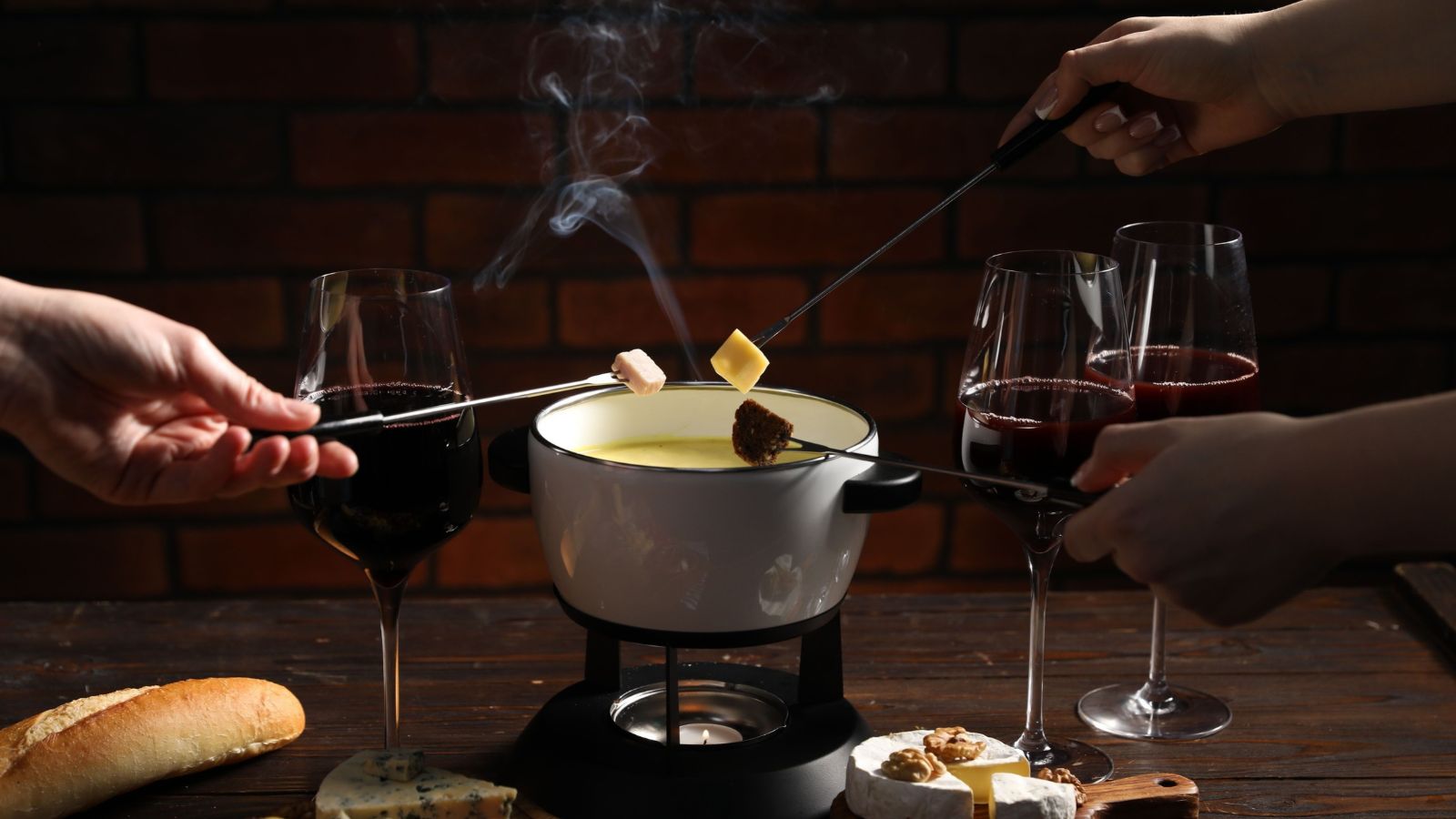
Before individual dipping sauces and elaborate appetizer platters became familiar party choices, fondue made sharing food part of the entertainment.
Guests gathered around a heated pot of melted cheese, dipping pieces of bread while conversation flowed across the table. The Smithsonian’s National Museum of American History documents home fondue party kits sold during the 1960s.
One museum record preserves a family’s recollection of roughly 20 people gathering after high-school football games in New Jersey during the early 1970s, with fondue among the refreshments.
Fondue hasn’t disappeared, but its place as the centerpiece of a gathering captures a distinctive approach to entertaining.
Serving Savory Gelatin Salads With Pride
A carefully molded gelatin dish could once command as much attention as an elaborate dessert. But not every gelatin creation was sweet.
Serious Eats’ historical reporting documents savory preparations containing vegetables and other ingredients suspended inside colorful gelatin. These dishes reflected an era when presentation, convenience ingredients, and careful homemaking were closely connected.
A perfectly shaped mold could become a party centerpiece, admired before anyone took the first serving. Although some combinations might surprise modern diners, they weren’t originally intended as jokes. For many cooks, the elaborate presentation represented genuine creativity and effort.
Turning Social Gatherings Into Tupperware Parties
Today, a party usually means food, music, and conversation. Earlier generations sometimes added product demonstrations to the invitation. Tupperware parties brought people together to examine and purchase plastic food-storage containers.
The Smithsonian’s history of Brownie Wise explains that Wise developed the company’s influential home-party sales system and became a vice president in 1951.
Demonstrations showed guests how the containers worked, including the famous method of pressing out air before sealing the lids.
The business format existed before boomers reached adulthood, but it became part of the household culture many encountered growing up.
Making Flaming Desserts Part of the Entertainment
Some memorable dinner presentations involved much more than placing dessert on the table. At Brennan’s in New Orleans, Bananas Foster became famous for its dramatic preparation.
According to the restaurant’s official history, the dessert was created in 1951 by chef Paul Blangé after Owen Brennan requested a dish featuring bananas.
The preparation combines bananas with butter, brown sugar, cinnamon, and liqueurs before the sauce is flambéed and served over ice cream. The flames transform dessert into a performance.
Although the documented tradition belongs to restaurant dining rather than every American home, it captures the theatrical spirit associated with elaborate entertaining.
Related: 5 Forgotten Retro Desserts That Were Dinner Party Showstoppers revisits other desserts remembered for their dramatic presentation.
Playing Twister When It Was Considered Scandalous
Twister might seem like harmless party entertainment today, but its early reputation was surprisingly controversial. The Strong National Museum of Play dates the game’s introduction to 1966.
Its colorful mat required participants to stretch and twist around one another, sometimes ending in spectacularly awkward positions.
According to Smithsonian reporting, Sears initially considered the game too suggestive. Then Johnny Carson and Eva Gabor demonstrated Twister on The Tonight Show in May 1966. By 1967, more than three million copies had reportedly sold.
What once raised eyebrows became a recognizable part of American game culture.
Showing Vacation Photographs With a Slide Projector
Before photographs appeared instantly on phone screens, sharing vacation memories could involve setting up an entire machine.
Kodak’s Carousel projector, introduced during the early 1960s, made it possible to display photographs sequentially on a wall or screen. The Science Museum Group preserves a Kodak Carousel Model 550R dating to 1961.
A family gathering could therefore include everyone watching projected images rather than passing around a digital device. The technology changed the way people shared memories, creating an experience where the whole room viewed the same photograph together.
Whether guests enjoyed every slide depended on the storyteller.
Dancing the Twist With Everyone Watching
Some party traditions were defined by the music rather than the menu. The Twist became one of the most recognizable dance crazes of the early 1960s.
According to the Library of Congress, Chubby Checker’s recording reached number one in 1960 and again in early 1962. Unlike many earlier social dances, the Twist didn’t require partners to hold each other in a conventional ballroom position. Its appeal crossed age and social boundaries, bringing different generations onto the dance floor.
The oldest boomers were still children when it became a sensation, so the craze belongs to the wider culture of their youth rather than exclusively to their adult parties.
Learning Coordinated Disco Partner Dances
When disco arrived, party dancing developed another distinctive style. Although disco is often associated with individual dancers moving beneath flashing lights, partnered disco dancing also became part of the scene.
Stanford dance historian Richard Powers documents partnered disco traditions and their connections to earlier swing dancing. His research draws on approximately 60 dance books published between 1975 and 1980.
These dances involved coordinated movements rather than simply following the beat independently. Disco also developed through important contributions from Black, Latino, and gay communities.
For boomers reaching adulthood during the 1970s, dancing could become a carefully practiced part of a night out.
Socializing When Cigarette Smoking Was Far More Common
The atmosphere surrounding social gatherings has changed considerably over the decades. In 1965, 42.4% of American adults smoked cigarettes, according to the CDC’s historical figures.
By 2022, that share had declined to 11.6%. The difference helps explain why cigarette smoking appears so frequently in photographs, films, and accounts of midcentury social life.
However, those figures don’t prove that every gathering involved indoor smoking or that all hosts welcomed it.
They simply establish that smoking was much more common in the broader society boomers experienced while growing up.
Buying Alcohol Before 21 in Some States
Another difference between earlier gatherings and modern expectations involved alcohol purchase laws. Today, 21 is the minimum legal purchase age throughout the United States, but that wasn’t always the case.
Before the National Minimum Drinking Age Act of 1984, states had different minimum purchase ages. The National Highway Traffic Safety Administration reports that every state had adopted 21 as its minimum purchase age by July 1988.
That means some boomers could legally purchase alcohol before turning 21, depending on where they lived and the year.
It doesn’t mean the drinking age was universally 18 or that every party followed the same customs.
The Party Traditions That Tell a Bigger Story
These 10 customs offer a fascinating glimpse into how American entertaining evolved. Fondue pots and gelatin molds brought elaborate presentations to the table. Tupperware gatherings blended socializing with shopping, while slide projectors and dance crazes provided entertainment long before smartphones.
Some customs began before boomers reached adulthood, and several continue in recognizable forms today. What makes them interesting isn’t that every gathering followed the same script. It’s how food, technology, changing expectations, and personal traditions shaped the way people came together.
A party might look different today, but the central idea remains familiar: good food, enjoyable company, and something worth remembering.