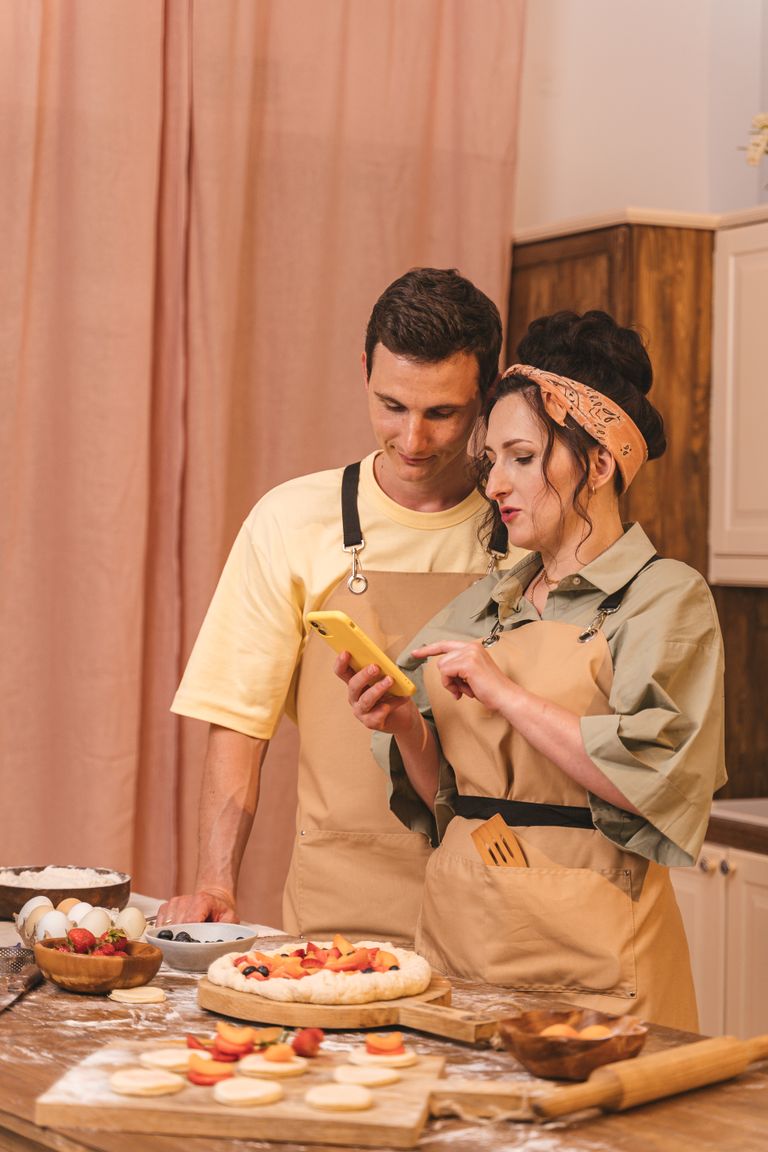
Picture a Friday evening. One person reaches past the other for the olive oil without asking. A spoon gets passed without a glance. Nobody is narrating. It’s a small, wordless dance that took many dinners to learn.
Maybe you know a couple like that. They have a weekly pasta night, or Sunday pancakes, or a Friday pizza tradition that has outlasted three apartments. They didn’t plan to build a ritual. They just kept returning to the kitchen, and one day it became theirs.
That’s the beauty of cooking together. It asks for an hour, a cutting board, and a shared opinion about garlic. In return, you get an evening with a purpose, a little teamwork, and a payoff you can both eat. Think of it as date night without the reservation, the dress code, or the parking hunt.
Researchers have noticed the pattern too, though they’re careful to say it shows links, not promises. Studies on couple rituals, shared meals, and savoring good moments all point to the same conclusion: couples who make time for these things tend to report more satisfaction and commitment. None of it crowns the skillet a magic wand. But it sketches a tasty idea.
Here are seven ways to make dinner the night you both look forward to.
Give the Night a Name
Every great tradition has a title. Taco Tuesday. Sunday pasta. Friday pizza with whatever’s in the fridge.
Harvard Business School researchers Ximena Garcia-Rada, Ovul Sezer, and Michael Norton found that couples who deliberately keep rituals felt more satisfied, invested, and committed, according to the school’s Working Knowledge summary. Garcia-Rada calls rituals “powerful commitment devices.”
Their work covered rituals in general, not cooking. But a named, standing dinner is exactly the kind of repeated, meaningful habit it describes. A regular night says, without a speech, that you’re both a priority. It also gives you something simple to come back to when the week gets loud.
Make Sure You’re Both In
The same research comes with a catch. Garcia-Rada says both partners need to agree that a ritual is a priority.
That’s good news for your menu. Ask your partner what a fun cooking night would look like, then build it together. Maybe it’s a full dinner. Maybe it’s breakfast for dinner. When both people are excited, the evening stops feeling like a chore and starts feeling like yours.
A little house rule helps: give each person one “not tonight” a month, no questions asked. A habit people want to return to needs room to breathe.
Run the Kitchen Like a Team
Restaurant kitchens run on stations for a reason. Nobody can chop, sear, and plate at once. Give each person a job and let them own it. One preps, one cooks. Next week, swap.
Try this twist: whoever picks the recipe is head chef for the night, and the other is sous chef. Sous chefs may comment. They may not criticize.
Related: 9 Everyday Foods People Are Choosing as They Think About Aging Well
This one is common sense, not science, but it works. Shared tasks mean you rely on each other, trade quick questions, and celebrate small wins. “Taste this” becomes its own kind of conversation. Hand the playlist to whoever’s off the stove.
Pick a Dish That Takes Its Time
A quick stir-fry has its place. But a pot of chili, a slow tomato sauce, a loaf of bread, or a Sunday roast gives you something better: a long, built-in stretch of time together.
While it simmers, you have nowhere else to be. You wander in and out of the kitchen, top off drinks, and talk about nothing important, which is often where the good conversation lives. A slow dish gives your evening room to breathe and a reason to keep drifting back to the same room.
Set the Table, Even for Two

Cooking is half the evening. Eating together is the other half, and the numbers are worth noticing.
A large, preregistered study called Two Forks, One Meal looked at couples in a representative German panel. They shared about 10 main meals a week, and more shared meals were associated with higher relationship satisfaction.
It’s an association, not proof, and the data comes from Germany. But the practical takeaway travels well: the table is where you two actually meet. Light a candle. Use the good plates. Put phones in a drawer. Even a Tuesday bowl of pasta counts as a dinner party if the table is set.
If dinner is the one time all day you face each other, make it count.
Taste, Slow Down, and Savor
Good cooks taste as they go, and couples can borrow the habit. Hand your partner a spoon. Ask, “Needs salt? More lemon?” Try a round of “guess the secret ingredient.” Then pause on the first bite of the finished dish and say what you love about it.
That pause has a name: savoring. University of Illinois researchers surveyed 589 U.S. adults. They found that people who savored good moments with their partners, including dinner, reported less conflict, more satisfaction, and greater confidence in their future together, as ScienceDaily reported. The effect stood out most among couples under higher stress, where savoring seemed to help protect confidence in the relationship.
One caution: only one partner in each couple took the survey, and it wasn’t a cooking study. Still, tasting together is a delicious way to practice.
Keep It Low-Stakes and Plan the Next One
This is not a cooking show. Choose recipes that forgive mistakes, like tacos, pasta, sheet-pan dinners, or homemade pizza. If something burns, congratulations: you’ve made next month’s favorite story.
Before you clear the plates, pick the next menu. Lead author Noah Larsen says finding time to slow down and be present with your partner, “even just once a week,” can really benefit a couple. Keep a running list of dishes you want to try on the fridge.
Looking forward to dinner is half the fun, and it’s the surest way to make sure there’s a next time.
Why It’s Worth Coming Back To
Strip away the garlic and the playlists, and the pattern is simple. A standing night tells your partner they’re a priority. A shared meal gives you uninterrupted time. A pause to savor helps you notice what’s good. None of it requires skill, and it all fits into one dinner.
Cooking together won’t fix everything, and it isn’t meant to. It’s a delicious, low-pressure way to show up for each other on purpose. And the best habits are the ones you actually look forward to repeating.
So if one shared dinner a week is all it takes to start a tradition, what’s the first dish you’d cook together, and what story would you finally tell while it simmers?