President Donald Trump says he has canceled a planned U.S. attack on Iran after Tehran and several Middle Eastern governments reportedly asked Washington to give negotiations more time. Trump said negotiators had agreed to the broad “perimeters” of a deal centered on reopening the Strait of Hormuz and ending what he described as Iran’s nuclear threat.
The announcement pulled the United States back from another potentially devastating escalation in a five-month conflict that has spread across Iran, the Gulf and surrounding maritime routes. However, no detailed agreement has been published, Iran has not publicly endorsed Trump’s description of the framework, and Israeli officials have warned that military action remains possible if Tehran rebuilds sensitive nuclear or missile capabilities.
Trump says the planned Iran attack has been canceled conditionally.
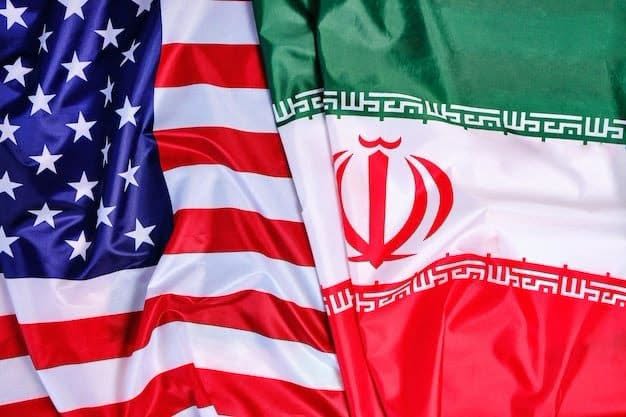
Trump announced the decision in a Saturday evening post after days of increasingly severe threats against Iranian infrastructure. He said the United States had prepared overwhelming military force but agreed to stop the operation because regional governments believed an agreement could be completed quickly.
The president identified two central demands. The first involved the “immediate, complete and total” reopening of the Strait of Hormuz. The second involved ending Iran’s nuclear threat, although Trump did not explain what technical, diplomatic or enforcement measures that language would require.
Trump also said Israel had joined the United States in supporting the diplomatic effort. His decision followed a telephone conversation with Saudi Crown Prince Mohammed bin Salman, who pressed for dialogue and warned against a wider regional conflict.
Why this is a military pause rather than a finished peace deal
We should distinguish between a political framework and a binding agreement.
A framework identifies broad objectives. A completed agreement usually defines obligations, deadlines, verification systems, enforcement procedures and consequences for violations. Trump’s statement offered the first category but not the second.
No publicly released document has explained how Iran would reopen the Strait of Hormuz, whether shipping restrictions would disappear immediately, who would monitor compliance or how disputes would be resolved. The announcement also lacked details about uranium enrichment, nuclear inspections, missile development, economic sanctions and Iran’s relationships with armed regional groups.
Iran did not immediately issue a formal public endorsement of Trump’s announcement. Iranian officials instead continued emphasizing military readiness, while state-linked reporting disputed the claim that Tehran had asked Washington to cancel an attack. Iran’s acting defense minister characterized recent U.S. threats as psychological warfare and said the country would strengthen its deterrence.
That difference in public messaging matters. Washington describes a developing diplomatic breakthrough. Tehran has treated the moment more cautiously and has not publicly accepted Trump’s interpretation of the negotiations.
The Strait of Hormuz stands at the center of the proposed agreement.
The Strait of Hormuz is not a secondary bargaining point. It is the economic center of the crisis.
The narrow waterway connects the Persian Gulf to the Gulf of Oman and the Arabian Sea. Before the conflict, roughly 20% of the world’s oil and liquefied natural gas moved through the route. Iran’s restrictions and attacks around the strait have disrupted shipping, stranded vessels, raised insurance costs and intensified pressure on global energy markets.
Reopening the strait would allow tankers carrying oil and LNG from Gulf producers to return to more predictable schedules. It could also lower the extraordinary security premiums that shipping companies, insurers and energy traders have added since the war began.
Yet reopening a waterway involves more than a political announcement. Ship operators need evidence that mines, drones, missiles and vessel seizures no longer threaten crews. Maritime insurers need credible security guarantees. Gulf governments need confidence that a new dispute will not shut the route again within days.
Iran has previously argued that it holds authority over important sections of the shipping channel and has explored arrangements that could give it a role in managing traffic or collecting service fees. The United States has opposed tolls and insisted that the strait remain open as an international waterway. A Gulf-backed Omani proposal involving voluntary shipping payments also faced resistance during earlier negotiations.
These competing positions reveal why the language “complete and total opening” requires a detailed legal and security plan. The parties must agree on navigation routes, naval activity, inspections, shipping fees and rules governing vessels linked to the United States or Israel.
Oil prices gave Washington another reason to step back.
The military confrontation has carried a growing economic cost.
Reuters reported that Brent crude futures rose 24% as an earlier ceasefire unraveled. The conflict has also increased transportation expenses, disrupted fuel supplies and fed broader inflation concerns. Damage to energy infrastructure and tanker traffic has affected oil, natural gas, aviation fuel, petrochemicals and fertilizer markets.
For American households, sustained disruption could translate into higher gasoline, heating, food and transportation costs. Businesses would face more expensive shipping and manufacturing inputs. Airlines could encounter higher fuel bills and additional route disruptions if regional airspace remains unstable.
The political consequences are equally significant. The United States is approaching midterm elections while the war remains unpopular with many Americans. Trump must balance his pledge to stop Iran from developing a nuclear weapon against public concerns about fuel prices, military casualties and another prolonged Middle Eastern conflict.
Saudi Arabia helped create space for the diplomatic reversal.
Saudi Arabia played a visible role in the hours before Trump’s announcement.
Crown Prince Mohammed bin Salman spoke with Trump and urged the United States to prioritize dialogue, reduce tensions and prevent the confrontation from expanding into a wider war. Saudi Arabia’s official statement emphasized that a broader conflict would threaten regional and international security.
Saudi concerns extend beyond general diplomatic stability. Iran has threatened energy infrastructure belonging to countries that assist U.S. military operations. Gulf governments understand that extensive American attacks on Iranian power plants, bridges or oil facilities could produce retaliatory strikes against refineries, ports, pipelines and desalination systems across the region.
Saudi Arabia and other Gulf states therefore occupy a difficult position. They want Iran’s military capabilities contained, but they also want to prevent their own cities and economic infrastructure from becoming targets.
Qatar, the United Arab Emirates, Oman, Turkey and Pakistan have also encouraged de-escalation, according to reporting about the negotiations. These governments can provide communication channels, propose technical compromises and relay messages between parties that do not trust one another.
The emerging diplomacy demonstrates how regional governments can influence American decision-making when the consequences of escalation would fall directly on their territory.
Israel supports the talks but preserves its freedom to strike.
Trump said Israel joined his commitment to pursuing an agreement. Israeli support, however, comes with firm conditions.
Israeli Energy Minister Eli Cohen, who serves on Prime Minister Benjamin Netanyahu’s security cabinet, said Israel and the United States remained closely coordinated. He also warned that Israel would act if Iran attempted to restore its nuclear program or expand its ballistic missile capabilities.
This position creates a potential challenge for negotiators. Iran may demand guarantees against future Israeli attacks. Israel may refuse to accept restrictions that prevent it from targeting facilities it considers an immediate threat.
A workable agreement must therefore address more than relations between Washington and Tehran. It must also establish conditions that Israel, Iran and Gulf governments can tolerate.
Netanyahu met Trump in Washington before the announcement, and the two leaders discussed diplomacy, economic pressure and military force as possible methods of limiting Iran’s nuclear program. Israel’s participation gives the negotiations greater strategic weight, but its warning also means the military option has not disappeared.
Iran’s nuclear program remains the hardest unresolved issue.
Trump’s demand for an end to Iran’s “nuclear threat” sounds decisive, but the phrase leaves several critical questions unanswered.
Would Iran stop enriching uranium entirely, or would it accept a limited civilian program? Would inspectors receive unrestricted access to declared and suspected nuclear sites? Would Iran transfer enriched material abroad? Who would verify that damaged facilities had not been rebuilt?
Negotiators must also decide what Iran receives in return. Tehran has historically sought sanctions relief, access to frozen assets and international recognition of what it describes as its right to peaceful nuclear technology.
Iran denies seeking a nuclear weapon. The United States and Israel argue that Iran’s enrichment capacity, stockpiles and restrictions on monitoring create an unacceptable risk.
These opposing narratives have repeatedly complicated negotiations. Washington wants restrictions that make a nuclear weapon impossible or extremely difficult to produce. Tehran wants economic relief and security guarantees without appearing to surrender its sovereignty.
The current framework cannot become durable until negotiators convert broad language into measurable limits. They need numbers, locations, inspection schedules, deadlines and clearly defined penalties.
Previous ceasefire failures shadow the new negotiations.
The greatest reason for caution is the history of the conflict itself.
The United States and Israel launched attacks against Iran on February 28. Trump said the campaign aimed to damage Tehran’s missile capabilities, prevent it from acquiring nuclear weapons and weaken its support for allied armed groups. The conflict then expanded across the Gulf and affected shipping routes extending toward the Red Sea.
An interim agreement reached in June temporarily halted fighting and was supposed to create a path toward a permanent settlement. That arrangement collapsed within weeks after renewed maritime attacks and disputes over implementation.
The failed truce provides a warning for the latest initiative. A new agreement cannot depend entirely on personal assurances or general promises. It requires verification, communication channels and rapid procedures for investigating alleged violations.
Without those safeguards, a drone attack, tanker incident or disputed military movement could trigger retaliation before diplomats determine what actually happened.
What must happen before the Iran deal becomes credible?
Several developments would signal that the diplomatic opening has moved beyond political messaging.
Iran must publicly confirm that negotiations cover the Strait of Hormuz and the nuclear program. The United States must clarify what actions it expects Tehran to take and what concessions Washington is prepared to offer.
The parties must establish a timeline for unrestricted commercial shipping. They must also define who will secure the strait, monitor vessels and respond to mines, drone attacks or armed interference.
Nuclear commitments require an inspection mechanism. Any agreement that lacks independent verification would leave the United States and Israel dependent on intelligence estimates, increasing the risk of renewed attacks.
Regional governments also need protection from retaliation. Saudi Arabia, Qatar, Kuwait, Bahrain, Oman and the United Arab Emirates cannot support an arrangement that leaves their energy facilities exposed to missiles or drones.
Finally, the negotiators need an enforcement structure. A durable deal should distinguish between minor disputes, accidental incidents and deliberate violations. Immediate military retaliation cannot remain the only available response.