Chicago-area residents were asked Wednesday to do something few people expect during severe weather: delay showers, laundry, dishwashing, and other heavy water use as torrential rain raised the risk of flash flooding and sewer backups across the region.
The request came on June 17 as strong storms swept across northern Illinois and northwest Indiana, threatening to overwhelm local sewer systems already struggling with rapid rainfall. Officials said the temporary warning was designed to reduce strain on pipes, treatment plants, and flood-control infrastructure during one of the day’s most dangerous weather windows.
Water use becomes part of flood control.

The unusual guidance was tied to an Overflow Action Alert, which asks residents and businesses to limit water use when heavy rain is expected to pour into the same regional system that handles wastewater from homes.
The alert asked residents to delay showers, baths, laundry, dishwashing, and unnecessary flushing before, during, and after the storm. The request applied across the Chicago area as officials prepared for several hours of heavy rain.
The message was direct: every gallon matters when the sewer system is already under pressure. A single shower may seem harmless, but thousands of showers, washing machines, and dishwashers can add a large amount of water at the worst possible time.
Officials said crews were managing large volumes of water at multiple water reclamation plants. The region’s tunnel and reservoir system was also being used to store and move stormwater, reducing the chance of flooding and protecting local waterways.
Why skipping a shower can matter
The request was not about a shortage of clean water. It was about keeping extra wastewater out of a system that could be hit by fast rainfall.
In much of the Chicago area, rainwater from streets and wastewater from homes can flow through the same sewer network. During normal weather, the system can manage that volume. During intense storms, the equation changes quickly.
The agency says stormwater enters the same sewer system as water from toilets, sinks, showers, and appliances. When rain arrives faster than the system can move it, water can back up into basements, pool in streets, or overflow into rivers.
That is why officials asked residents to shift ordinary routines by a few hours. Waiting to run laundry or take a shower can create extra capacity when the system needs it most.
This kind of alert may feel strange because it turns a private household habit into part of a public safety response. But in dense urban areas, water use within a single home does not remain isolated. It joins a regional network shared by neighborhoods, businesses, and treatment facilities.
Flash flooding risk spreads across the area.
Forecasters warned that the storms could bring heavy rain quickly enough to trigger flash flooding across the Chicago region. The danger was not limited to one suburb, one roadway, or one neighborhood.
The forecast called for rain rates that could exceed 2 inches per hour in the strongest storms. One or two waves of heavy rain-producing thunderstorms were possible between 8 a.m. and 9 p.m.
That timing created a long window of concern for commuters, homeowners, and emergency crews. Rain falling at that pace can overwhelm drains before residents have time to react.
Flooding is especially dangerous in low-lying areas, on viaducts and underpasses, in creekside neighborhoods, and on streets with poor drainage. Basement apartments and homes with a history of sewer backups also faced heightened risk.
Officials urged people in flood-prone areas to prepare before the heaviest rain arrived. That included moving valuables away from basement floors, checking sump pumps, and avoiding unnecessary travel during the strongest storms.
Roads can turn dangerous fast.
Drivers were warned not to treat standing water as a minor inconvenience. Flooded roads can hide stalled vehicles, open manholes, road damage, or deeper water than expected. A vehicle can lose control in far less water than many drivers realize. Water can also quickly rise around underpasses, trapping cars before drivers can reverse out.
Residents were urged to find alternate routes if water covered roadways. Emergency officials often repeat the same warning during flash flood events because it remains one of the most common causes of storm-related rescues: do not drive through flooded streets.
The Chicago area’s road network includes many low points where water can collect quickly. Heavy rainfall during commuting hours can make those spots dangerous within minutes.
Public alerts also advised residents to enable phone warnings and follow local updates through the evening. Storms can change direction, speed, or intensity as they move through the region.
Severe storms add another concern.
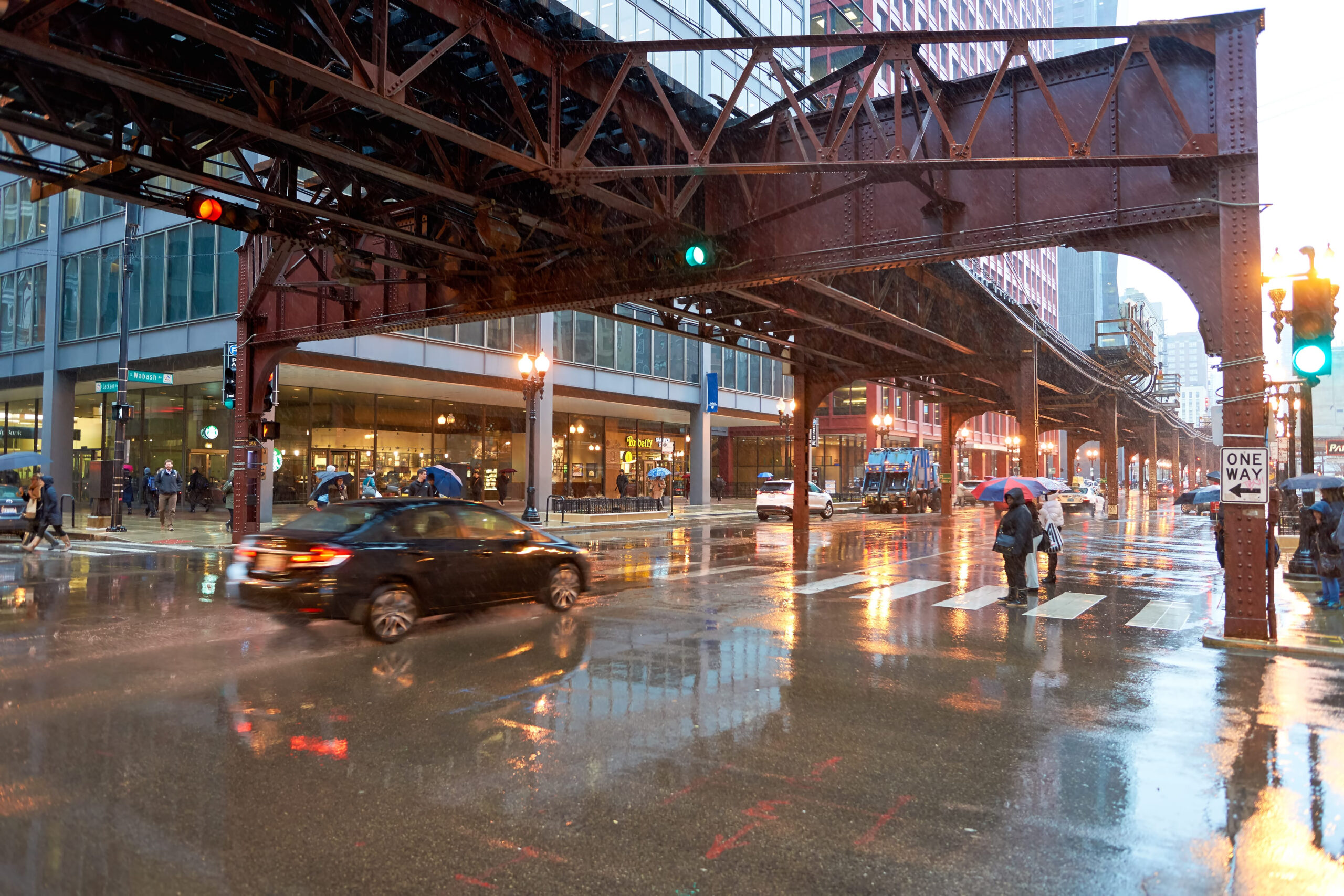
The flood threat was not the only risk tied to Wednesday’s weather. The same storm system also carried the potential for damaging winds, hail, and tornadoes in parts of northern Illinois and northwest Indiana.
The strongest severe weather risk was expected later in the day, especially near and south of Interstate 80. Forecasters said the afternoon and evening period could bring the more dangerous round of storms.
The second wave was expected between 2 p.m. and 9 p.m. That timing raised concern for residents traveling home from work, school activities, or errands.
Local updates said the Chicago area faced an elevated risk of flash flooding on Wednesday, with multiple rounds of torrential rain possible. The severe weather risk depended in part on where a warm front settled during the day. Areas closer to that boundary faced a greater chance of stronger storms.
A temporary request during a high-risk window
Officials framed the water-use warning as temporary. Residents were not being asked to stop normal routines for the entire day unless storm conditions required it.
Instead, the request focused on delaying nonessential water use during the most intense rainfall period and shortly afterward. Sewer systems can remain stressed even after rain stops, especially if large amounts of water are still moving through pipes and reservoirs.
For households, the guidance was simple. Wait for showers. Hold laundry. Skip the dishwasher. Flush less often if possible. Keep water use low until the storm threat eases.
For the broader region, the goal was larger than convenience. Reducing water use can lower the risk of basement backups, street flooding, and waterway overflows when the system is most vulnerable.
The latest guidance urged residents to monitor weather alerts through the evening as heavy rain and severe storms remained possible. Normal water use was expected to resume once the worst of the rain had passed and sewer capacity improved.