Your kitchen already has a soundtrack: the knife on the board, the clink of a bowl, the pan warming on the stove. A running faucet needn’t join every verse. USDA advises against rinsing raw poultry, and the federal temperature chart specifies 165°F for chicken and turkey; FoodSafety.gov says greens labeled prewashed need no additional washing.
These eight examples share several handling rules, with a useful distinction: some foods come with a no-washing recommendation, while others need no repeat rinse.
Raw chicken
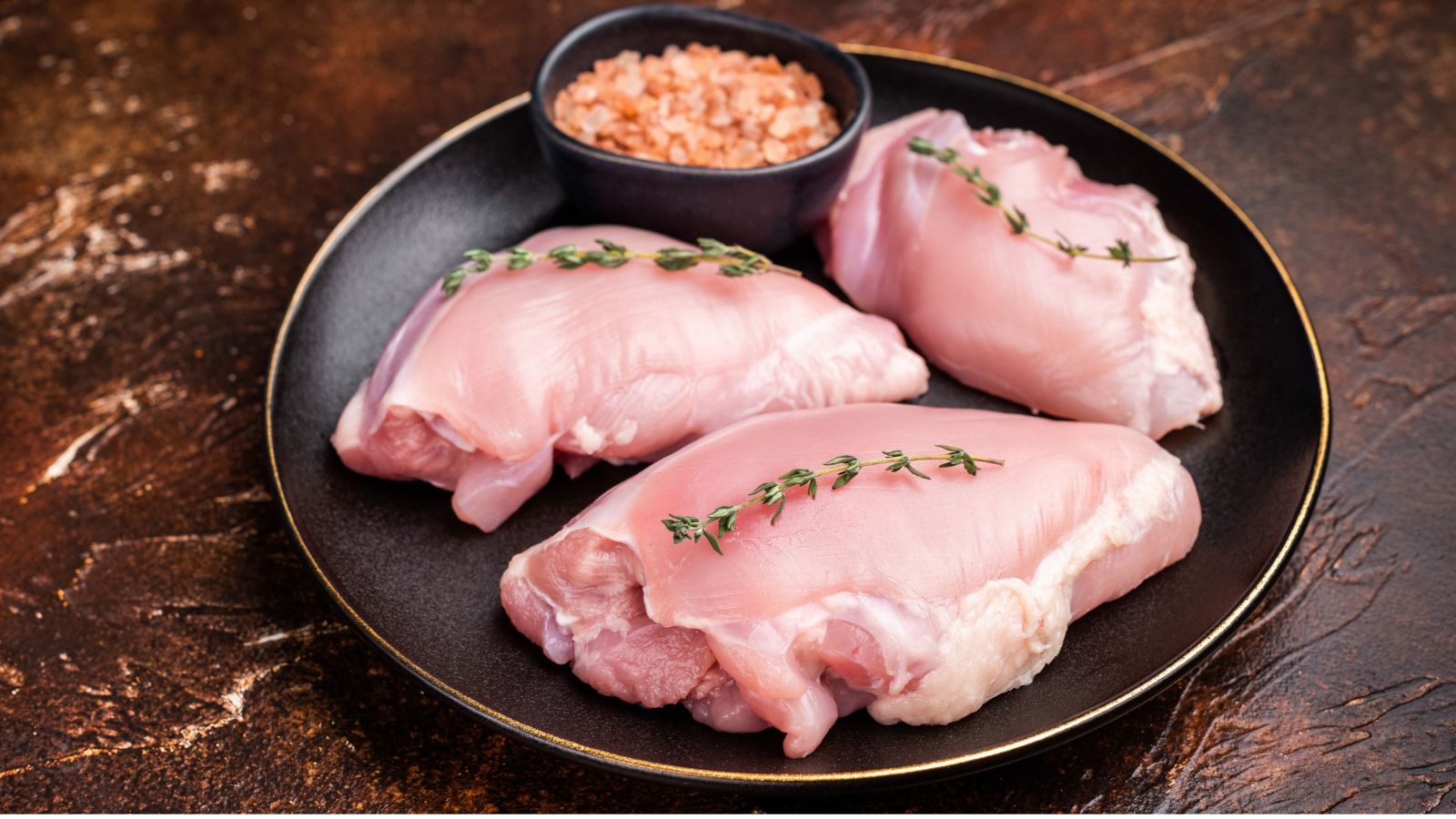
Let chicken’s first stop be your preparation area. USDA’s poultry guidance advises skipping the rinse, keeping raw chicken apart from food that will be served without cooking, and washing your hands after handling it.
Clean and sanitize the surfaces that touched the chicken or its juices, then use a thermometer to check for 165°F during cooking. That gives you a clear routine from opening the package to finishing dinner, without adding a trip to the sink.
Raw turkey
Turkey belongs under the same poultry guidance, so there is no separate rinsing ritual for the bigger bird. USDA recommends keeping its juices away from other foods and equipment, and the federal temperature chart sets the same 165°F target for turkey as for chicken.
A recipe involving salt water, vinegar, or lemon juice does not replace those handling and cooking instructions. Keep your attention on the preparation space and the thermometer, even when the recipe includes a brine or marinade.
Raw beef
A steak and a packet of ground beef may lead to different dinners, but USDA’s washing guidance covers both: leave out the preliminary rinse. FoodSafety.gov recommends separate cutting boards for raw meat and foods that will be eaten without cooking.
When it is time to cook, consult the federal temperature chart for the beef you actually bought, because whole cuts and ground meat have different instructions. Let that distinction guide your preparation instead of treating every beef dinner alike.
Raw pork
USDA gives pork the same straightforward instruction: don’t wash it before cooking. Set up your prep so raw pork and its juices stay separate from ready-to-eat ingredients, and follow FoodSafety.gov’s advice to wash your hands and clean the utensils and surfaces you use.
USDA’s guidance also gives no reason to substitute a vinegar, lemon-juice, or salt-water rinse for that routine. Keep the recipe moving toward its cooking stage, with the appropriate thermometer guidance close at hand.
Purchased raw fish fillets
For purchased raw fish fillets, you can retire the automatic rinse: FoodSafety.gov includes seafood in its no-washing advice. FDA’s seafood guidance directs you to wash your hands and clean cutting boards, utensils, and counters between preparing raw seafood and preparing cooked or ready-to-eat food.
Keep those preparation tasks separate as you work. This entry covers routine rinsing of fillets you bought; cleaning a whole fish or preparing live shellfish requires its own instructions, not the assumption that every seafood task is identical.
Commercially processed U.S. shell eggs
The eggs in that carton have already been washed: USDA explains that washing is part of commercial egg processing and advises consumers not to wash eggs before storage. FoodSafety.gov recommends leaving them in their original carton in the refrigerator’s main compartment, away from the door.
After working with uncooked eggs, wash your hands and the equipment you used. This advice applies to commercially processed U.S. eggs; it is a specific preparation routine, not a blanket description of eggs sold everywhere.
Related: 7 Foods You Should Never Store in the Fridge Door, According to Food Safety Experts
Lettuce labeled prewashed or ready-to-eat
Let the small print do a little kitchen work for you. FDA produce guidance says lettuce labeled prewashed or ready-to-eat can be used without another wash; being in a bag by itself doesn’t establish that preparation status.
If you prefer another rinse, FDA advises keeping the leaves away from unclean surfaces and utensils. The takeaway is that you can skip an unnecessary step, but pay attention to your workspace if you repeat it.
Spinach labeled prewashed or ready-to-eat
Spinach follows the same label-based instruction, so check the wording before you reach for the colander. FDA says prewashed or ready-to-eat packaged produce needs no further washing. At the same time, ordinary fresh spinach without that designation falls under its advice to wash produce thoroughly under running water.
The agency also advises against using soap, detergent, or commercial produce wash. Keep the greens separate from raw meat, poultry, seafood, and their preparation utensils, and follow the package instructions to decide whether rinsing belongs in your routine.
Before the next meal, borrow this simple cue from FoodSafety.gov: wash your hands and equipment, read the greens’ label, and give each ingredient the preparation it calls for. Then let dinner have your attention.