Moving in together means sharing more than an address. It means sharing the last clean frying pan, the shelf where the coffee belongs, and deciding what to do with yesterday’s pasta.
One person may wash dishes while cooking. The other may prefer to finish dinner first. Someone buys groceries with recipes in mind; someone else shops for whatever looks good. Neither approach is wrong, but the combination can become inconvenient.
A workable shared kitchen does not require matching habits or an elaborate household rulebook. It needs a few clear agreements about food, space, and responsibility. These seven habits offer practical starting points, without turning dinner into another project to manage.

Keep one grocery list both people use
Two separate mental shopping lists are hard to compare at checkout. Put grocery needs in one shared place, whether that is a phone note, a refrigerator pad, or a simple app.
Add an item when you notice it running low, not when someone is already leaving for the store. Be specific where it matters: coffee filters, not just coffee supplies; two onions, not vegetables.
Before shopping, check what is already available. The Environmental Protection Agency’s guidance on preventing wasted food at home recommends checking the refrigerator, freezer, and pantry first and including quantities on shopping lists.
Agree on how you’ll check off purchases, too. A shared list is useful only when it reflects what you still need to buy.
Plan dinner around your actual week
Start with the calendar, not an ambitious collection of recipes. Which evenings will you both be home? Who has a late shift? When would leftovers be more realistic than cooking?
Choose a few meals together, then leave room to change them. Planning three dinners you will actually make is more useful than assigning seven elaborate meals to an unpredictable week. It’s also advisable to plan for quick dishes or leftovers on especially busy nights.
For couples, the practical extension is to name who handles each planned dinner. “Pasta on Tuesday” leaves a question unanswered. “You cook Tuesday; I take Wednesday” gives the plan someone to carry it out.
Related: 9 Everyday Foods People Are Choosing as They Think About Aging Well
Give cleanup a clear finish line
“I’ll clean up” can mean different things. One person means washing plates. Another expects the pans, stovetop, counters, and leftover containers to be handled as well.
Decide what a finished kitchen looks like in your home. Keep the standard realistic: put food away, handle dishes, wipe cooking surfaces, and leave the space ready for its next use.
Then divide responsibility in a way that fits your schedules. One cooks while the other cleans, you alternate nights, or each takes ownership of particular tasks.
In Good Housekeeping’s reporting on dividing household labor, author Eve Rodsky emphasizes that fairness need not mean splitting every individual task exactly in half. The article also highlights the need to reassess arrangements as circumstances change.
The useful question is whether both people understand and accept the arrangement.
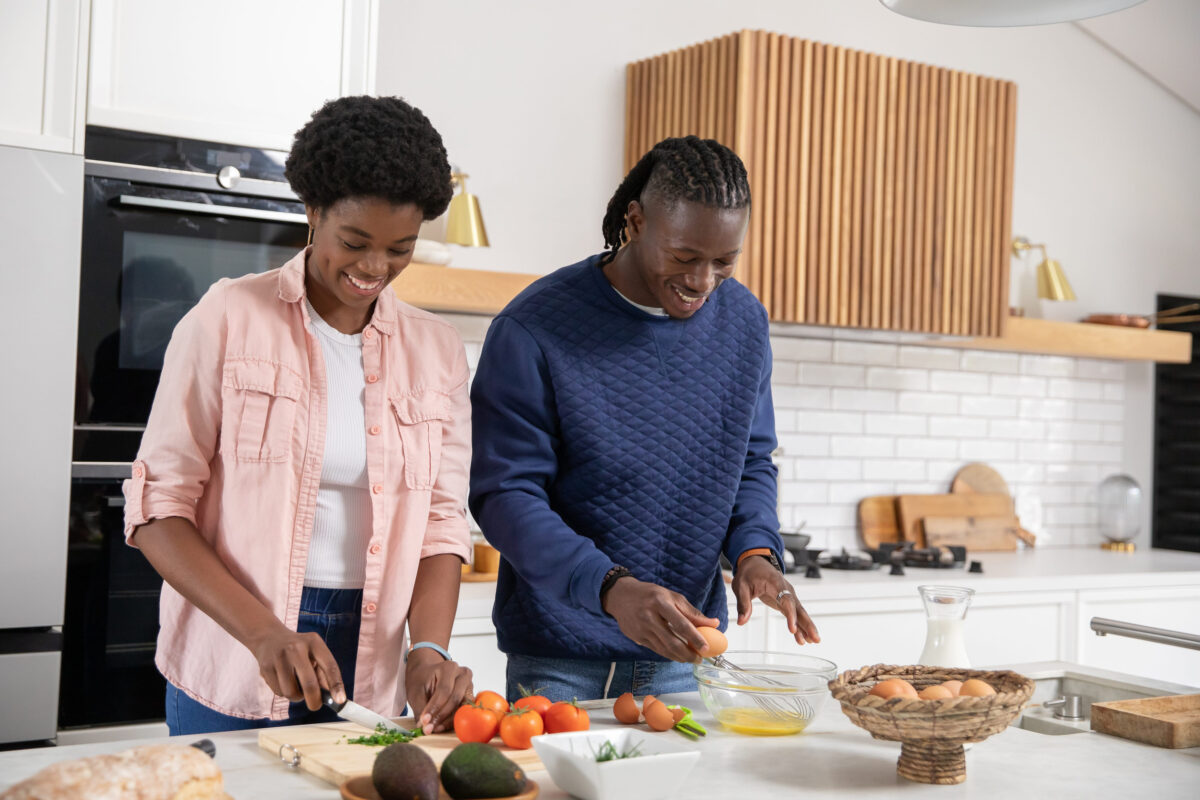
Put everyday tools in predictable places
A kitchen can be organized neatly and still be difficult to share if only one person knows where anything belongs.
Choose permanent homes for the items you use most: knives, cutting boards, cooking utensils, storage lids, and the pan you use most for weeknight dinners. Put them back in those places after you use them.
Make the arrangement together rather than reorganizing everything as a surprise. Someone who cooks frequently may want utensils beside the stove; someone who makes breakfast may need clear access to the toaster.
You do not need matching containers or a complete cabinet makeover. Start with the objects that repeatedly send someone searching, and fix those first.
Label leftovers and agree on where they go
An unlabeled container can create several questions at once: what is inside, when was it made, and is someone saving it for lunch?
Label leftovers with their contents and preparation date. It is recommended to use clear, dated containers for refrigerated or frozen leftovers.
Then add the detail a shared household needs: who plans to eat them. A small note saying “Wednesday lunch” can distinguish a reserved meal from food available to either person.
Avoid relying on memory alone. If dinner produced extra portions, decide whether they belong in tomorrow’s plan or the freezer. A label is an organizing tool, not a replacement for appropriate storage and handling.
Keep a dinner fallback you both accept
Not every evening will follow the plan. Keep ingredients for one or two meals that require little discussion and modest preparation.
That might be pasta with jarred sauce, bean quesadillas, or a frozen dinner you both enjoy. The point is not culinary ambition. It is having an agreed answer when neither person wants to begin from scratch.
Decide who notices when those supplies run out and adds them to the shared list. Otherwise, the backup meal can disappear just when you need it.
Treat the fallback as part of your kitchen routine, not evidence that someone failed to cook.
Reset the kitchen together regularly
Take a brief look at the kitchen before the next shopping trip. Check what needs using, what’s missing, and whether the current division of work still fits.
Keep the conversation specific. “We need somewhere for container lids” is easier to act on than “This kitchen never works.” “Can you handle dinner Thursday?” is clearer than hoping someone notices a crowded schedule.
Adjust one recurring problem at a time. Move the lunch containers, change the cleanup rotation, or simplify a dinner plan.
Sharing a kitchen works better when the routine belongs to both people. The goal is not identical preferences. It is knowing where things go, what needs doing, and who is taking care of it.