Remember when a trip to the candy aisle felt like a special occasion? Back in the 1970s, candy bars weren’t just about satisfying a sweet tooth. They came in unusual shapes, had unforgettable names, and sometimes offered several flavors in a single wrapper.
You could pick up an eight-inch caramel bar for just 15 cents or enjoy a chocolate treat named after a famous baseball player. Some candies disappeared from store shelves, while others survived long enough for new generations to discover them.
Not every candy on this list was invented during the ’70s, but all seven were available during that memorable decade. Whether you grew up enjoying these treats or are discovering them for the first time, they’re worth remembering.
Marathon Bar
If you remember the Marathon Bar, you probably remember just how ridiculously long it was.
Mars introduced this chocolate-covered caramel bar in 1973, and it stretched about eight inches. Instead of looking like an ordinary candy bar, it featured a braided caramel design that made it stand out on store shelves.
The packaging was just as memorable. Its bright-red wrapper included a printed ruler, allowing customers to see exactly how long their candy was.
Early wrappers even advertised the Marathon for just 15 cents.
Despite its impressive appearance, the Marathon didn’t last long. Mars discontinued the American version in 1981 after sales reportedly fell short of expectations.
Today, Britain’s Curly Wurly offers a similar braided chocolate-and-caramel experience, although it isn’t an official Marathon revival.
For longtime fans, nothing quite replaces that original red wrapper and its built-in ruler.
REGGIE! Bar
How many candy bars can claim they interrupted a professional baseball game?
The REGGIE! Bar can.
Introduced in 1978, this candy was named after legendary New York Yankees player Reggie Jackson. Despite being called a bar, it was actually a round chocolate-covered patty filled with caramel and peanuts.
According to the National Baseball Hall of Fame, it originally sold for 25 cents.
Its most unforgettable moment came on April 13, 1978, during the Yankees’ home opener. Fans received REGGIE! Bars, and when Jackson hit a home run, spectators celebrated by throwing candy onto the field.
The game stopped while workers cleared the playing surface.
The original candy disappeared in 1981, but the brand eventually returned. A modern version is still marketed today, complete with familiar orange packaging.
Not every candy gets its own moment in baseball history.
Seven Up Bar
Imagine opening one candy bar and discovering seven different fillings.
That was the appeal of the Seven Up Bar, a treat that first appeared in the 1930s and stayed on shelves into the 1970s.
Instead of one continuous filling, the bar contained seven separate chocolate-covered sections. A documented assortment included cherry, coconut, caramel, fudge, jelly, maple, and Brazil nut.
The exact fillings varied over the years, but the concept remained wonderfully unusual.
Every section offered a different experience, making the candy feel more like a miniature assortment of chocolates than an ordinary bar.
For anyone who struggled to choose just one flavor, Seven Up offered a clever solution.
Pearson’s Candy discontinued the bar during the 1970s. Although the company still hears from people who want it back, it has said it currently lacks the manufacturing capability to reproduce it.
For nostalgic candy lovers, seven different flavors in one wrapper is hard to beat.
Sky Bar
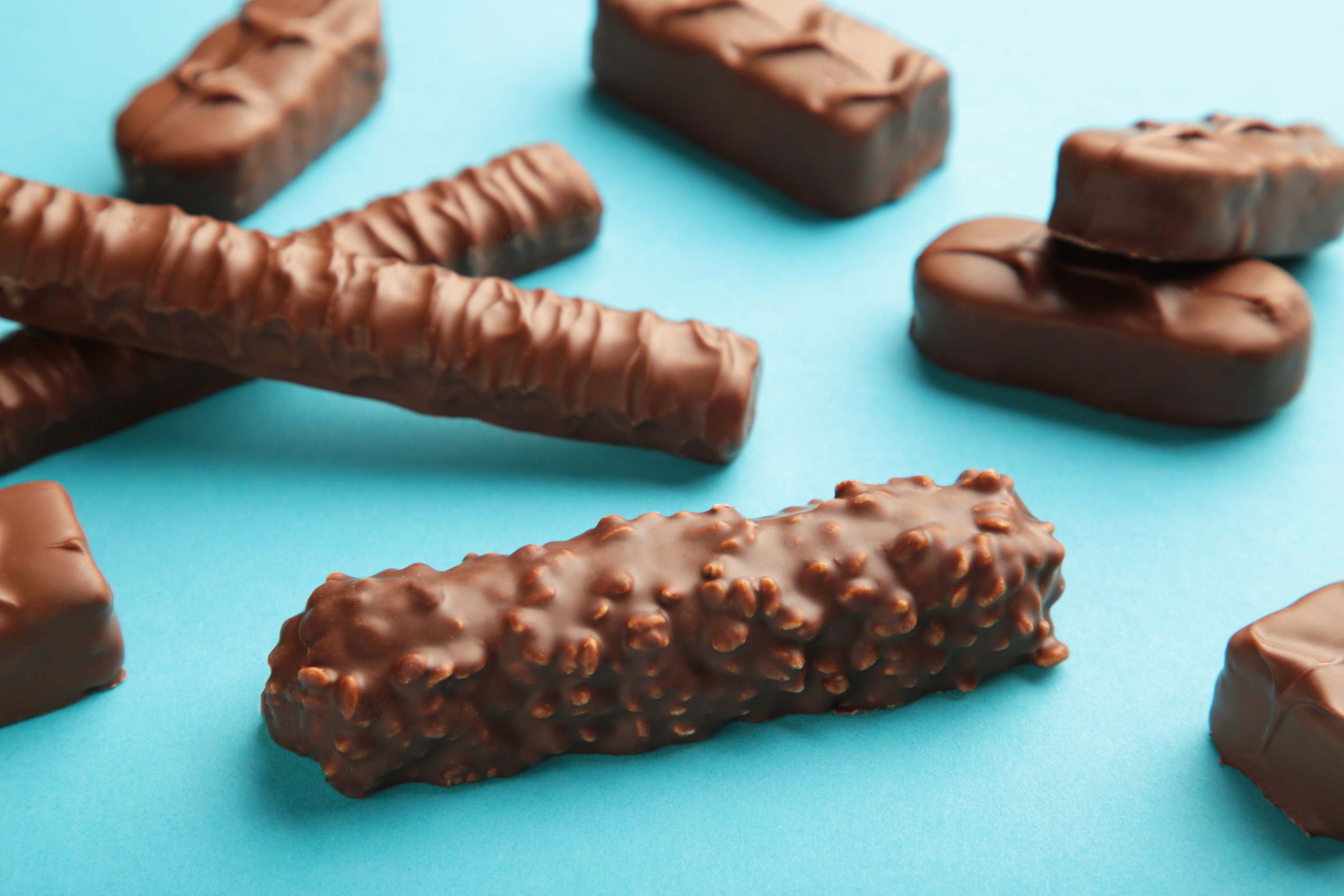
If seven fillings sounded ambitious, Sky Bar offered a slightly simpler alternative.
NECCO introduced this chocolate bar in 1938, with four individual compartments holding different centers.
Today’s version includes caramel, vanilla, peanut, and fudge fillings.
Its popularity was especially strong in New England, where generations of candy lovers grew familiar with its distinctive design.
Part of the fun was deciding which section to take a bite of first. You could start with caramel, save your favorite filling for last, or simply work your way across.
When NECCO collapsed in 2018, Sky Bar production stopped, leaving longtime fans wondering whether the candy would disappear permanently.
Fortunately, Massachusetts business owner Louise Mawhinney acquired the brand and helped bring it back in 2019.
It’s a rare example of an old-fashioned candy making a comeback after it seemed to disappear.
For anyone who remembers its four compartments, that revival was sweet news.
Related: 6 Top Halloween Candy Picks for Trick-or-Treaters
WHATCHAMACALLIT
Some candy bars have straightforward names. Others leave you wondering what you’re supposed to call them.
Hershey’s WHATCHAMACALLIT, introduced in 1978, proudly belongs to the second category.
According to Hershey, the company considered around 100 possible names before settling on this wonderfully confusing choice.
The original candy featured crispy peanut-butter filling covered with a thin chocolate coating.
Interestingly, the WHATCHAMACALLIT that shoppers recognize today isn’t exactly the same as the 1978 version.
Hershey added caramel in 1987, adding another layer of sweetness and chewiness.
That means someone remembering the original candy from the late ’70s might recall a slightly different experience from what’s sold today.
Unlike several discontinued favorites, WHATCHAMACALLIT remains available.
After nearly five decades, its unusual name remains one of its biggest attractions.
$100,000 Bar
Who wouldn’t want a candy bar that made them feel like a millionaire?
During the 1970s, shoppers could find Nestlé’s $100,000 Bar, a chocolate treat packed with chewy caramel and crisped rice.
Introduced in the 1960s, it offered a texture combination that set it apart from smoother, nougat-filled competitors.
The extravagant name was part of the fun.
You weren’t actually getting a fortune, of course, but buying something called $100,000 with pocket change was amusing.
During the mid-1980s, the candy was renamed 100 Grand.
The familiar combination of chocolate, caramel, and crispy rice remains available today under Ferrero ownership.
While the packaging and name have evolved, the basic appeal is easy to understand.
There’s something satisfying about biting into chewy caramel and hearing that unmistakable crunch.
It’s one of those nostalgic treats that survived the decades, even if its original name didn’t.
ZERO Candy Bar
Most candy bars announce themselves with a familiar brown chocolate coating.
ZERO took a completely different approach.
This unusual candy featured caramel, peanuts, and almond nougat beneath a smooth white-fudge coating.
The pale exterior immediately set it apart from competing chocolate bars.
Although ZERO traces its beginnings to 1920, it remained part of the American candy market throughout the 1970s.
During that decade, Hollywood Brands produced it, long before Hershey acquired the brand in 1996.
Its unusual appearance was only part of the appeal. Beneath the white coating, shoppers discovered several contrasting flavors and textures.
For anyone accustomed to traditional milk-chocolate bars, ZERO offered something noticeably different without abandoning familiar candy ingredients.
Best of all, ZERO is still available today, making it one of the older candy bars that still draws attention.
Related: 10 Things Kids in the 1970s Did on Halloween That Would Shock Parents Today
Why These Old-School Candy Bars Still Matter
The candy aisle of the 1970s offered something today’s shoppers can still appreciate: plenty of variety and a little imagination.
Some bars came with rulers. Others featured multiple fillings, celebrity endorsements, or names that were almost impossible to forget.
Of course, not every treat survived. Marathon and Seven Up remain discontinued, while favorites like Sky Bar and REGGIE! have experienced revivals.
Others, including WHATCHAMACALLIT, 100 Grand, and ZERO, continue to appear on store shelves.
Perhaps that’s the real charm of these old-fashioned candies. They remind people that sometimes the smallest purchases create the most lasting memories.
And if your favorite candy from the ’70s suddenly returned to store shelves, wouldn’t you be tempted to buy one just to see whether it tasted the way you remembered?
Other Posts You May Like
- 10 Candy Everyone Secretly Obsesses Over
- 10 nostalgic foods from our childhood that nobody else remembers