Imagine picking up a steak at the grocery store, taking it home, and later discovering that a machine built its meat-like texture layer by layer.
Would you want to know that before buying it?
That question is becoming more relevant as 3D-printed plant-based meat enters American grocery stores. In September 2026, Israeli food technology company Steakholder Foods announced the U.S. retail launch of its Perfecta brand.
The products look familiar: steak, filet mignon, chicken breast, and fish patties. But some have a manufacturing story that shoppers might never guess from an ordinary ingredient list.
Here’s the interesting part. Federal food-labeling rules generally require companies to explain what’s in packaged food, but they don’t automatically require a label saying the food was 3D-printed.
So, what exactly are shoppers buying, and how much does the package tell them?
3D-Printed Steak Has Officially Entered the Grocery Aisle
On September 3, 2026, Steakholder Foods announced that its Perfecta products had reached selected U.S. retail locations.
The company introduced five plant-based alternatives: marbled steak, filet mignon, chicken breast, salmon patties, and white fish patties.
But there’s an important distinction.
According to a company spokesperson interviewed by Food & Wine, the steak, filet mignon, and chicken breast use 3D-printing technology. The fish patties, however, are made using conventional forming equipment.
In other words, not everything sold under the Perfecta name comes out of a food printer.
The company’s store locator lists 34 locations across 10 states, including New York, New Jersey, Massachusetts, Pennsylvania, and Maryland. Those are company-listed locations, though, not confirmation that every product is currently sitting on every shelf.
Wait, How Do You Actually Print Meat?
Forget paper, ink cartridges, and that printer in your home office that jams whenever you’re in a hurry.
Food printing works differently.
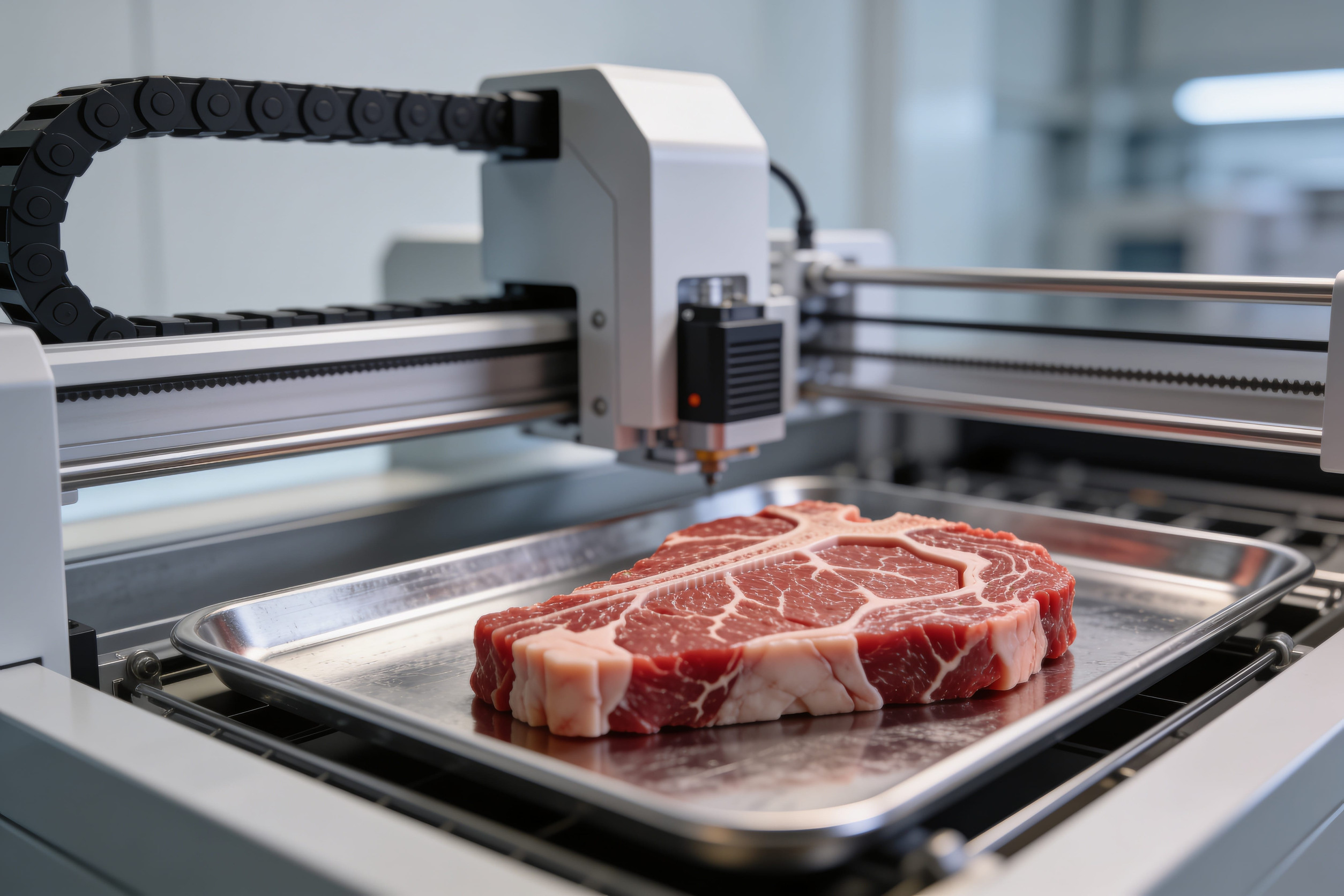
Steakholder Foods uses technology designed to arrange edible plant-based mixtures into specific patterns. Its system places protein-based and fat-based components to imitate the internal structure of conventional meat.
Think about the marbling in a steak. Instead of relying on an animal’s natural muscle and fat structure, the machine builds a similar-looking arrangement using plant ingredients.
The goal is to create familiar shapes and textures, including fibrous chicken-like cuts and marbled beef alternatives.
And no, the Perfecta retail range isn’t lab-grown animal meat. It’s marketed as plant-based food.
The company also researches cultivated-cell technologies, but those separate projects shouldn’t be confused with what Perfecta is selling in U.S. stores.
The Ingredient List Doesn’t Explain the Printing
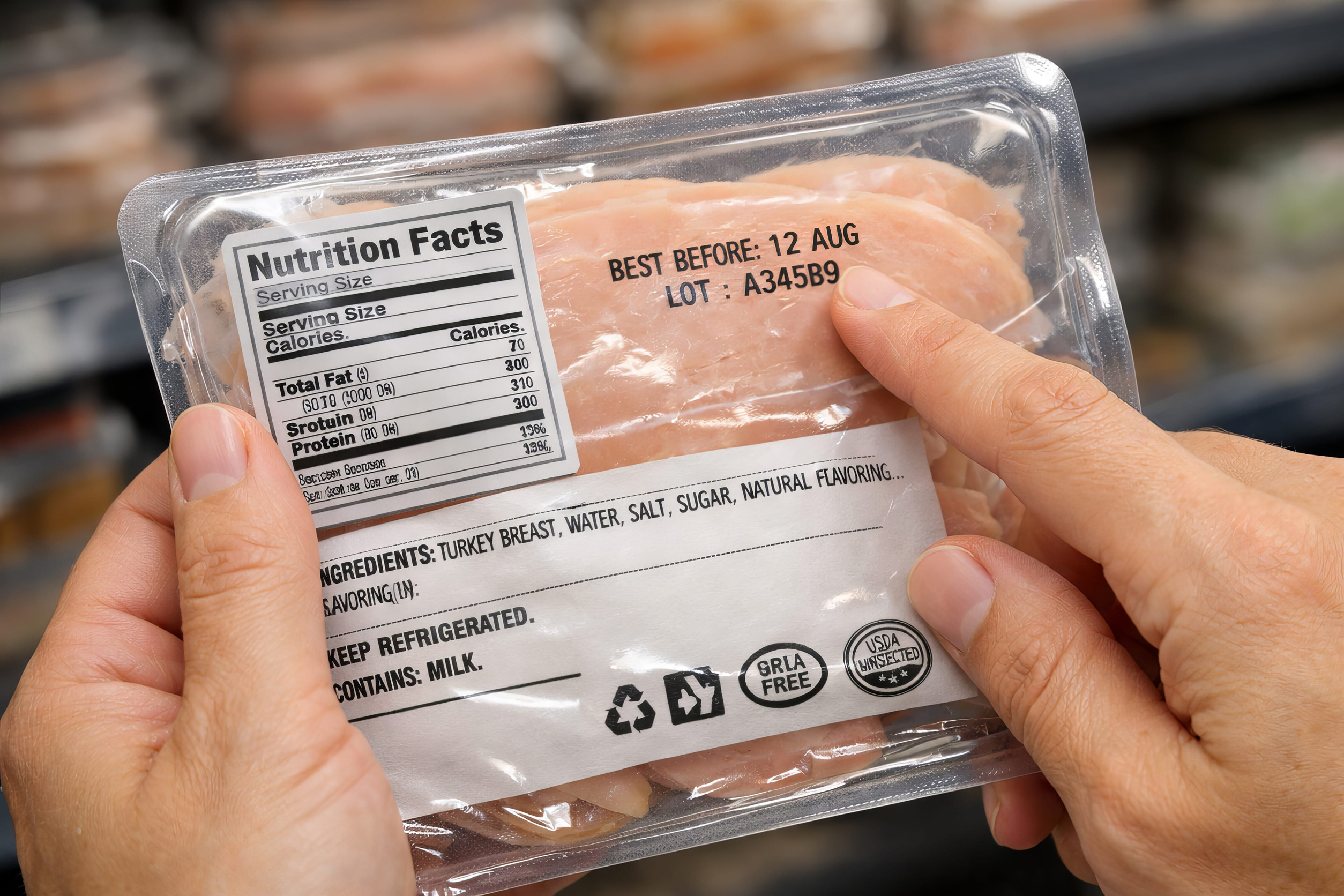
Here’s where things get interesting for label readers.
A grocery package can tell you what’s inside without telling you exactly how those ingredients were assembled.
For example, an Instacart listing for Perfecta’s marbled steak identifies water, soy flour, rapeseed oil, coconut oil, and methylcellulose as its first five ingredients.
Those ingredients give shoppers useful information about the product’s composition.
What they don’t explain is how a printing system arranges the ingredients to create the finished steak-like structure.
The chicken breast has a different formulation. Reporting from Green Queen identifies wheat protein, wheat flour, soy protein, and soy fiber among its ingredients.
However, the complete chicken-breast ingredient declaration was not independently authenticated in the supplied research.
That’s an important detail because shoppers shouldn’t assume that every Perfecta product contains the same ingredients or carries the same allergen information.
And it’s worth remembering that the actual package, rather than an incomplete online listing, is the place to check current ingredients.
Does the FDA Require a 3D-Printed Food Label?
Surprisingly, there’s no general federal requirement that plant-based food produced through 3D printing must carry those exact words on its packaging.
Under existing FDA rules, packaged foods generally must disclose information such as product identity, ingredients, net quantity, nutrition information, and applicable major allergens.
But an ingredient list isn’t a step-by-step explanation of the manufacturing process.
That means a product could potentially meet federal labeling requirements without prominently telling shoppers that its structure was created using a food printer.
There are still rules against misleading labels, and some manufacturing methods have specific disclosure requirements.
The distinction matters: the absence of a dedicated 3D-printing label rule doesn’t mean these products are unregulated or that every possible label is automatically compliant.
An Aldi Chicken Video Added to the Confusion
Meanwhile, an unrelated viral chicken video shows how easily unusual food appearances can create suspicion.
In October 2026, BroBible reported that TikTok creator Fraser Morse had purchased chicken from Aldi for approximately $11 to $12.
After seeing unusual ridges on a partially cooked chicken breast, Morse suspected it had been 3D-printed. He eventually threw it away.
But here’s the catch: there was no verified evidence that the chicken was printed.
No authenticated package information, laboratory examination, or manufacturing records established how it was made. There was also no evidence connecting the Aldi chicken to Perfecta.
The incident illustrates how quickly shoppers can become confused when unfamiliar manufacturing technology enters conversations about everyday groceries.
What Should Shoppers Look for Before Buying?
If you come across Perfecta or another unfamiliar meat alternative, start with the basics.
Check the product name to understand whether you’re buying an animal-based or plant-based food. Read the full ingredient declaration, particularly if you’re avoiding wheat, soy, or other ingredients.
Look at the package’s current allergen information rather than assuming every product in a brand’s range is identical.
And if the manufacturing method matters to you, check the company’s website or contact the manufacturer directly.
Being curious about food technology doesn’t mean you have to reject it. It simply means you want enough information to make your own purchasing decision.
The Bigger Question Is What Shoppers Deserve to Know
Steakholder Foods isn’t hiding its 3D-printing technology from the public. In fact, the company actively promotes that technology as part of its business.
The unresolved question is how clearly the manufacturing method appears on individual retail packages. The supplied research couldn’t verify every current package panel.
And that’s where the transparency debate becomes interesting.
A product can have an accurate ingredient list without explaining how its ingredients were turned into something resembling steak.
For shoppers who care about manufacturing methods, that distinction matters.
As 3D-printed foods become more visible in American grocery stores, the conversation may move beyond what’s inside the package to how it got there.
Because sometimes, knowing what’s for dinner is only half the story.