America is one of the world’s wealthiest countries, yet many of its citizens struggle to feel satisfied with their lives. Despite technological advances, career opportunities, and higher living standards, millions of Americans face financial pressure, loneliness, uncertainty, and exhaustion.
The numbers reveal a troubling pattern. According to Gallup, only 48.9% of American adults were considered to be thriving in early 2025, down from 59.2% in June 2021. Although many Americans remain satisfied with their lives, these findings suggest the American dream increasingly feels out of reach for many households.
So, why are so many Americans unhappy? The answer goes beyond money, politics, or personal struggles. Here are ten pressures that help explain the country’s growing dissatisfaction.
The cost of living keeps increasing.

For millions of Americans, simply covering everyday expenses has become a source of frustration. Groceries, electricity, transportation, insurance, and other household necessities compete for an increasingly stretched paycheck.
The Federal Reserve’s 2025 household survey, published in May 2026, found that 91% of adults considered rising prices a financial concern. More than half described price increases as a major concern, highlighting how widespread affordability worries remain.
Even when people receive pay raises, they may not feel financially better off if their expenses rise. This creates a frustrating situation where working harder does not necessarily translate into greater comfort or freedom.
Buying a home feels out of reach for many.
Homeownership has long represented financial stability and personal achievement in America. However, rising property prices, expensive mortgages, and limited affordable housing options have made that milestone increasingly difficult.
According to Harvard University’s Joint Center for Housing Studies, 22.6 million renter households spent more than 30% of their income on housing and utilities in 2023. Of those, 12.1 million spent more than half their income on these expenses.
For younger Americans, the situation can be particularly discouraging. Many work full-time jobs but still struggle to save enough for a down payment while paying rent and other bills.
When housing consumes so much income, financial independence can feel like a distant goal rather than an achievable reward for hard work.
Americans are feeling increasingly lonely.
Having hundreds of social media connections does not necessarily mean someone has meaningful relationships. Many Americans keep busy schedules while struggling to find genuine friendship and emotional support.
In 2023, the U.S. Surgeon General released an advisory describing loneliness and social isolation as serious national concerns. The report emphasized the importance of meaningful relationships with family members, friends, neighbors, and communities.
Modern lifestyles can make these relationships difficult to maintain. Long working hours, frequent moves, and increased reliance on digital communication may leave people feeling disconnected.
The result is a frustrating contradiction: Americans have more ways to communicate than previous generations, yet some still feel they have nobody to turn to when life becomes difficult.
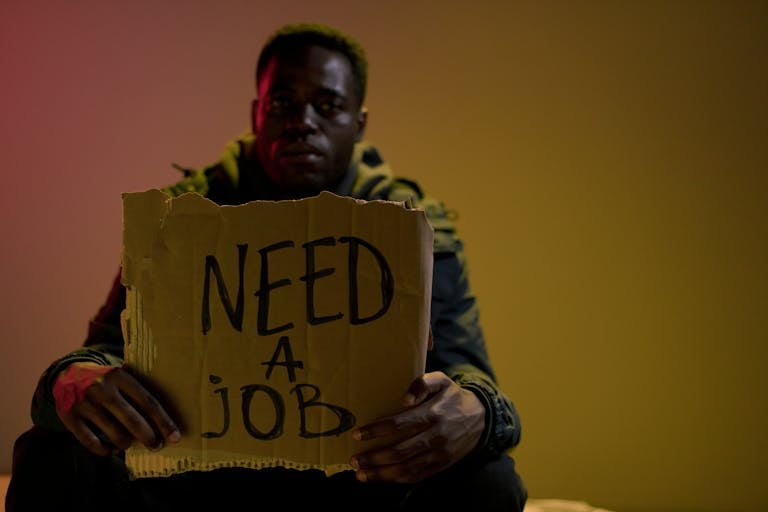
Job security no longer feels guaranteed.
A steady job once offered many Americans a relatively predictable path toward financial stability. Today, layoffs, technological changes, workplace restructuring, and concerns about automation can make employment feel less secure.
The Federal Reserve reported that 42% of adults were concerned about finding or keeping a job in 2025, compared with 37% in 2024. Younger workers and lower-income households expressed particularly strong concerns.
Even employees with stable jobs may worry about their future. Losing an income source can make long-term decisions, such as buying property or starting a family, feel risky.
For many workers, employment provides a paycheck but not necessarily the peace of mind they want.
Political divisions are damaging trust.
Political disagreements have always existed in America, but widespread distrust is making public life increasingly uncomfortable. Conversations about elections, government policies, and national priorities can quickly turn into heated arguments.
A Gallup survey reported in October 2026 found that only 51% of Americans expressed substantial or moderate trust in their fellow citizens to make democratic decisions. That was down from 86% in 1976.
Political division can also affect friendships, families, and communities. People may avoid discussing important issues for fear of arguments or judgment from those who disagree.
When citizens begin viewing one another with suspicion, it becomes harder to maintain a shared sense of national purpose.
Social media encourages constant comparison.
Social media allows Americans to see carefully selected moments from other people’s lives throughout the day. Expensive vacations, beautiful homes, career achievements, and seemingly perfect relationships can create unrealistic expectations.
Someone managing their finances responsibly might suddenly feel unsuccessful after scrolling through photos of luxury purchases. Another person may begin questioning their relationship after watching couples share romantic highlights online.
Research has linked certain patterns of social media use, particularly problematic use and negative social comparison, with poorer psychological well-being. However, the relationship is complex, and online platforms can also provide friendship, entertainment, and support.
The problem often begins when people compare their ordinary daily experiences with the most impressive moments of someone else’s life. That comparison can make genuine achievements feel disappointingly small.
Americans struggle to achieve work-life balance.
For many workers, the traditional workday does not always end when they leave the office. Emails, phone notifications, extra responsibilities, and financial obligations can make it hard to disconnect from work.
Parents may face an added challenge as they balance work with childcare, household chores, and family commitments. Even people without children can struggle to protect time for friendships, hobbies, or relaxation.
When daily life becomes dominated by obligations, activities that once brought enjoyment can gradually disappear. A person might have a respectable career and a steady income but still feel a lack of personal freedom.
The challenge is not necessarily that Americans dislike working. Many want their professional achievements to leave enough room for a fulfilling life outside their jobs.
Financial emergencies can destroy peace of mind.
Financial uncertainty extends beyond high grocery bills and expensive housing. An unexpected vehicle repair, medical expense, or temporary job loss can quickly disrupt a household’s budget.
The Federal Reserve reported that 63% of adults could cover a hypothetical $400 emergency in 2025 using cash or its equivalent. That means more than one-third would need another way to cover it.
Living without adequate financial reserves can turn ordinary situations into stressful decisions. A broken appliance may require borrowing money, while an unexpected bill could force someone to postpone another important expense.
This uncertainty can make people feel trapped financially, even when they have a regular income. Without an emergency cushion, maintaining stability can require constant planning and difficult sacrifices.
Constant negative news creates emotional exhaustion.
Americans encounter a steady stream of information about political disagreements, economic problems, international conflicts, and other troubling developments. Smartphones and social media let people follow these events almost continuously.
However, staying informed can sometimes take an emotional toll. A February 2026 Pew Research Center report found that 52% of U.S. adults felt worn out by the amount of news available, while 60% said they had reduced their overall news consumption at some point.
The constant flow of troubling headlines can create a sense that another crisis is always approaching. Some people respond by checking the news repeatedly, while others disengage entirely.
Neither response necessarily means someone is indifferent to what happens around them. For many Americans, stepping away from the news offers temporary relief from an overwhelming information environment.
The American dream feels harder to achieve
One of the deepest sources of dissatisfaction may be the growing gap between what Americans expect from life and what they believe they can realistically achieve.
Generations have grown up hearing that education, determination, and consistent hard work can lead to financial independence. Yet many people now find that traditional milestones require greater sacrifices than they anticipated.
Recent Federal Reserve data illustrate some of this pressure. In 2025, only 63% of adults ages 18 to 29 reported doing okay financially or living comfortably, compared with 83% of adults aged 60 and older.
These differences do not mean younger Americans have abandoned their ambitions. Instead, they suggest that the journey toward financial security can feel considerably more challenging earlier in adulthood.
When people believe they are doing everything expected of them but still falling behind, disappointment can gradually replace optimism.
What America’s unhappiness reveals
America’s happiness problem has no single explanation. Financial pressures, housing difficulties, social isolation, job uncertainty, and political disagreements affect people differently depending on their circumstances.
The statistics also reveal an important distinction: dissatisfaction is widespread, but it is not universal. Many Americans continue to report financial stability, meaningful relationships, and satisfying lives.
Still, the challenges facing struggling households deserve attention. Improving affordability, strengthening communities, protecting personal time, and rebuilding trust could help create conditions in which more people feel optimistic about their future.
Ultimately, happiness involves more than earning a good salary or owning expensive possessions. For many Americans, it also means feeling secure, maintaining meaningful relationships, enjoying personal freedom, and believing that tomorrow can be better than today.
Posts You Might Like:
7 Hidden Signs of Depression Most People Miss
7 Signs You May Have High-Functioning Depression