Some foods look unusual, others smell like something went terribly wrong, and a few are so unexpected you might question whether they belong on a dinner plate at all. Yet around the world, people enjoy these dishes as beloved delicacies, traditional comfort foods, or special treats served on important occasions. From cheese containing insect larvae to a fruit famous for its powerful smell, these ten foods prove that what seems unbelievable to one person can be perfectly normal to someone else.
Casu Marzu: The Cheese With a Shocking Secret
Imagine cutting into a piece of cheese and discovering that its most unusual ingredient is still moving.
On the Italian island of Sardinia, casu marzu is a traditional sheep’s milk cheese associated with a particularly unusual ripening process. Cheese fly larvae break down the cheese’s fats, producing an exceptionally soft texture and a strong, pungent flavor. The result is so different from ordinary cheese that even adventurous food lovers might hesitate before taking a bite.
Its reputation has drawn attention far beyond Sardinia, but the cheese is also linked to food safety concerns. It reminds us that traditional foods can be fascinating without necessarily being suitable for everyone.
Century Eggs: Eggs That Look Like They’ve Been Forgotten
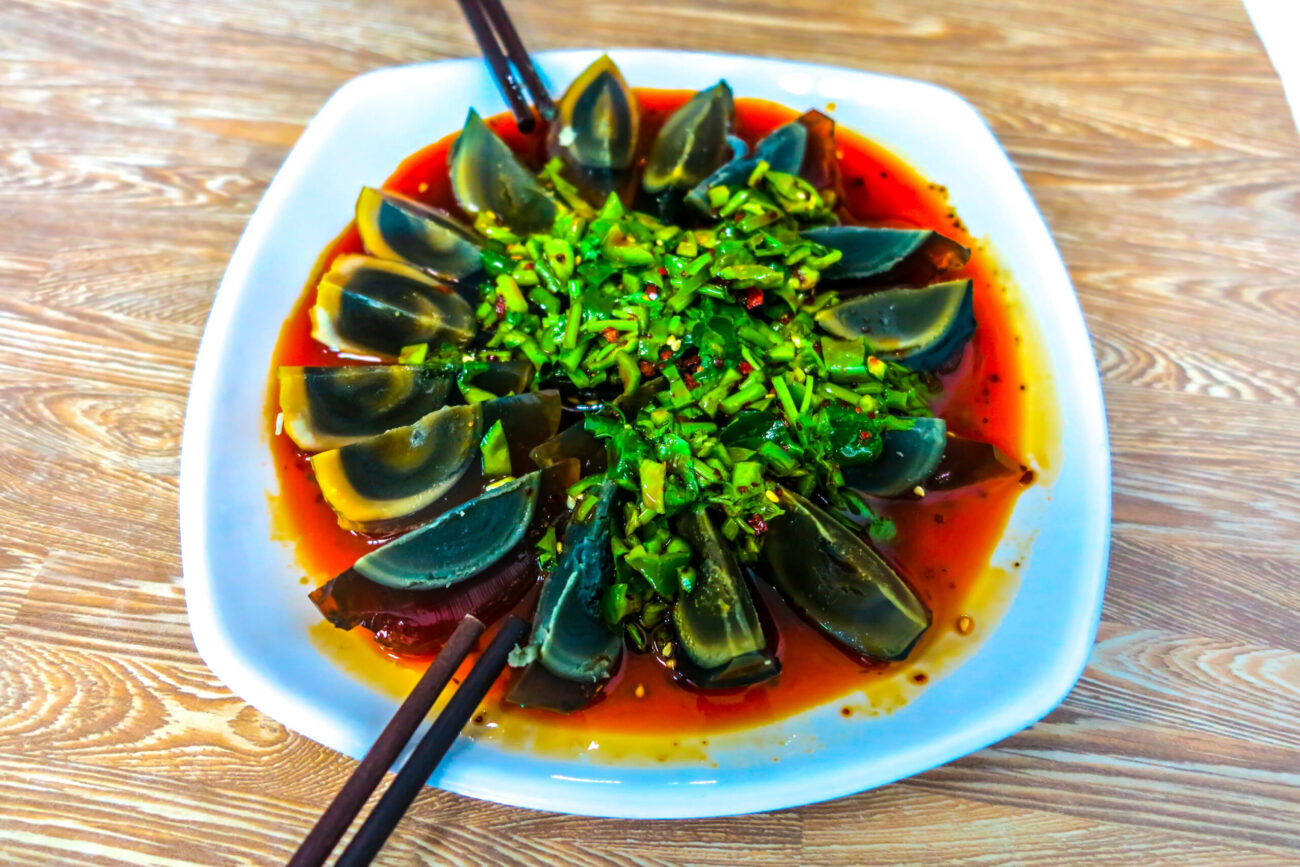
These eggs look ancient, but their dramatic appearance comes from a preservation technique, not a hundred years of waiting.
Popular in Chinese cuisine, century eggs, also called preserved or thousand-year eggs, are typically made from duck eggs. An alkaline curing process turns the egg white into a dark, translucent jelly and gives the yolk a creamy texture and distinctive flavor.
Despite their unusual appearance, they are an established part of Chinese food culture. People may serve them with rice porridge, tofu, or ginger, creating a dish that balances their rich taste with simpler ingredients. For a closer look at their history and preparation, explore this Smithsonian Magazine article about preserved eggs.
Durian: The Fruit That Clears a Room
Few fruits inspire such a dramatic reaction before anyone has even tasted them.
Durian is a large, spiky tropical fruit popular in parts of Southeast Asia. Its smell is famously powerful, with descriptions ranging from sweet and fruity to onion-like and sulfurous. Some people find the aroma unbearable, while devoted fans happily seek it out.
The creamy flesh has a rich, custard-like consistency, and its flavor can combine sweet, nutty, and savory notes. Durian appears in everything from ice cream and cakes to smoothies and traditional desserts. It also shows how smell can shape someone’s opinion of a food before the first bite.
Balut: The Egg With a Surprise Inside
This popular street food asks diners to look beyond the familiar appearance of an ordinary boiled egg.
In the Philippines, balut is a fertilized duck egg with a developing embryo, boiled or steamed and eaten from the shell. Vendors commonly sell it as a snack, often accompanied by salt, vinegar, or other seasonings.
For people who grew up eating it, balut can be a familiar and satisfying treat. First-time visitors, however, may struggle with the appearance and texture. The dish illustrates how childhood memories and cultural traditions influence what people consider delicious.
Hákarl: Iceland’s Fermented Shark
If a food’s smell could win an argument before the meal begins, hákarl would be a serious contender.
This traditional Icelandic specialty is made from Greenland shark that undergoes a lengthy curing and drying process. Fresh Greenland shark meat contains compounds that make it unsuitable to eat without proper processing, so the traditional preparation is essential.
The finished meat has a powerful ammonia-like aroma and an intense flavor that many newcomers find challenging. Hákarl is traditionally associated with Icelandic winter celebrations and is often sampled by curious travelers. Atlas Obscura explains more about this distinctive dish in its feature on Iceland’s fermented shark.
Escamoles: Mexico’s Insect Caviar
Tiny grains of rice can turn out to be one of Mexico’s most unusual delicacies.
Escamoles are the edible larvae and pupae of certain ants, harvested from their underground nests. Sometimes nicknamed insect caviar, they have a delicate texture and are often described as buttery or nutty.
People may cook them with butter, herbs, and spices, then serve them in tacos or alongside other traditional ingredients. Although eating ant larvae may surprise people unfamiliar with the dish, escamoles have a place in Mexican culinary traditions dating back centuries.
Stargazy Pie: A Fish Pie That Stares Back
This traditional British pie looks as though its ingredients are trying to escape through the crust.
Originating in the Cornish village of Mousehole, stargazy pie is made with fish, commonly pilchards, baked beneath a pastry crust. The fish heads protrude through the top, appearing to gaze toward the sky.
The unusual presentation is connected to local tradition and a story celebrating a fisherman who supposedly saved the village from starvation. The pie is particularly associated with Tom Bawcock’s Eve, a local celebration held in December. Its appearance might raise eyebrows, but the hearty dish beneath the crust is rooted in coastal life.
Related: 10 American Foods That Make Visitors Scratch Their Heads- But Many Americans Still Love
Shirako: Japan’s Unexpected Seafood Delicacy
This Japanese specialty looks more like a soft cream than the seafood most people expect.
Shirako is the milt, or sperm sacs, of male fish, commonly cod and sometimes pufferfish. It is valued for its delicate, creamy texture and mild, slightly briny taste.
Depending on the preparation, shirako may be served raw where appropriate, lightly cooked, grilled, or added to hot pots. Its appearance can be surprising, but its appeal lies in its subtle flavor and silky consistency. It also shows how different culinary traditions make use of ingredients that might otherwise be overlooked.
Sannakji: The Seafood That Appears to Move
Few dishes make the phrase “fresh seafood” quite as startling as this Korean specialty.
Sannakji is made from small pieces of octopus dressed with sesame oil and often served with sesame seeds. The pieces can keep twitching after cutting because the nerves and muscles can still respond temporarily.
That movement doesn’t mean the octopus is alive, but the dish still requires care. Its suction cups can cling to the mouth or throat, creating a choking hazard. Anyone considering it should understand the risk and follow appropriate preparation and eating practices.
Salo: The Food That Celebrates Pork Fat
In parts of Eastern Europe, a thick slice of cured pork fat is more than an unusual snack; it is a traditional favorite.
Salo is closely associated with Ukrainian cuisine and consists of salted pork fatback, sometimes seasoned with garlic, pepper, or herbs. It is commonly sliced thinly and served with bread, onions, pickles, or other accompaniments.
For someone accustomed to trimming fat away from meat, eating it as a featured ingredient may seem strange. Yet curing gives salo a distinctive flavor and preserves a tradition built around making practical use of available ingredients.
Strange to One Person, Delicious to Another
The most surprising foods often reveal something interesting about the people and places that created them.
From Sardinian cheese to Korean seafood and Ukrainian salo, these dishes reflect local ingredients, preservation methods, history, and generations of culinary knowledge. Their unusual appearances or aromas might make outsiders hesitate, but judging them only by first impressions misses the stories behind them. Food traditions remind us that taste is personal, and familiarity often separates something that seems bizarre from something that feels like home.
Which of these ten foods would you be brave enough to try, and which one would you absolutely refuse to put on your plate?