Halloween parties are all about spooky decorations, creepy-looking snacks, caramel apples, and pumpkin desserts that disappear before the night is over. But while everyone is busy making food look frightening, a few ordinary kitchen mistakes can create genuine problems. The good news is that keeping your Halloween spread safe does not require expensive equipment or complicated rules. A little planning can help you serve treats that are memorable for the right reasons.
Leaving Pumpkin Pie Out All Night
That beautiful pumpkin pie can become a food safety problem long before the last guest leaves.
Pumpkin pie made with eggs and milk needs proper refrigeration because harmful bacteria can grow when perishable foods remain at room temperature. The same applies to many homemade custard desserts and cream-filled pastries. According to the U.S. Food and Drug Administration’s food safety guidance, perishable foods should generally be refrigerated within two hours.
For a Halloween party, serve pie in smaller portions and keep the remaining slices chilled. If food has been sitting out beyond the recommended limit, do not rely on its smell or appearance to decide whether it is safe. Bacteria that cause foodborne illness don’t always show obvious warning signs.
Treating Caramel Apples Like Ordinary Candy
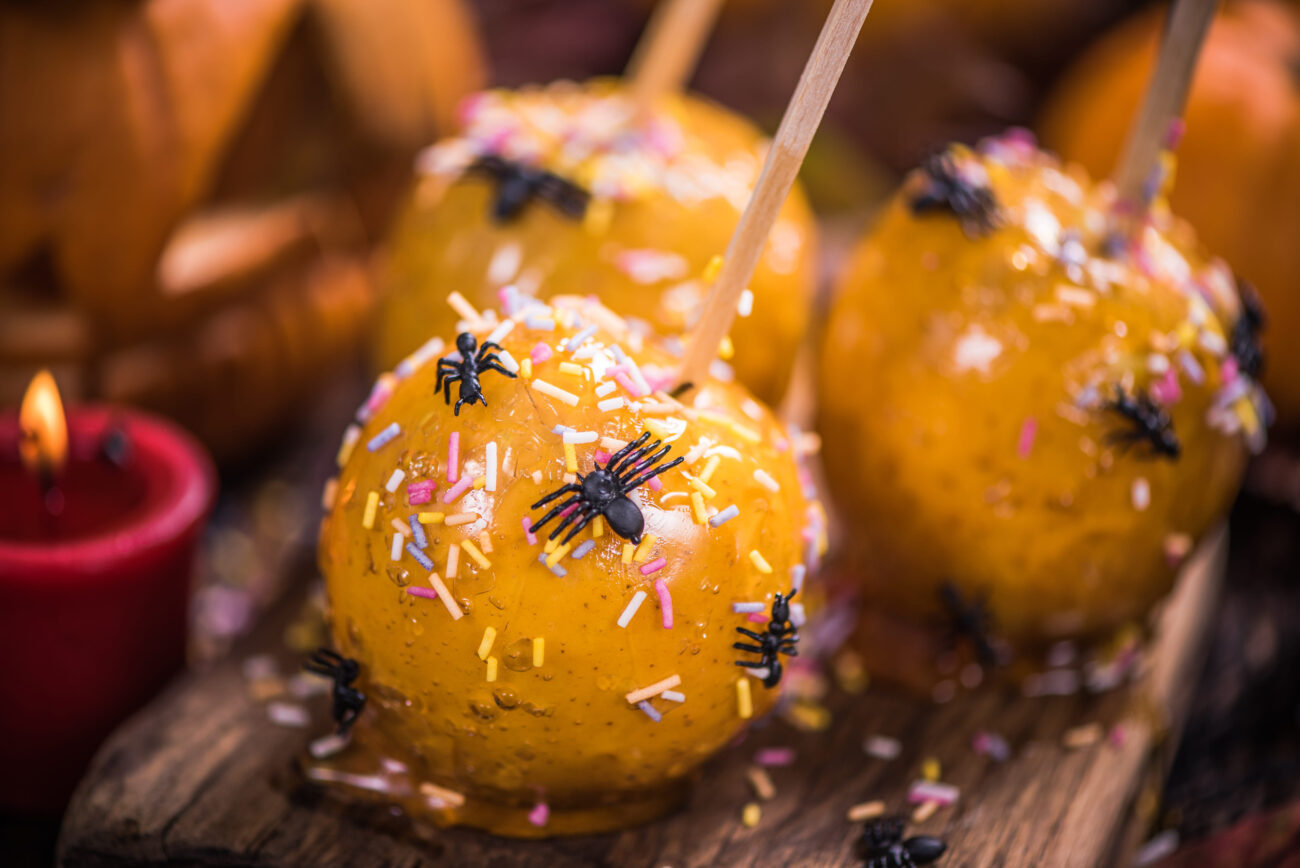
A glossy caramel coating does not automatically make an apple safe to leave on the counter indefinitely.
Caramel apples combine fresh fruit with a sugary coating, and preparation and storage matter. Wash apples thoroughly under running water before dipping them, dry them properly, and use clean utensils and work surfaces. Don’t assume the caramel coating preserves the fruit or eliminates contamination.
If you prepare caramel apples ahead of time, follow a reliable recipe’s storage instructions and refrigerate them when required. Cut apples also need careful handling because cutting exposes their flesh to contamination.
Leaving Party Platters on the Table for Hours
A cheese board can look fresh while sitting too long in conditions that encourage bacterial growth.
Cheese platters, meat sandwiches, creamy dips, cut fruit, and pasta salads with meat or seafood shouldn’t sit unrefrigerated throughout an entire Halloween gathering. The general rule is to discard perishable food left at room temperature for more than two hours, reducing that limit to one hour when temperatures exceed 90°F (32°C).
Instead of filling one enormous serving tray, put out smaller portions and replenish them from the refrigerator. This approach also keeps the table looking fresh. The CDC’s food safety guidance explains why prompt refrigeration and clean food preparation help prevent foodborne illness.
Serving Unpasteurized Apple Cider
That steaming mug of autumn cider may feel wholesome, but the way the juice is processed matters.
Unpasteurized apple cider can contain harmful bacteria, including E. coli and Salmonella. Pasteurization uses heat to reduce dangerous microorganisms, making pasteurized cider the safer choice for parties with children, older adults, pregnant people, or anyone with a weakened immune system.
Check the product label before buying cider for a crowd. For a warm Halloween drink, gently heat pasteurized cider with cinnamon sticks, orange slices, or cloves for seasonal flavor. You can still create a festive drink station without taking unnecessary risks.
Letting Guests Sample Raw Cookie Dough
The temptation to taste cookie dough before baking is real, but raw ingredients can carry invisible hazards.
Raw eggs may contain Salmonella, while uncooked flour can contain harmful bacteria such as E. coli. That means homemade cookie dough and cake batter are not automatically safe to eat just because they contain sugar and familiar baking ingredients.
If baking is part of your Halloween entertainment, prepare a separate edible cookie dough recipe made with ingredients specifically treated for safe consumption without baking. Otherwise, wait until the cookies are fully cooked before serving them. Children can still decorate cooled cookies with colorful icing, candy eyes, and spooky designs.
Forgetting About Food Allergies and Choking Hazards
A treat that delights one child may not suit another.
Halloween candy can contain common allergens such as peanuts, milk, soy, wheat, and tree nuts. Read ingredient labels carefully, and remember that individually distributed sweets may not always provide enough information to make a safe decision. When hosting children with known allergies, ask their caregivers about restrictions before planning the menu.
Age matters, too. Hard candies, whole nuts, chewing gum, and small decorative pieces can pose choking risks for young children. Keep decorations separate from edible food, and avoid using tiny objects that could accidentally end up in a child’s mouth.
Reusing the Same Utensils for Everything
One contaminated spoon can undo the careful work you put into preparing an entire party spread.
Cross-contamination happens when harmful microorganisms move from one food, surface, or utensil to another. Using the same knife for raw meat and ready-to-eat vegetables without washing it properly is one example. The same concern applies to serving spoons shared between dishes or hands that move from handling raw ingredients to arranging snacks.
Wash your hands with soap and water for at least 20 seconds, clean prep surfaces, and use separate utensils when appropriate. If you are organizing several dishes, prep ingredients in advance and keep your kitchen organized, much like building simple habits that recharge your mind and body.
Make Halloween Spooky, Not Risky
The best Halloween parties leave guests talking about the decorations and delicious food, not an avoidable bout of food poisoning.
Keep perishable dishes chilled, choose pasteurized drinks, handle ingredients carefully, and watch for allergies and choking risks. These practical steps make it easier to enjoy everything from pumpkin pie to caramel apples without unnecessary worry.
Related: 9 Things You Should Never Do When Handing Out Halloween Candy
What Halloween party food do you always serve, and which of these safety mistakes will you be more careful to avoid this year?