New Jersey’s voter roll controversy began with a citizenship answer the system apparently ignored. Thousands reportedly selected “no” when asked whether they were United States citizens, yet the state still registered them. Now, the Trump Justice Department says every provable illegal vote could lead to federal action.
Assistant Attorney General Harmeet Dhillon has promised to investigate every credible lead, not only schemes that could change an election. She described a “broken windows” strategy that treats individual violations as serious offenses. Her announcement has turned the registration failure into a national battle over security, privacy and accountability.
The central issue is not simply how many names entered the database. A government system apparently received a disqualifying citizenship answer and still continued the registration. That contradiction now drives the federal investigation and political fight.
The system recorded “no” but kept moving
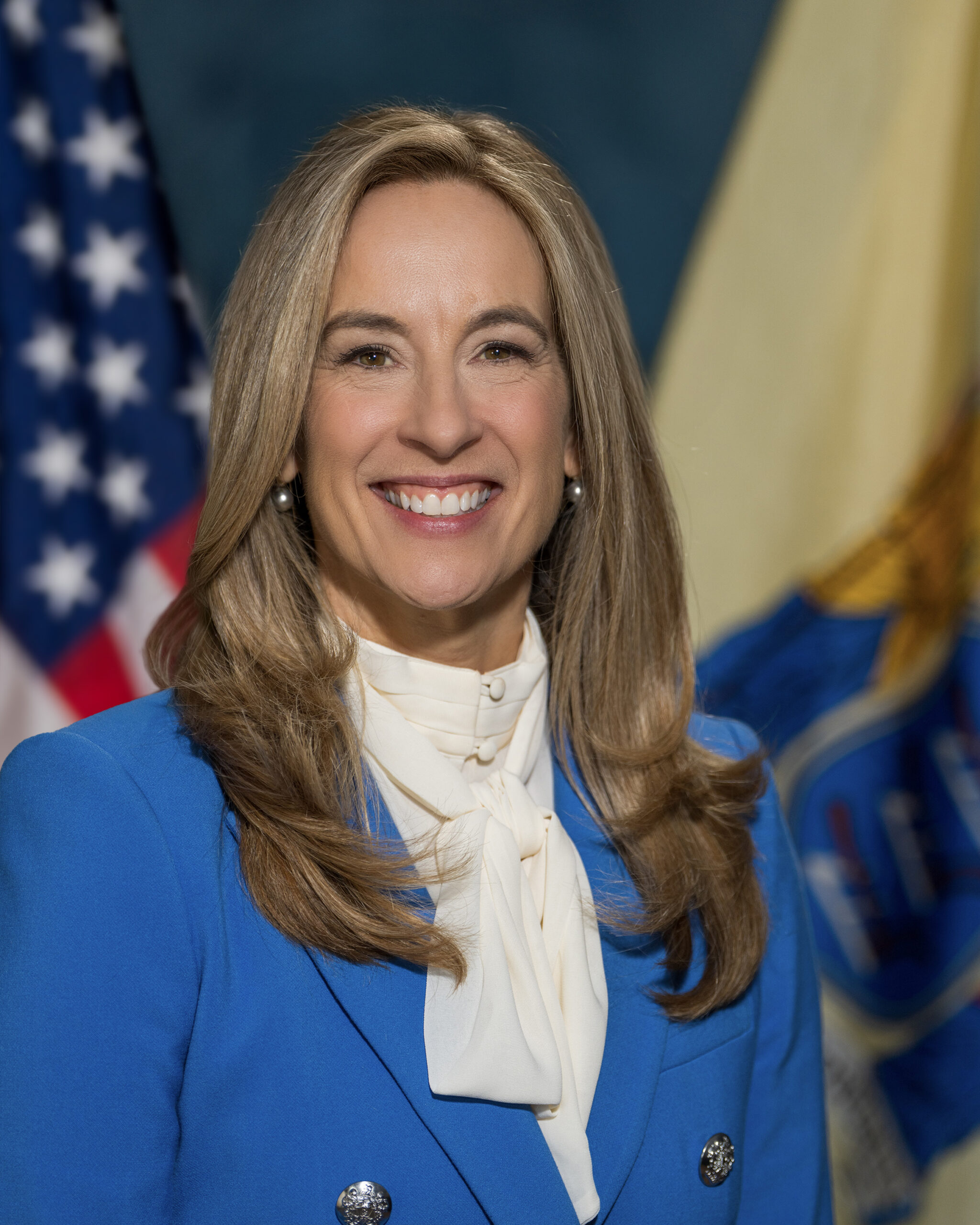
State of New Jersey, Public domain, via Wikimedia Commons
Governor Mikie Sherrill disclosed that about 6,600 people were mistakenly placed on New Jersey’s voter rolls between June 2023 and June 2024. The affected residents reportedly identified themselves as noncitizens while applying for driver’s licenses or state identification cards. Despite that answer, their information continued through the motor voter process.
That sequence raises a question officials cannot answer by simply blaming software. If the system captured the citizenship response correctly, why did it not stop the registration immediately? Someone must explain whether the failure occurred during data collection, transmission, review, or final approval.
The answer matters because every stage involved a different responsibility. A technology failure could point toward faulty programming, while an approval failure could expose weak state oversight. Investigators must reconstruct the complete data trail before blaming one company, one agency, or one employee.
New Jersey and its vendor disagree
Sherrill ordered officials to remove affected residents from the rolls and investigate how the error happened. She also announced plans to replace the technology vendor connected to the registration system. That decision suggested the administration believed the vendor played a major role.
The vendor, IDEMIA, rejected the idea that its technology alone caused the problem. The company said it transmitted registration information while New Jersey election officials remained responsible for determining eligibility. That response transformed the controversy from a technical malfunction into a dispute over government oversight.
If the company transmitted “no” responses, the state must explain why the applications were approved. If the software lost those answers, the vendor must explain why testing missed the defect. An independent technical audit may be the only credible way to settle the dispute.
Fewer than 400 affected residents reportedly voted
New Jersey’s initial review found that fewer than 400 people from the affected group later cast ballots. The registrations were reportedly spread among Democrats, Republicans and unaffiliated voters across the state. That distribution weakens claims that the error clearly benefited only one political party.
The number of registrations must not be confused with the number of illegal votes. A person may have been registered by mistake without knowing the state had created a voter record. Criminal liability depends on whether the person remained ineligible, understood the citizenship requirement, and knowingly cast a ballot.
Federal investigators must examine every case individually. They need to confirm each voter’s citizenship status on the day of voting and determine what information the state provided. Without those facts, a questionable record proves a system failure but does not automatically prove a crime.
The numbers require context, not dismissal
New Jersey had nearly 6.7 million registered voters in July 2026. The 6,600 affected registrations represented roughly one tenth of one percent of the statewide voter roll. The fewer than 400 reported ballots represented a much smaller share of the total electorate.
Those percentages do not support claims that noncitizen voting controlled every New Jersey election. They also do not make the breakdown harmless. A system capable of approving thousands of self identified noncitizens contains a serious weakness that demands public explanation.
The responsible response lies between denial and exaggeration. Officials should not present every mistaken registration as proof of organized fraud. They should also refuse to dismiss a failure that bypassed one of the most basic eligibility safeguards.
Dhillon promises aggressive enforcement
Dhillon says previous federal officials often declined to pursue isolated voting violations unless they involved widespread fraud. She argues that ignoring smaller cases weakens deterrence and encourages Americans to believe election laws are optional. Her strategy promises prosecution whenever investigators find sufficient evidence of an offense.
The “broken windows” phrase comes from a theory that enforcing smaller violations may prevent more serious disorder. Dhillon has applied that idea to election law by insisting that every illegal ballot deserves attention. Under that philosophy, a case does not become unimportant simply because it failed to change a result.
The strategy may satisfy voters who believe election offenses have been overlooked. However, it will succeed only if investigators use accurate records and careful identity matching. Aggressive enforcement based on outdated immigration data could wrongly target lawful naturalized citizens.
Federal penalties can reach beyond one ballot
Federal law generally prohibits noncitizens from voting in elections that include candidates for federal office. A conviction can bring prison time, financial penalties, and immigration consequences. Additional charges may follow when someone falsely claims citizenship or lies during the naturalization process.
The Justice Department has already filed election related cases in New Jersey involving alleged false citizenship statements and concealed voting histories. Those cases remain allegations unless prosecutors prove them in court. They also differ sharply from the newly disclosed registration failure.
The earlier defendants were accused of directly claiming that they were citizens. The 6,600 affected applicants reportedly told the system that they were not citizens before being registered anyway. That distinction separates possible deliberate deception from a government created error.
The voter data fight is expanding
The Justice Department confronted New Jersey before the registration failure became public. Federal officials had already sued the state for refusing to provide complete electronic voter rolls. The department argues that federal law permits it to inspect records and investigate improper registrations.
New Jersey has resisted demands for unredacted voter information. State officials have raised concerns about releasing names, birth dates, addresses and other sensitive details. They also fear outdated federal records could produce false matches and wrongful accusations.
The newly disclosed error strengthens the federal argument that outside review is necessary. New Jersey can no longer say concerns about its voter database are purely hypothetical. The state must now balance voter privacy against a documented failure involving thousands of registrations.
Investigators must follow the approval trail
Officials should identify the exact moment when the citizenship answers stopped controlling the registration process. They should review software logs, employee actions, transmission records, approval rules and warning messages. Every stage deserves scrutiny rather than allowing one company or agency to become a convenient scapegoat.
Investigators must also determine when state employees first discovered the problem. If officials knew about the registrations before the public disclosure, they must explain why they waited. The timeline could reveal whether the scandal involved only technical failure or also poor administrative judgment.
The state should release a detailed public report after completing the review. It should explain how many affected people later became citizens, how many remained ineligible, and how many knowingly voted. It should also identify reforms needed to prevent the same failure from happening again.
The real scandal extends beyond the ballots
The deepest problem is not simply that fewer than 400 affected residents reportedly voted. A government process received thousands of declarations of noncitizenship and still created voter records. That breakdown raises serious questions about software design, state oversight, and competence.
Republicans are justified in demanding answers about how ineligible registrations reached the rolls. Democrats are justified in warning against treating people as criminals when the government may have created the mistake. Both concerns can be valid at the same time.
New Jersey must reveal who approved the registrations and why safeguards failed. The Justice Department must prove every alleged violation rather than assume guilt from a flawed database. The public deserves accountability that protects election law and due process.
Dhillon’s strategy faces a major test
The Justice Department’s enforcement policy may produce strong cases against people who knowingly violated federal voting laws. Careful prosecutions could improve deterrence and reassure voters who believe individual offenses have been ignored. Weak cases built on unreliable data would deepen distrust and damage innocent people.
New Jersey’s failure gives federal officials a chance to show that aggressive enforcement can remain fair. It also lets state leaders prove that security and voter access need not conflict. Both sides will be judged by their evidence and their mistakes.
The 6,600 registrations expose a system that failed one of its most basic tasks. The fewer than 400 ballots require careful individual review rather than sweeping assumptions. What happens next could shape voter roll battles across the United States.