Gender and sexuality should not feel like a courtroom where everyone must defend themselves. Many still carry labels applied by others before they can speak, and while these may seem harmless, they influence workplaces, relationships, schools, families, communities, health care, and policy.
We live in a time when more Americans openly identify as LGBTQ+, more families talk about gender roles, and more young people have the language to describe themselves with honesty. That visibility has helped many people feel less alone, but it has also stirred up old assumptions in public conversation. The problem is not that people ask questions. The problem begins when stereotypes masquerade as facts.
The confusion over gender and sexuality takes many forms.
One of the most common misconceptions is the idea that gender identity, sexual orientation, and gender expression all mean the same thing. They do not. Gender identity refers to a person’s internal sense of gender. Sexual orientation describes patterns of romantic, emotional, or sexual attraction. Gender expression is how someone presents themselves through clothing, hairstyle, voice, movement, mannerisms, or social style.
This matters because people quickly assume from appearances. A masculine woman is not necessarily gay, nor is a feminine man automatically transgender. A nonbinary person’s sexuality is not predetermined, and bisexual identity does not rely on specific looks or behaviors.
Mixing these ideas turns people into puzzles for public inspection. Better to acknowledge we cannot infer someone’s identity from appearance alone. Respect starts by not making identity a guessing game.
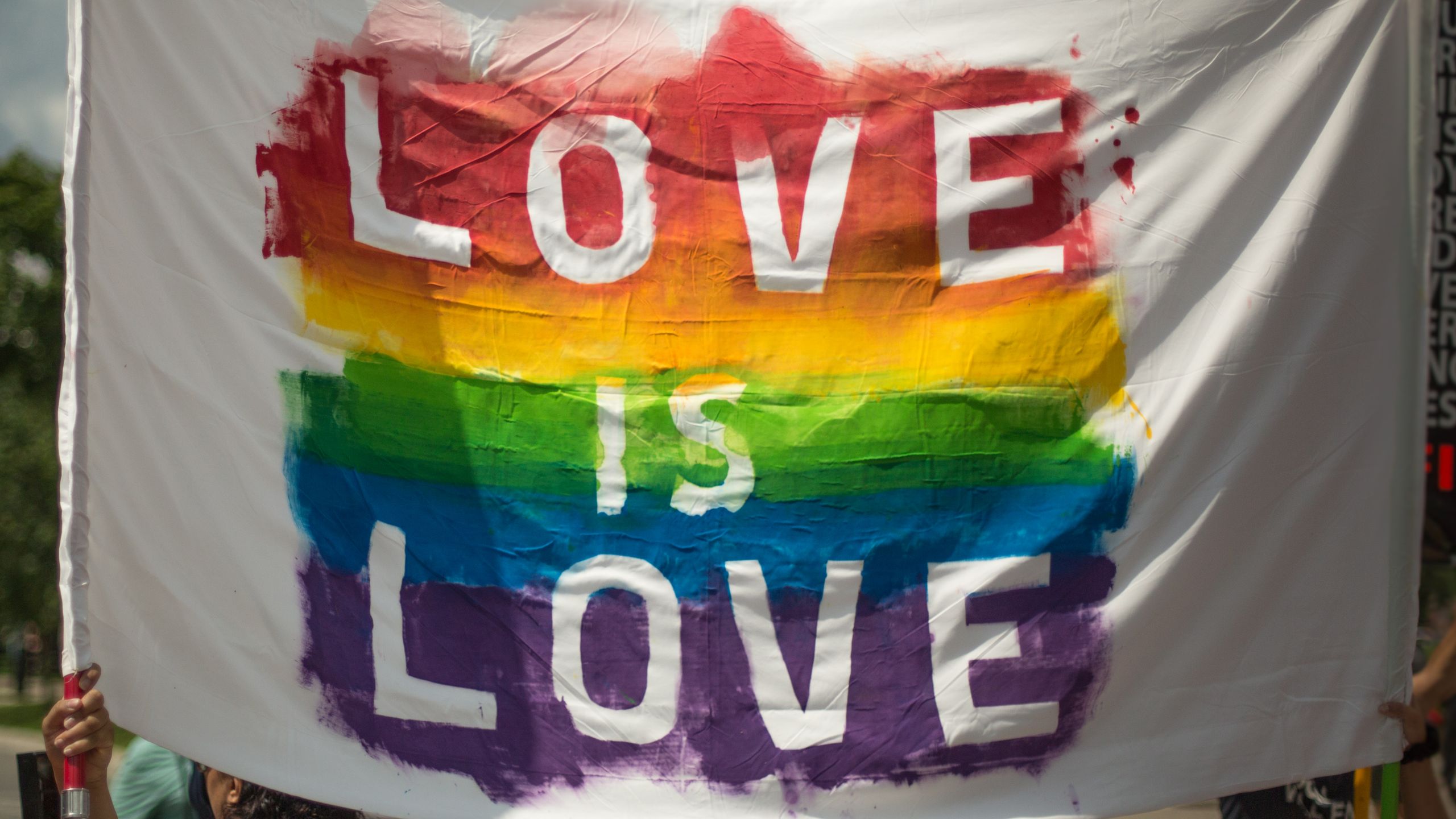
LGBTQ+ Identity Gets Dismissed As A Modern Trend
The idea that LGBTQ+ identity suddenly appeared because of social media, schools, celebrities, or politics misses the larger picture. LGBTQ+ people have always existed across cultures and historical periods, even when laws, stigma, religion, family pressure, or fear forced many people to stay silent. What has changed most is not human identity itself. What has changed is the space some people now have to name it.
Gallup’s 2026 data found that 9% of U.S. adults identify as LGBTQ+, more than double the share recorded in 2012. That rise does not prove that people are being turned into something. It suggests that more people, especially younger adults, feel able to answer honestly when asked. Silence can hide a population for generations, but it cannot erase it.
Calling LGBTQ+ identity a trend treats people like fashion instead of human beings and makes families dismiss genuine feelings as rebellion or confusion. Increased visibility does not mean identities are fake just that fewer people hide.
Biological Sex Gets Oversimplified Into A Rigid Box
Many people were taught that biological sex is only male or female and that everybody fits neatly into one of those two boxes. For everyday paperwork, that simple model may feel familiar. In real life, biology is more layered. Sex can involve chromosomes, hormones, reproductive anatomy, external anatomy, and secondary sex characteristics, and those traits do not always align in a uniform pattern.
Intersex variations show why this discussion needs care. Some are born with traits outside typical male or female categories, often discovered later in life. Their existence does not erase male and female, but challenges the notion that sex is always simple or visible.
A serious conversation about sex does not need to deny biology. It needs to understand biology with more accuracy. Oversimplifying sex may feel convenient, but it can create real harm in medicine, sports policy, identity documents, education, and family life. Human bodies deserve better than cartoon-level certainty.
Gender Roles Still Trap People In Outdated Expectations
Traditional gender roles are often seen as timeless truths, but are mostly societal habits. A boy who cooks isn’t betraying masculinity, nor is a girl who loves engineering rejecting femininity. Fathers who stay home aren’t weak, and mothers earning more aren’t damaging their families.
Americans continue to debate changing gender roles, especially around women working outside the home and men taking on more child care and housework. That debate shows how much of this issue is cultural, not biological destiny. Couples and families often work best when they divide responsibilities by skill, availability, preference, and fairness rather than by outdated scripts.
Rigid gender roles make people perform instead of live. They pressure men to hide tenderness, women to downplay ambition, boys to avoid softness, and girls to apologize for strength. Society thrives when people are free to grow, not boxed in by narrow roles.
Equal Relationships Get Blamed For Marriage Problems
Some think relationships only work if men lead and women follow, assigning tasks by gender. But strong relationships are built on honesty, maturity, shared work, trust, and respect—qualities not limited by gender.
Modern couples face real pressure from rent, childcare costs, student loans, health expenses, long work hours, and family obligations. A relationship that refuses to be flexible can become brittle under that pressure.
If one partner handles every meal, every school email, every doctor’s appointment, every emotional crisis, and every household detail, resentment can quietly grow even when the relationship looks traditional from the outside.
Equality does not mean both partners do the exact same thing every day. It means both people matter, both people contribute, and both people can speak openly about what feels fair. A marriage does not collapse because a man washes dishes or a woman manages money. It collapses when power replaces partnership.
Men Get Painted As Violent, And Women Get Painted As Harmless
The stereotype that men are violent and women are gentle harms everyone. It unfairly casts boys as threats and ignores that women can also be harmful. Human behavior can’t be boxed by gender.
Men are often taught to hide fear or tenderness. When anger is the only acceptable male emotion, some may express pain through dominance. This is learned, not destiny; society needs to teach boys that emotional honesty is strength.
This misconception also harms victims. Male victims of abuse may stay silent because they fear ridicule. Female abusers may be overlooked because people assume women cannot cause serious harm. A safer culture judges behavior clearly, not lazily, by gender. Violence is a choice, a pattern, or a failure of control. It is not a birthright.
Women Without Children Still Face Cruel Judgment
The belief that a woman’s worth relies on motherhood is an old, stubborn assumption. Motherhood is meaningful, but not the only valuable path. Women contribute in countless ways and are not incomplete without children.
Some women are childfree by choice. Some cannot have children. Some wanted children, but life unfolded differently. Some are still deciding. Some are raising children alone. None of these paths should determine whether society treats them with dignity. Reducing women to reproductive status turns personhood into a checklist.
Single mothers deserve special mention because they are often judged from every direction. They may be criticized for needing help, only to be ignored when they show strength. Many work, study, parent, budget, protect, comfort, and plan with little room to rest. The question should not be whether single mothers have value. The question should be: why does society make its labor so invisible?
Bisexual And Pansexual People Get Unfairly Branded As Unfaithful
Bisexuality and pansexuality describe attraction, not character. A bisexual person can be faithful. A pansexual person can be deeply committed. A straight person can cheat. A gay person can cheat. Infidelity comes from choices, boundaries, honesty, opportunity, emotional maturity, relationship health, and personal values. It does not come from being attracted to more than one gender.
This assumption survives because some people confuse capacity for attraction with lack of self-control. By that logic, anyone attracted to a large group of people would be untrustworthy, which makes no sense. A person in a committed relationship does not stay faithful because only one type of human exists. They stay faithful because they choose respect over betrayal.
The cheating stereotype also creates a cruel double bind. Bisexual women may be fetishized, treated like a fantasy, or assumed to be experimenting. Bisexual men may be dismissed as secretly gay. Both reactions erase the person standing in front of us. Attraction to more than one gender is not confusion, greed, or dishonesty. It is simply one valid way human attraction can work.
Asexual People Get Treated As Broken
Asexuality is often misunderstood because many cultures treat sexual attraction as a universal human experience. For some people, sexual attraction is central to love and connection. For others, it is limited, rare, absent, or not especially important.
Asexuality exists on a spectrum, and asexual people can have romantic relationships, emotional intimacy, deep partnerships, affection, marriage, or none of those things, depending on the person.
The harmful assumption says asexual people must be traumatized, repressed, immature, sick, prudish, or secretly afraid. Some asexual people have experienced trauma, just as some straight, gay, bisexual, and pansexual people have. Trauma can affect desire, but it does not explain every person’s orientation. Treating asexuality as damage turns a valid identity into a diagnosis.
A better question is not “What happened to you?” It is “How do you understand yourself?” That shift matters. It allows people to define their own boundaries without being pressured to perform for other people’s comfort. Nobody should have to prove they are whole by wanting sex.
Gender Expression Gets Used To Judge People Too Quickly
People often think they can identify someone’s gender or sexuality by looking at clothing, makeup, body language, hairstyle, voice, or interests. That assumption creates unnecessary pressure. A man can wear nail polish and still be a man. A woman can have a shaved head and still be a woman. A nonbinary person can dress in a masculine, feminine, mixed, or simple style without owing anyone a performance.
Gender expression is personal, cultural, playful, practical, political, artistic, and sometimes ordinary. A person may dress a certain way because of comfort, safety, work, religion, climate, money, mood, fashion, or community. The outside presentation may tell part of a story, but it rarely tells the whole story.
This assumption fuels harassment in public bathrooms, schools, workplaces, gyms, churches, and family gatherings. People who do not fit expected gender presentation may face staring, teasing, suspicion, or violence. Respect does not require us to understand every detail of someone’s identity. It requires us to stop turning strangers into public debates.
Sexuality Gets Treated As Something That Can Never Shift
Some people experience their sexuality as stable from childhood or adolescence onward. Others understand themselves gradually. Some people use one label for years and later find a better one. Some discover attraction later in life after a major relationship, personal growth, religious change, grief, safety, therapy, community exposure, or simple self-reflection. Human identity can be both stable and in motion.
This does not mean sexuality is a casual choice that someone can switch on command. It also does not mean every person’s sexuality will change. The point is more precise. A person’s self-understanding can deepen over time, and their attractions may not always fit the label they used before. That complexity deserves patience instead of suspicion.
The idea of fixed, perfectly knowable sexuality can trap people in shame. It makes late bloomers feel fraudulent, bisexual people feel pressured to pick a side, queer elders feel erased, and young people feel rushed to produce a permanent answer. A healthier culture allows people to tell the truth as they understand it now, then make room for growth without treating change as betrayal.
Why These Harmful Beliefs Still Spread
Misconceptions about gender and sexuality spread because they are simple, emotional, and easy to repeat. They often come wrapped in fear. Fear of social change. Fear of children being confused. Fear of losing tradition. Fear of saying the wrong thing. Fear of being judged by family, faith groups, coworkers, or online audiences.
They also spread because stereotypes give people quick answers. Quick answers can feel safe when the real topic is complex. It is easier to say men are like this, women are like that, bisexual people do this, or trans people mean that than to sit with the full range of human experience. But easy explanations often lead to harsh consequences for the people forced to live under them.
The way forward does not require everyone to become an expert overnight. It requires better habits. Ask before assuming. Listen before labeling. Learn definitions before debating them. Notice when a claim describes millions of people as if they all share one mind. Most harmful beliefs lose power when people stop repeating them casually.
Key Takeaways
Gender and sexuality are not internet arguments. They are parts of real people’s lives, shaping how people date, marry, parent, work, worship, study, receive health care, and move through public space. The most damaging assumptions survive because they sound simple, but human beings are rarely simple.
We do not build a smarter society by forcing everyone into old categories and calling it common sense. We build one by using accurate language, respecting lived experience, and refusing to let stereotypes stand in for truth. The goal is not to win every debate. The goal is to treat people with enough dignity that they do not have to fight for basic recognition every time they introduce themselves.