Child hunger in America is one of the clearest signs that a wealthy country can still fail children in quiet, daily ways. We are not facing a food shortage. We are looking at a shortage of reliable income, affordable groceries, easy access to programs, stable housing, and school meal coverage that reaches children every day of the year.
The phrase “food insecurity” can sound soft, but the reality is sharp. It means a household does not always have enough food for every person to live an active, healthy life. For children, that can mean going to school without breakfast, stretching dinner into smaller portions, relying on snacks instead of full meals, or watching adults skip meals so the kids can eat.
The hardest truth is that we already know many of the solutions. School breakfast works. Lunch programs work. SNAP and WIC help families buy food. Summer grocery benefits close a dangerous gap when school is out. The problem is that these systems still miss too many children, move too slowly, and depend too much on paperwork, transportation, state participation, and family awareness.
What Child Hunger Really Means

Child hunger is not always the dramatic image people expect. Many children facing hunger still go to school, still smile in class, still show up at practice, and still try to act normal. The crisis often hides behind smaller signals, such as low energy, headaches, irritability, trouble focusing, missed assignments, or repeated visits to the school nurse.
We should understand food insecurity as uncertainty, not just empty cupboards. A family may have food on Monday and be short by Thursday. A parent may buy cheaper, filling foods instead of fresh produce, lean protein, or dairy. A child may eat enough calories but still miss the nutrients needed for healthy growth, a strong immune system, and steady learning.
Why Child Hunger Still Exists in a Wealthy Country
America has enough food, enough farms, enough stores, and enough money in the economy to feed every child. The failure happens between abundance and access. Food exists, but it does not always reach the child whose parent has an empty bank account, no nearby grocery store, no paid leave, no reliable car, or no time to navigate benefit forms.
The pressure builds fastest in households with unstable income. A missed shift, a medical bill, a rent increase, or a broken car can knock a family off balance. For families already living on the edge, one bad week can change the grocery list from balanced meals to rice, noodles, canned goods, and whatever lasts the longest.
We also need to be honest about the cost of living. The federal poverty line provides a basic benchmark, but it does not fully capture what families face in high-rent cities, rural areas with long drives, or communities where child care costs swallow a paycheck. A family can earn too much to qualify for some help and still not earn enough to buy healthy food every week.
Poverty and Food Insecurity Are Connected, But They Are Not the Same
Poverty is one of the strongest predictors of hunger, but hunger does not stop neatly at the poverty line. Many families above official poverty levels still struggle because food insecurity is shaped by debt, transportation, medical costs, housing pressure, family size, and local food prices.
This matters because policy often treats income as a simple gatekeeper. A family may be considered slightly above the cutoff, yet still face impossible choices. When a parent earns a little more, they may lose benefits faster than their paycheck can cover the gap. That creates a benefits cliff where progress at work does not immediately translate into food security at home.
We should measure child hunger using more than just income. A better picture includes rent burden, local meal costs, school meal access, summer coverage, disability, transportation, and whether families can actually enroll in programs without confusion or delay.
The School Day Starts Before the First Lesson
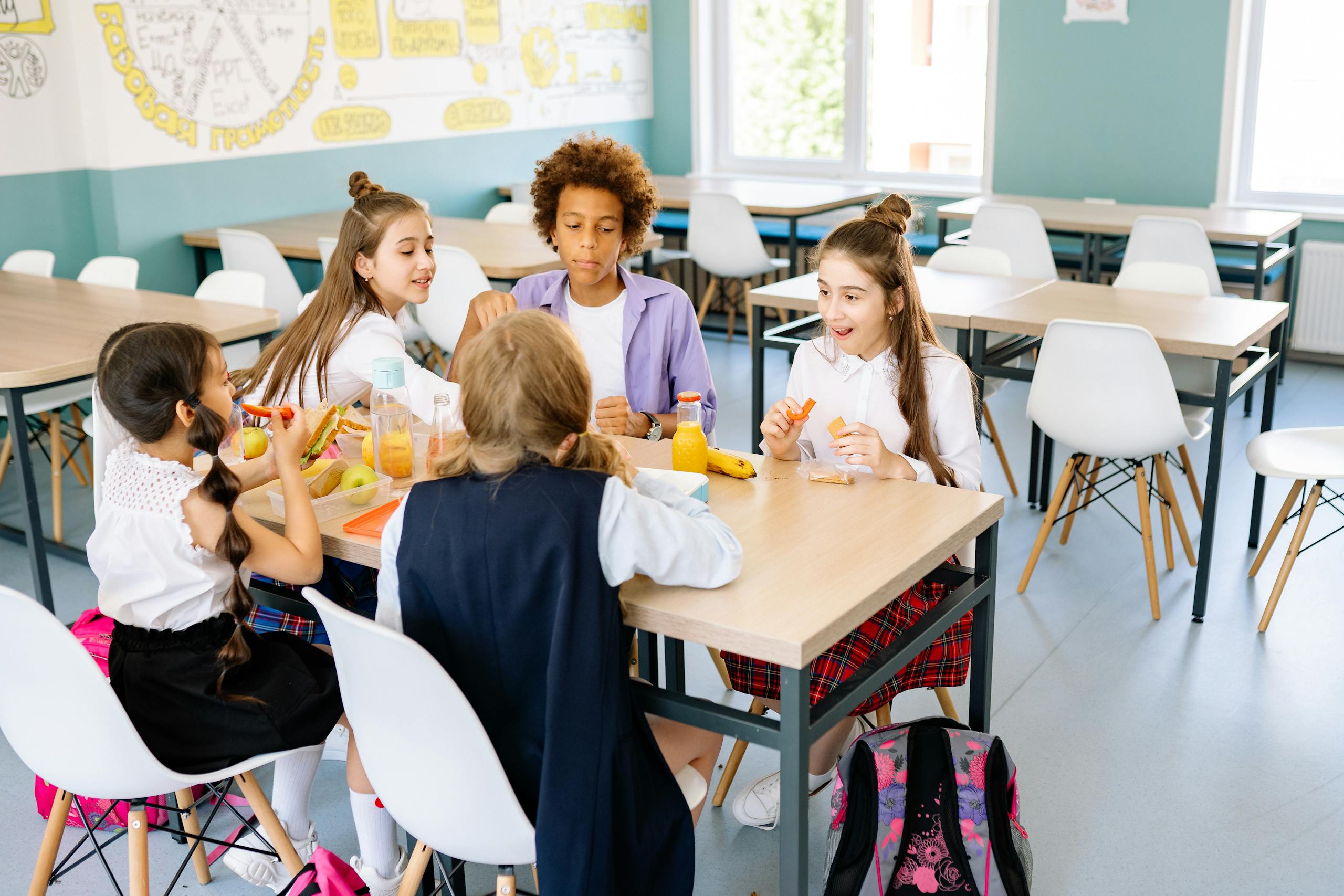
A hungry child does not arrive at school with the same chance to learn. Breakfast affects attention, memory, mood, and classroom behavior. When students begin the day hungry, teachers often become the first responders, quietly stocking snacks, watching for low energy, and adjusting expectations for children who are trying to learn on an empty stomach.
School breakfast is one of the most practical solutions to hunger because it reaches children where they already are. When breakfast is served after the bell or built into the school day, participation often improves because students do not have to arrive extra early or feel singled out. That small design change can make the difference between a child eating and a child pretending not to be hungry.
Lunch matters just as much. For millions of students, school lunch is the most reliable meal of the day. A strong school meal system does more than fill plates. It protects family grocery budgets, supports classroom performance, and gives children access to food that may be more balanced than what their household can afford at the end of a hard month.
Summer Hunger Is the Gap We Can Predict Every Year
Child hunger often rises when school closes for the summer. During the school year, breakfast and lunch programs create a daily safety net. In summer, that structure disappears for many families, and grocery costs rise just as children spend more hours at home.
Traditional summer meal sites help, but they do not reach every child. Transportation, rural distance, parent work schedules, weather, safety concerns, and limited site hours can block access. A meal site may be technically available, yet practically unreachable for a child whose parent cannot leave work or drive across town.
SUN Bucks, also known as Summer EBT, addresses this gap by providing eligible families with grocery benefits for their children during the summer. This approach matters because it respects how families actually live. It lets parents buy food at the places they already shop instead of forcing every household into the same pickup schedule.
SNAP Is One of the Strongest Anti-Hunger Tools
SNAP helps families buy groceries directly, making it one of the most flexible hunger-prevention programs in the country. It can be used for common foods such as bread, cereal, fruits, vegetables, meat, fish, poultry, dairy, and other grocery staples. That flexibility matters because families have different diets, cultures, allergies, access to stores, and cooking realities.
SNAP also supports local economies. Benefits are spent in grocery stores, farmers’ markets, and approved retailers, which keeps dollars moving through communities. When families receive SNAP, they are not just getting food support. They are also gaining breathing room in a budget that may be squeezed by rent, transportation, school supplies, and medicine.
The challenge is that SNAP still leaves gaps. Some eligible families do not enroll because they do not know they qualify, fear stigma, face language barriers, lack internet access, or find the application process difficult. Others receive benefits that help, but do not fully cover a month’s groceries, especially when prices rise faster than household income.
Food Insecurity Looks Different Across Communities
Child hunger exists in every state, every county, and every type of community. It appears in rural towns where the nearest grocery store is miles away. It appears in cities where stores are nearby, but prices are too high. It appears in suburbs where families look comfortable from the outside but are buried under rent, debt, and child care costs.
Local differences matter because national averages can hide extreme hardship. Some counties have child food insecurity rates that are several times higher than others. That means solutions must be nationally funded but locally designed. A rural county may need mobile meals, grocery delivery, transportation support, or flexible pickup. A dense urban district may need greater access to school meals, food pantries near transit, and benefits that match local prices.
The Hidden Tradeoffs Behind the Grocery Bill
Families facing hunger often become experts at tradeoffs. They compare prices per ounce, stretch leftovers, water down meals, buy cheaper starches, skip fresh foods, and delay purchases until benefits arrive. These choices require skill, but they should not be romanticized. Stretching food is not the same as having enough food.
The cheapest calories are often not the most nutritious. Families may rely on low-cost foods that fill stomachs quickly but do not provide the same balance of protein, fiber, vitamins, and minerals. Over time, food insecurity can coexist with poor diet quality, creating a painful contradiction. A child may be eating, yet still not be nourished.
Food insecurity also steals time. Parents spend hours searching for deals, visiting food pantries, comparing benefits, arranging rides, and planning meals around scarcity. That invisible labor rarely appears in statistics, but it shapes daily life for millions of households.
Food Pantries Help, But They Cannot Carry the Whole Crisis
Food banks and pantries are vital, especially during emergencies. They fill gaps when benefits run out, jobs disappear, disasters hit, or families face sudden financial shocks. Many communities would be in a deeper crisis without them.
But charity cannot replace strong public nutrition programs. Food pantries often depend on donations, volunteer labor, warehouse capacity, and local supply. They may not always offer the foods families need for allergies, cultural diets, medical conditions, or young children.
The strongest anti-hunger strategy uses both public programs and community support. SNAP, WIC, school meals, and summer benefits provide scale. Food banks, pantries, churches, clinics, and local nonprofits provide flexibility and human connection. We need both, but we should not expect charity to do the work of national policy.
Child Hunger Affects Health Long Before Adulthood
Food insecurity can affect a child’s body and mind early. Children need steady nutrition for growth, immune function, brain development, and emotional regulation. When food becomes uncertain, the body learns stress, and the mind learns scarcity.
The effects can appear in different ways. Some children may struggle with concentration. Others may become anxious around food, hide snacks, overeat when food is available, or feel embarrassed about needing help. Hunger is not only physical. It can shape a child’s relationships with school and family, as well as their confidence and sense of safety.
Better nutrition support is preventive health care. When we feed children consistently, we reduce pressure on schools, clinics, hospitals, and families. A meal is not a small intervention when it helps a child learn, grow, sleep, recover, and participate fully in daily life.
The Real Solution Is a Stronger Food Security System
Ending child hunger requires more than emergency food drives. We need a food security system that catches families before they reach crisis. That means automatic enrollment where possible, simpler benefit renewals, stronger school meal access, expanded summer grocery support, and outreach that reaches families in multiple languages and trusted spaces.
We also need benefits that reflect real costs. Food prices, rent, transportation, and child care do not fit neatly within official poverty categories. Families need support that recognizes the full cost of raising children, not just a narrow income formula.