A block of cheese might not look like the start of a party snack, but halloumi has a useful talent: it can handle heat without collapsing into a puddle. Cut it into chunky fingers, coat it, and fry it until golden, and that familiar grilling cheese becomes something made for sharing. The result is a crisp exterior surrounding warm cheese that keeps its shape, a different kind of pleasure from the stretchy pull of a mozzarella stick.
Cookbook author and television presenter Nadiya Hussain gives the idea a particularly festive treatment in her BBC Food recipe for chunky halloumi chips, featured on “Nadiya’s Party Feasts.” Her version finishes the fried cheese with sour cream, za’atar, mint, chili flakes, and pomegranate seeds. It is a snack with plenty going on, but the underlying method remains straightforward: Dry the cheese, coat it thoroughly, and fry it in manageable batches.
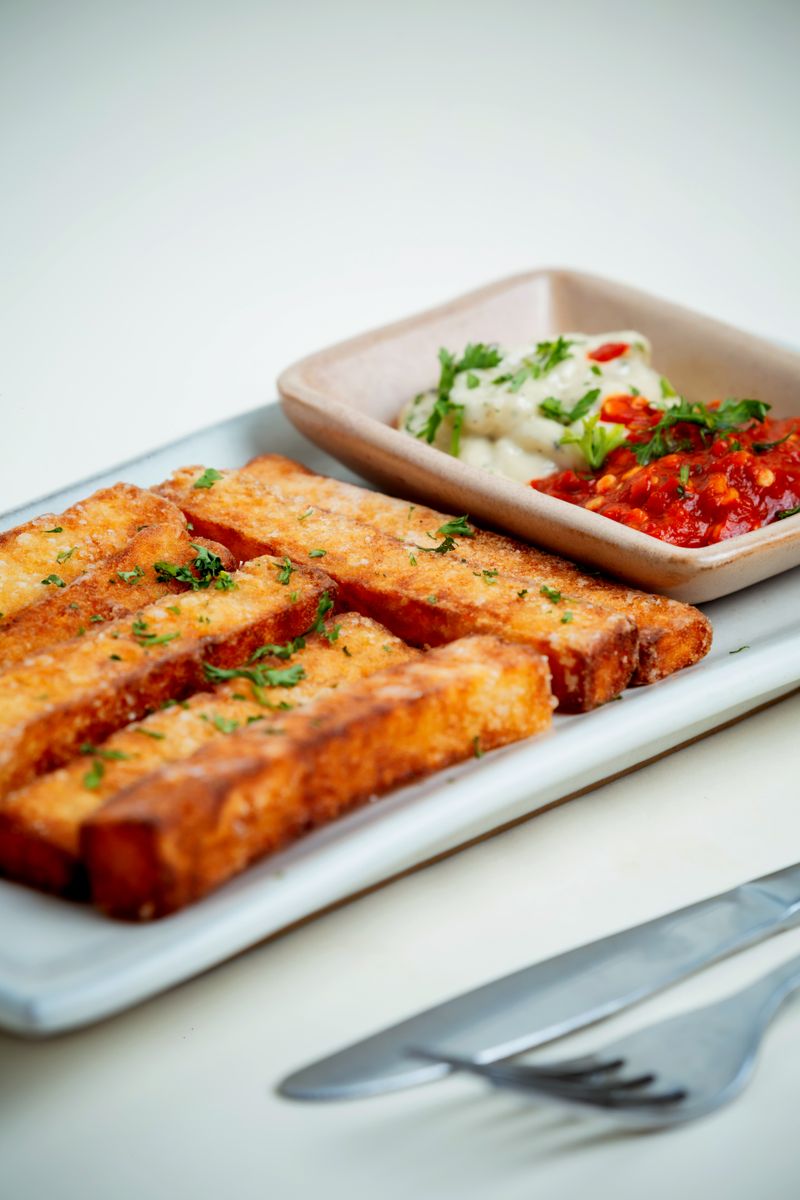
“These halloumi fries have a light, crisp outer shell,” the introduction to Hussain’s recipe explains, before describing the warmed cheese as “gooey and creamy.” That contrast is the attraction. You get a golden coating and a softer center without making dough, shaping individual croquettes, or hoping the cheese stays inside a complicated wrapper. A couple of blocks of halloumi provide the structure from the start.
Why Halloumi Can Take the Heat
Halloumi is a white, semi-hard cheese indigenous to Cyprus, with a distinctive layered texture. According to the Republic of Cyprus’s Trade Service, it is made from sheep’s and/or goat’s milk, sometimes blended with cow’s milk. The same source also notes its resistance to melting and spreading at high temperatures as a defining characteristic. That makes frying or grilling it a practical cooking method rather than an exercise in rescuing melted cheese from a pan.
Its identity also has formal protection. The European Union registered Halloumi/Hellim as a Protected Designation of Origin in 2021. The European Commission explains that cheese sold under those names in the EU must be produced on Cyprus according to the relevant specification. Fries are a serving format; the cheese itself has a specific geographic and culinary identity that deserves recognition beyond its usefulness as an appetizer.
For the cook, the most relevant feature is structure. Halloumi can become warm and softer while remaining a recognizable finger of cheese. That is why Hussain’s recipe starts with two 250-gram blocks, each cut into 12 pieces, rather than asking for a molded filling. The cheese supplies the shape, while the coating adds the crisp outer layer. The recipe serves eight, giving a clear starting point for a small gathering.
The Coating Is Simple, but the Details Matter
Hussain begins by patting the cut halloumi dry with a clean kitchen towel or paper towels. Her coating uses 75 grams of all-purpose flour, 2 teaspoons of paprika, 3 teaspoons of garlic powder, and a beaten egg. The egg and flour go into separate shallow dishes, making the assembly easy to organize. This version has no breadcrumbs, so the seasoned flour forms the shell rather than a thick breaded jacket.
Dip each piece in the beaten egg first, then in the flour mixture. Hussain’s instructions call for an even coating, followed by a second pass through the flour. That extra flour coating is part of her method, not a cue to invent a completely different breading routine. Lay the prepared pieces on a tray as you work, so they are ready before you begin handling the hot oil.
The frying temperature is another detail worth following accurately. Hussain specifies 150 degrees Celsius, or about 302 degrees Fahrenheit, for a gentle deep-fry, and the pieces take about two to three minutes to turn deep golden brown. That is the temperature for this particular egg-and-flour recipe; other halloumi-fries methods use different coatings and hotter oil. Choose one complete recipe rather than combining its ingredients with another recipe’s cooking instructions.
Her most useful warning concerns crowding: “Be careful not to overcrowd the pan or this will reduce the temperature of the oil too much.” Fry only a few pieces at a time, leaving room for them to move. The BBC recipe also cautions that you must not leave hot oil unattended. This is a quick-cooking snack, but it still requires your attention at the stove, not a trip across the room to greet arriving guests.
Related: 10 Diet Pills That Support Healthy Weight Loss
Give the Fries a Cool, Tangy Finish
A party-friendly detail in Hussain’s method is the warm oven. Before frying, she heats it to 170 degrees Celsius (approximately 338 degrees Fahrenheit) or 150 degrees Celsius in a fan oven. As each batch finishes, the fries go onto a baking tray in the oven to stay warm and crisp while the remaining pieces cook. That gives you a practical way to bring the batches together without pretending everything fits in the saucepan at once.
Once ready to serve, drizzle her fries with sour cream, then sprinkle with za’atar, chopped mint, chili flakes, pomegranate seeds, and salt. The presentation makes a simple fried-cheese snack feel considered without adding another cooking project. Keep that garnish until serving, as her instructions specify, rather than dressing the first batch while the rest are still frying. Save the finishing step for the end of the process.
A dipping sauce offers another approach. Good Food’s halloumi-fries recipe pairs the cheese with Greek yogurt, lemon zest, and harissa, swirling the chili paste through the yogurt rather than blending it completely. That provides pockets of heat alongside the cool yogurt. Its fries use a separate flour-and-za’atar coating, so treat it as an alternative recipe, not an interchangeable set of frying instructions for Hussain’s version.
Whichever complete method you choose, the appeal is refreshingly uncomplicated: cheese cut into grab-and-dip pieces, a crisp coating, and a bright accompaniment. Hussain’s version supplies the practical details that make it workable for company, from the 24-piece yield to the oven-holding step. The block that might otherwise become a few grilled slices gets a different assignment, and a much more sociable way to serve it.
Other post You Might Also Like
.7 Outdated Habits People Over 60 Should Leave Behind for a Healthier, Happier Life
.8 Healthy Habits to Support Weight Management Without Extreme Diets
.6 Benefits of Working Out That Go Far Beyond Weight Loss