One pot yields a dark, saucy dish, ready to drench a mound of rice. Another holds pork with barely any liquid left, its edges fried in rendered fat. A third adds coconut milk. All can be Filipino adobo, which helps explain why searching for the definitive recipe can feel like asking a whole family to choose its favorite relative. These differences aren’t a distraction from the dish. They are central to understanding it.
Adobo is so adaptable because it is better understood as a vinegar-based cooking approach than one fixed combination of ingredients. Chicken and pork are familiar choices, but seafood and vegetables belong in the conversation, too. Soy sauce is common, not compulsory, and cooks can change the richness, seasoning and amount of sauce without abandoning the tradition. Family accounts show how those choices become something more personal: the particular adobo that tastes like home.
The Secret Is the Method, Not a Rigid Ingredient List
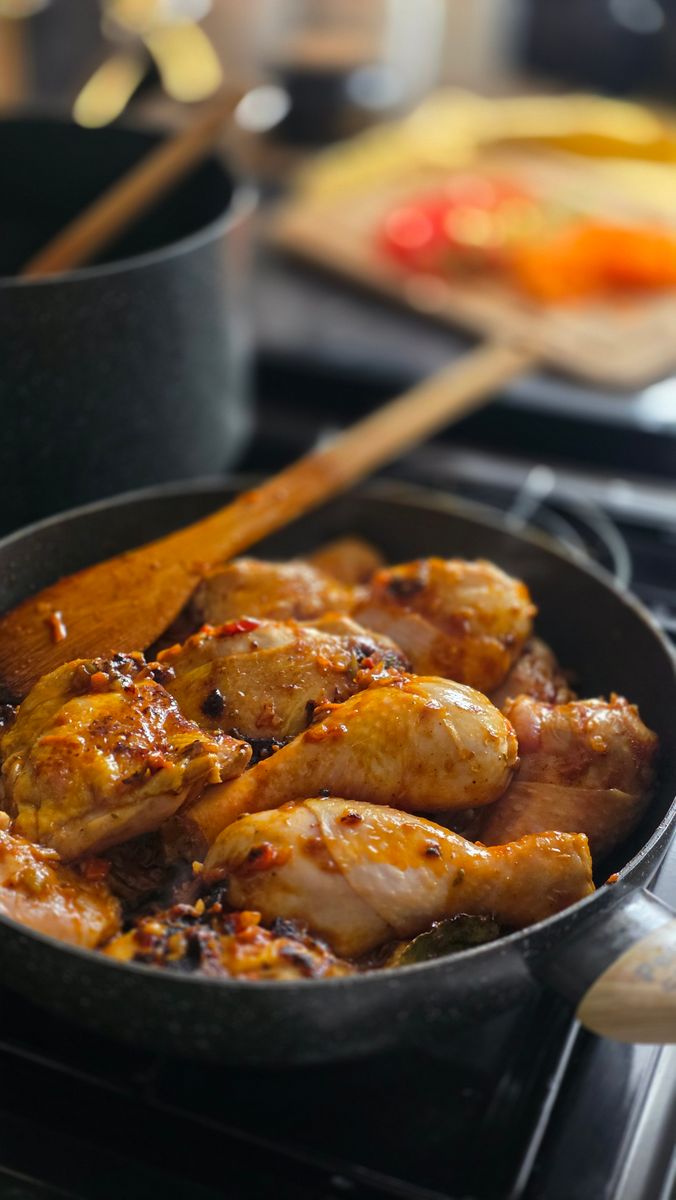
The word to remember is vinegar. In the familiar dark version, meat simmers with vinegar, soy sauce, garlic, bay leaves and black peppercorns. But that recognizable combination is one expression of a broader tradition, not a checklist every adobo must satisfy. The vinegar-based foundation leaves room for different proteins, seasonings and finishing techniques. Understanding that distinction explains how two pots can look remarkably different while still belonging to the same culinary family.
Even the name needs a little unpacking. Filipino adobo has a Spanish name, but Philippine vinegar-based cooking predates Spanish colonization, according to ABS-CBN’s culinary history reporting. Food writers Doreen Fernandez and Edilberto Alegre drew an important distinction in their book Kinilaw: “The Spanish (word) adobo is (actually) a pickling sauce rather than a dish.” The shared word should not lead readers to mistake Filipino adobo for an imported Spanish recipe.
Chef Datu Shariff Pendatun offered a useful summary of the dish’s layered identity: “Adobo is an expression of our culinary history: local in ingredients, tinted with Chinese flair, Hispanic in affiliation, and regional in provenance.” His description connects the ingredients, name and regional differences without pretending they tell one simple origin story. Adobo’s flexibility is not a recent makeover. Its many documented forms are already part of the tradition.
How One Family’s Adobo Becomes Completely Different From Another’s
Sometimes, you do not even need to leave one family to find contrasting versions. In a 2015 GQ interview, chef Paul Qui described the difference between the adobos he grew up with: “My father’s family used soy sauce, which made it juicier, while my mother’s version was drier, almost akin to carnitas.” That comparison makes the distinction easy to picture: one version offers more liquid, while another concentrates the experience around tender pork and rendered fat.
Qui also recalled learning to make adobo from his maternal grandmother before leaving for college. The recipe published with his interview uses pork, coconut vinegar, garlic, shallots, peppercorns, bay leaves, water, and sea salt, with no soy sauce listed. His account illustrates how a family recipe carries both a cooking method and a connection to the person who taught it. What gets passed down is not necessarily the version a restaurant menu makes most familiar.
Writer George Banez described another household perspective in a personal essay for Pressenza. “The adobo I enjoyed eating at home had no soy sauce,” he wrote, identifying it as adobong puti, or white adobo. He recalled pork belly simmered with vinegar, salt, and aromatics until the liquid dried out, then fried further in its own fat. In his household, soy sauce appeared on the rice instead. That small detail changes the idea that soy sauce must always go into the pot.
These accounts also show why “saucy or dry?” matters, not just as a minor serving preference. Leaving cooking liquid gives diners sauce to spoon over rice; reducing it further changes the finish and can lead to frying in rendered fat. Neither approach needs to erase the other. In the families described by Qui and Banez, those decisions helped define the dish’s familiar taste and texture long before anyone needed to explain it to an unfamiliar audience.
Coconut Milk, Squid and the Freedom to Make It Your Own
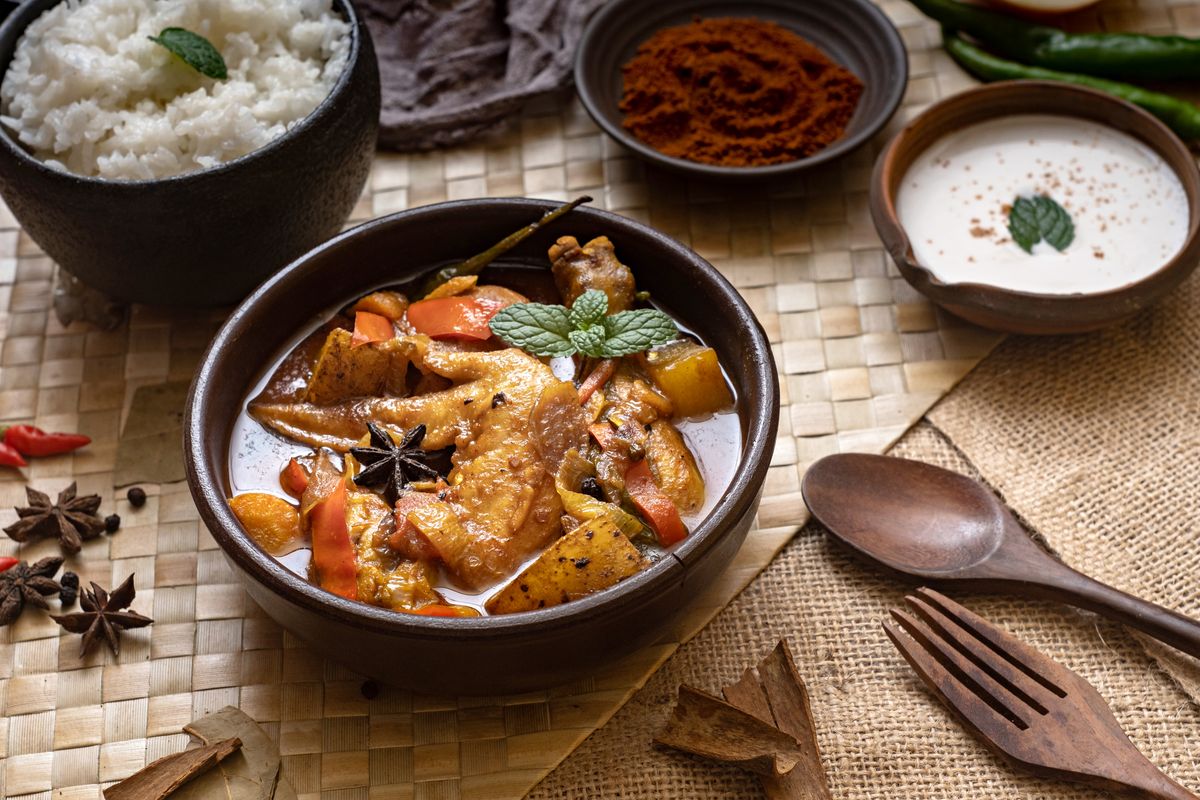
Regional variations expand the picture further. Adobo sa gata brings coconut milk into the dish, and ABS-CBN’s account describes coconut-milk adobo in Bicol, as well as related preparations elsewhere. A South China Morning Post recipe explains that coconut milk tones down the vinegar’s acidity in its chicken version. The result offers a different balance of richness and tang, showing that changing the sauce doesn’t automatically mean leaving adobo behind.
Then there is adobong pusit, or squid adobo, whose ink can give it a strikingly dark appearance. Vegetables also fit within the tradition: documented examples include water spinach, long beans, eggplant and banana blossoms. Those dishes matter because they prevent “adobo” from becoming shorthand for chicken alone. The category is broad enough to encompass different main ingredients, while vinegar-based cooking provides a recognizable thread connecting the variations.
For home cooks trying to understand the dish, the best starting point is a complete recipe with a clear point of view: a particular family’s chicken adobo, a soy-free pork version, or a coconut-milk preparation. Those examples make the choices visible rather than leaving “adaptable” to mean anything goes. Notice the vinegar, the source of saltiness, and how far the sauce is reduced. Those decisions distinguish the documented versions.
Adobo’s appeal is that variety does not cancel out familiarity. Qui’s family accounts, Banez’s childhood memories, and regional preparations all show a dish that can hold different tastes without forcing any household to surrender its own. A glossy sauce, a coconut-rich simmer, or pork finished in its fat can each tell a specific story. The interesting question is not simply which adobo is correct, but whose cooking you are getting to know.
Other Posts You Might Like
- 9 Things Retired Americans Wish They Had Done Differently Before Age 60
- Outdated American Traditions We Need to Rethink
- 15 Powerful Tips for Staying Motivated to Work Out and Achieve Your Fitness Goals