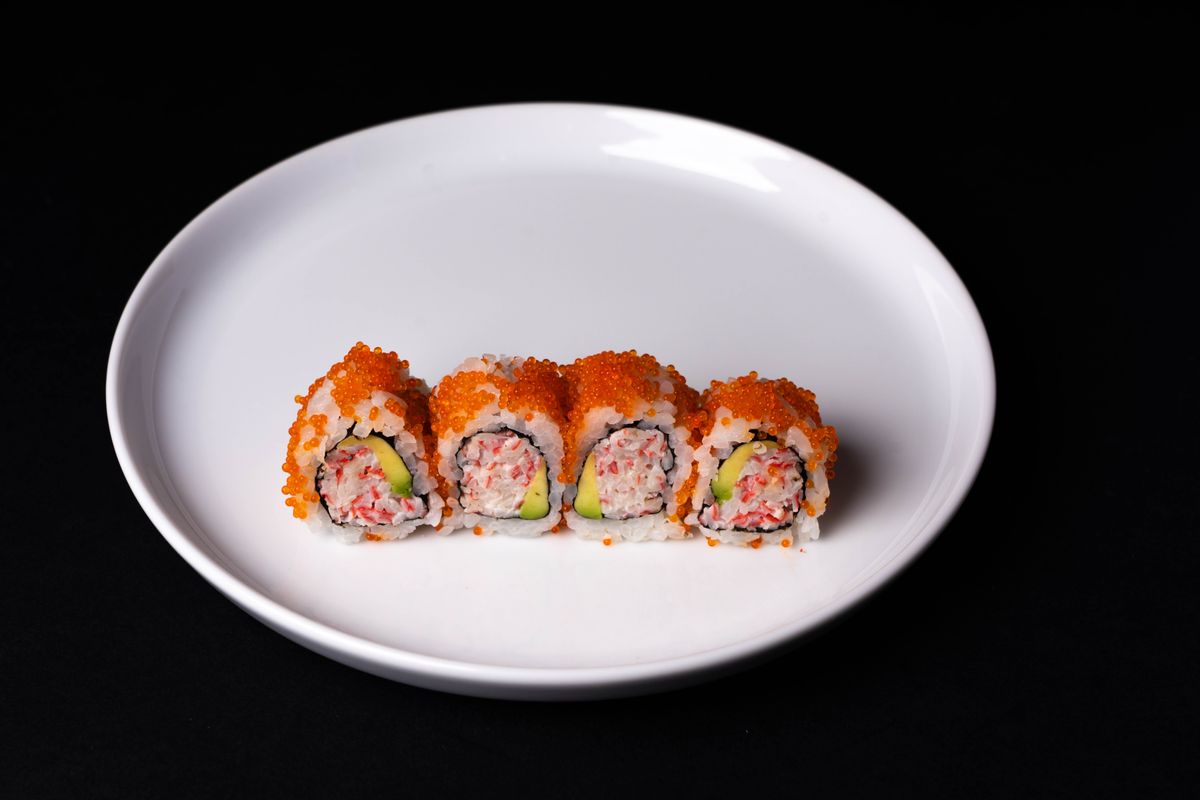
For someone unsure about sushi, a California roll offers a reassuring introduction: creamy avocado, crunchy cucumber, and cr imitation crab, wrapped in seaweed; there is no raw fish required, and the seaweed usually stays tucked beneath the rice rather than facing outward. That combination helped make the roll an approachable first order for American diners who were curious about sushi but hesitant about unfamiliar ingredients. Its influence came from making the unfamiliar feel a little less intimidating.
The roll did not single-handedly introduce America to sushi, and its inventor remains disputed. Japanese chefs in Los Angeles and Vancouver appear in competing accounts, with different explanations for the ingredients and inside-out construction. What is clearer is the role the California roll played: it offered a bridge between Japanese sushi-making and North American tastes. Understanding that distinction makes the history more interesting than a simple story about one chef inventing the perfect beginner’s bite.
A Familiar Filling Made an Unfamiliar Food Easier to Try
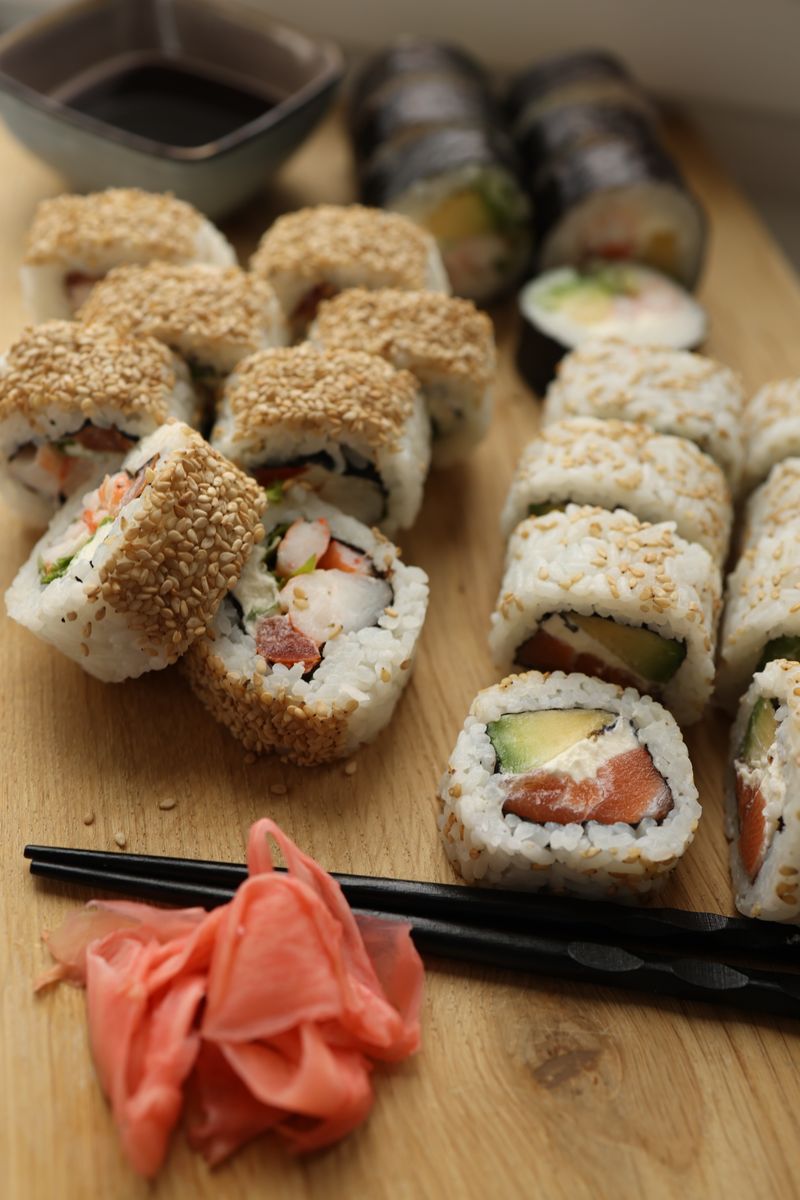
The California roll belongs to a category called uramaki, or inside-out rolls. Instead of putting nori, the edible seaweed, around the outside, the chef places rice on the exterior and keeps the nori within. The familiar version encloses cucumber, avocado, and crab or imitation crab, sometimes with sesame seeds on the rice. It is a small architectural change with an important effect: diners encounter the rice first, while the seaweed remains part of the experience without dominating its appearance.
That rearrangement addressed a specific hesitation described in several origin accounts. Some North American customers disliked the sight or idea of eating seaweed, while others were reluctant to try raw fish. Cooked crab and avocado offered another route into the meal. The roll did not eliminate the sushi format; it adjusted the ingredients and presentation. The Smithsonian identifies the California roll as a significant development in adapting sushi for a mainstream American audience, although accounts differ on exactly when and where it emerged.
Its importance was not merely that people could order something without raw fish. It also gave them a low-pressure way to become comfortable with a sushi menu. In the documentary “California Roll: The Rise of American Sushi,” former Japanese American National Museum curator Emily Anderson describes that progression: “It takes some courage or curiosity to try something that you haven’t had before.” As reported by Pacific Citizen, she explains that enjoying a California roll could encourage diners to try another roll containing raw fish.
The Origin Story Has More Than One Chef
One frequently repeated account credits Ichiro Mashita at Tokyo Kaikan in Los Angeles’ Little Tokyo, sometimes alongside his assistant, Teruo Imaizumi. In that version, avocado stood in for fatty tuna, with crab supplying seafood flavor. Britannica describes an early version reportedly introduced in the 1960s, followed by an inside-out presentation intended to appeal to American customers. It is an influential account, but the word “reportedly” matters: the historical record does not establish it as an uncontested invention story.
Food historian Andrew F. Smith has questioned the explanation that unreliable fish supplies drove the substitution. “By the 1960s, Los Angeles had plenty of fish markets, and tuna and other sushi fish were brought in year-round,” he wrote in “American Tuna,” as quoted by TODAY. Smith considers Ken Seusa of Los Angeles’ Kin Jo another strong claimant, citing an Associated Press report that credited him with creating the roll. Those competing accounts make it unwise to assign one chef a definitive invention date.
Then there is Hidekazu Tojo, the Japanese-born chef in Vancouver who says he developed his version after moving to Canada in 1971. He told TODAY that customers found seaweed unappealing, prompting a change in presentation: “I had an idea there: I made it inside out.” His original combination, he said, included Dungeness crab, avocado, spinach, egg, and sesame seeds. That differs from the cucumber-and-crab version many diners recognize today, another reminder that the roll’s history includes variations rather than one perfectly preserved formula.
Related: 8 Old-School Pantry Ingredients That Are Quietly Making a Comeback
A Gateway to Sushi, Not the Whole Story
The California roll’s success belongs within a larger history of Japanese restaurants, immigrant chefs, and diners gradually expanding their tastes. Los Angeles’ Little Tokyo provided an important setting, including Kawafuku, whose sushi bar features in accounts of sushi’s growing American audience. The California roll helped make that culinary exchange more approachable, but it did not create Japanese food culture in the United States from nothing. Its role was to widen an existing doorway, not build the entire house.
Calling it merely “not real sushi” also misses the people doing the adapting. The principal competing invention accounts involve Japanese chefs working outside Japan, responding to ingredients and customers around them. Chef Masaharu Morimoto told TODAY that the roll revealed new possibilities for combining sushi with international tastes. “It’s very reflective of the creativity and adaptability in the culinary world,” he said, describing how ingredients from different cultures can produce something new. For him, adaptation offered inspiration rather than a reason to dismiss the dish.
Morimoto’s own menus illustrate that continuing flexibility: he told TODAY that most Morimoto restaurants serve a version with snow crab, cucumber, and avocado, while Momosan uses imitation crab. Meanwhile, Anderson connects introductory dishes to curiosity extending beyond dinner, including Japanese language and Japanese American history. That is the California roll’s most meaningful legacy: a familiar ingredient could invite a first bite, and that first bite could open the door to another dish, another restaurant, or a deeper interest in the culture behind the meal.
Other Posts You Might Like:
- 6 Ways to Declutter Your Pantry and Maximize Space
- 6 Pantry Essentials to Toss for a Healthier Kitchen