You’ve taken out the trash, wiped down the countertops, and checked the refrigerator. Yet something in your kitchen still smells unpleasant. Before you start pulling everything out of your cabinets, check one appliance: your dishwasher.
Yes, the machine that cleans your dishes could be causing that mysterious odor. Food scraps, greasy residue, and drainage problems can all create unpleasant smells inside a dishwasher, even when it appears clean.
The good news? Some common causes are relatively easy to investigate, and you might not need a repair technician to address them.
Your Dishwasher Might Be Hiding the Problem

A dishwasher gets plenty of water and detergent during every cycle, so it seems reasonable to assume the appliance cleans itself along with your dishes.
Unfortunately, that isn’t always the case.
According to Consumer Reports, dishwashers with manual filters collect food particles that remain trapped until someone removes and cleans the filter.
Over time, those forgotten scraps can create unpleasant odors and interfere with water flow.
The tricky part is that the filter isn’t always easy to notice. It’s typically located near the bottom of the dishwasher, underneath the lower rack.
That means your dishwasher could look perfectly presentable while hiding a collection of old food debris below.
Related: 9 Common Dishwasher Myths Debunked: Expert Advice for Cleaner, More Efficient Use
The Hidden Filter Deserves a Closer Look
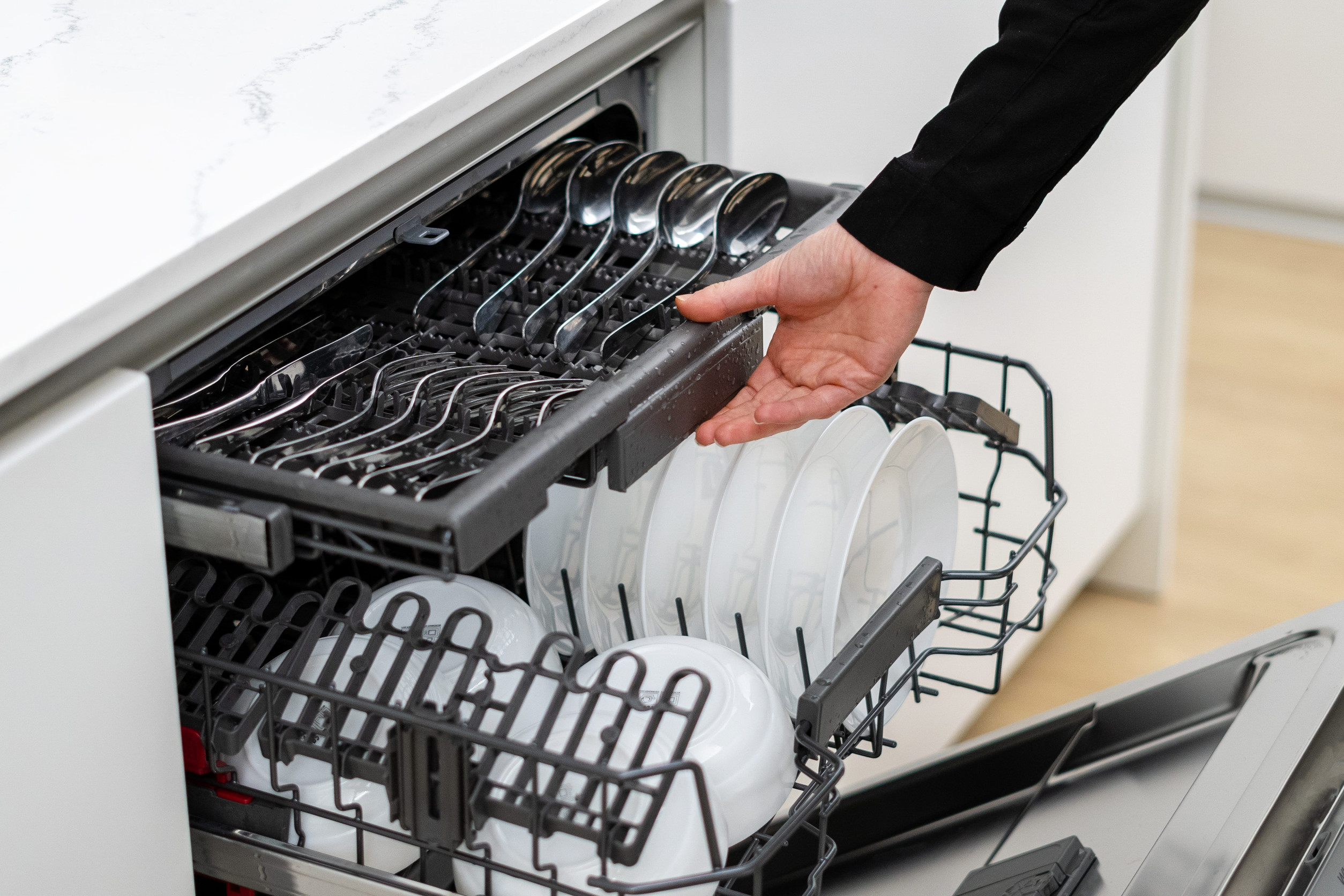
If opening your dishwasher releases an unpleasant smell, check the filter first.
Bosch identifies trapped food particles and debris as a common cause of dishwasher odors. Consumer Reports also explains that neglected manual filters can affect cleaning performance.
You might notice food particles remaining on supposedly clean dishes or visible debris around the filter area.
But here’s an important detail: not every dishwasher has the same filter system.
Some models have removable manual filters, while others use self-cleaning systems. Before removing anything, check your owner’s manual.
If your dishwasher has a removable filter, the cleaning process generally involves removing the lower rack, unlocking the filter, and rinsing it under running water.
Bosch recommends mild soap and a soft brush when needed. Whirlpool warns against wire brushes and abrasive scouring pads because they can damage filter components.
Once everything is clean, reinstall the filter securely before running another cycle.
This simple maintenance task can make a noticeable difference when trapped food is causing the smell.
Related:4 Common Kitchenware Items You Should Never Clean in the Dishwasher
Don’t Forget the Door Seals and Interior Edges
The filter isn’t the only place grime can hide.
Check around your dishwasher door, especially the rubber seals and the lower edges of the tub.
KitchenAid says food residue and grime can build up around these areas. Also inspect the bottom front portion of the dishwasher.
Because these areas don’t always get the same direct washing as your dishes, residue can go unnoticed.
Fortunately, cleaning accessible surfaces doesn’t require anything complicated.
KitchenAid recommends wiping rubber seals with a damp cloth and mild detergent. A soft toothbrush may help reach small crevices, if the manufacturer’s instructions allow it.
Be gentle; don’t scrub aggressively or pull at the seals.
While you’re inspecting the interior, also check the spray arms. Blocked spray holes can disrupt proper water distribution, leaving residue after washing.
Follow your manufacturer’s instructions for clearing any visible obstruction.
Standing Water Could Be Another Clue
Here’s where things become a little more complicated.
Sometimes the smell isn’t coming from food trapped in the filter. Instead, dirty water may linger inside the appliance or return after a wash cycle.
GE Appliances explains that an improperly installed drain connection can allow dirty sink water to flow back into the dishwasher.
A blocked drain hose, clogged filter, or drainage issue may also prevent water from draining properly.
However, don’t panic just because you notice a little water at the bottom.
GE notes that about 1 to 2 cups of residual water can be normal in certain dishwasher designs. That figure isn’t a universal rule for every model.
The bigger concern is dirty water accumulating between uses or unusual amounts remaining after a completed cycle.
If this keeps happening, cleaning the interior alone probably won’t solve the underlying drainage issue.
A qualified technician or plumber may need to inspect the drain connection.
Give Your Dishwasher a Proper Cleaning
After checking the filter, seals, and visible debris, consider whether the dishwasher needs a dedicated cleaning cycle.
Regular dishwashing doesn’t necessarily remove every deposit from the machine’s interior.
Manufacturers recommend different cleaning products and schedules depending on the appliance.
For example, Whirlpool recommends monthly cleaning with Affresh Dishwasher Cleaner in its maintenance guidance. Bosch provides separate instructions for its dishwasher cleaning products.
The key is to follow the directions for your model and chosen cleaner.
Don’t assume every cleaning product works the same way or belongs in the same compartment.
Resist the temptation to mix a homemade cleaning solution.
Whirlpool specifically cautions that frequent vinegar use may damage a dishwasher because vinegar is acidic.
An approved dishwasher cleaner, used as directed on the label and in your appliance instructions, is a more reliable starting point than experimenting with household chemicals.
How Often Should You Clean the Filter?
No single cleaning schedule works for every dishwasher.
Bosch generally recommends cleaning its dishwasher filters every few months, while Whirlpool recommends monthly cleaning and more frequent attention for heavy use.
Consumer Reports notes that many manufacturers recommend cleaning filters every two to three months, though requirements vary.
Your owner’s manual should take priority.
Meanwhile, GE recommends removing visible debris from the dishwasher bottom after each load and scraping significant food scraps from dishes before loading them.
These small habits can help prevent another unpleasant discovery the next time you open the appliance.
What If the Smell Isn’t Coming From Your Dishwasher?
Your dishwasher is worth investigating, but it isn’t the only appliance that can produce strange kitchen odors.
A garbage disposal can collect food buildup, particularly when water flow during operation is insufficient. InSinkErator identifies this as a common source of disposal odors.
Your refrigerator and microwave can also retain unpleasant food smells.
Try to notice where the odor is strongest. Does it get worse when you open the dishwasher? Is it concentrated around the sink opening? Or does it appear when you open another appliance?
Those observations can help narrow down which area needs attention.
If you encounter persistent sewage-like odors or recurring dirty-water backflow, arrange a plumbing inspection instead of repeatedly deodorizing the area.
One important exception: A rotten-egg smell that could indicate a gas leak requires immediate attention. Leave the area and, from a safe location, contact emergency services or your gas utility. Likewise, an electrical burning smell isn’t something to investigate by running another cleaning cycle.
The Bottom Line
A mysterious kitchen odor doesn’t always mean something obvious has been overlooked. Sometimes the source is tucked inside an appliance you use regularly.
When unpleasant smells keep returning, check your dishwasher’s filter, door seals, interior surfaces, and drainage system.
Start with the accessible components, follow your manufacturer’s cleaning instructions, and watch for signs of a deeper drainage problem.
You might discover that the appliance you’ve been relying on to clean your dishes is the very thing that needs a little cleaning attention itself.
Other Posts You May Like
- 8 Everyday Habits That Are Making Your Home Smell Bad Without You Realizing It
- 10 Unusual House Rules That Seem Extreme Until You Understand the Logic