A spring break visit should end with tired smiles, packed bags, and stories a child can carry home. For 6-year-old Jason Alvarado, a boy from Texas visiting family in Illinois, it ended on a Joliet sidewalk after a child-sized ATV went out of control and struck a tree.
The crash has become more than a heartbreaking local tragedy. It now sits within a broader national conversation about one central issue: children riding ATVs face risks that can turn a “kid’s vehicle” into something a child cannot safely control.
A Spring Break Visit Turned Into a Joliet Tragedy
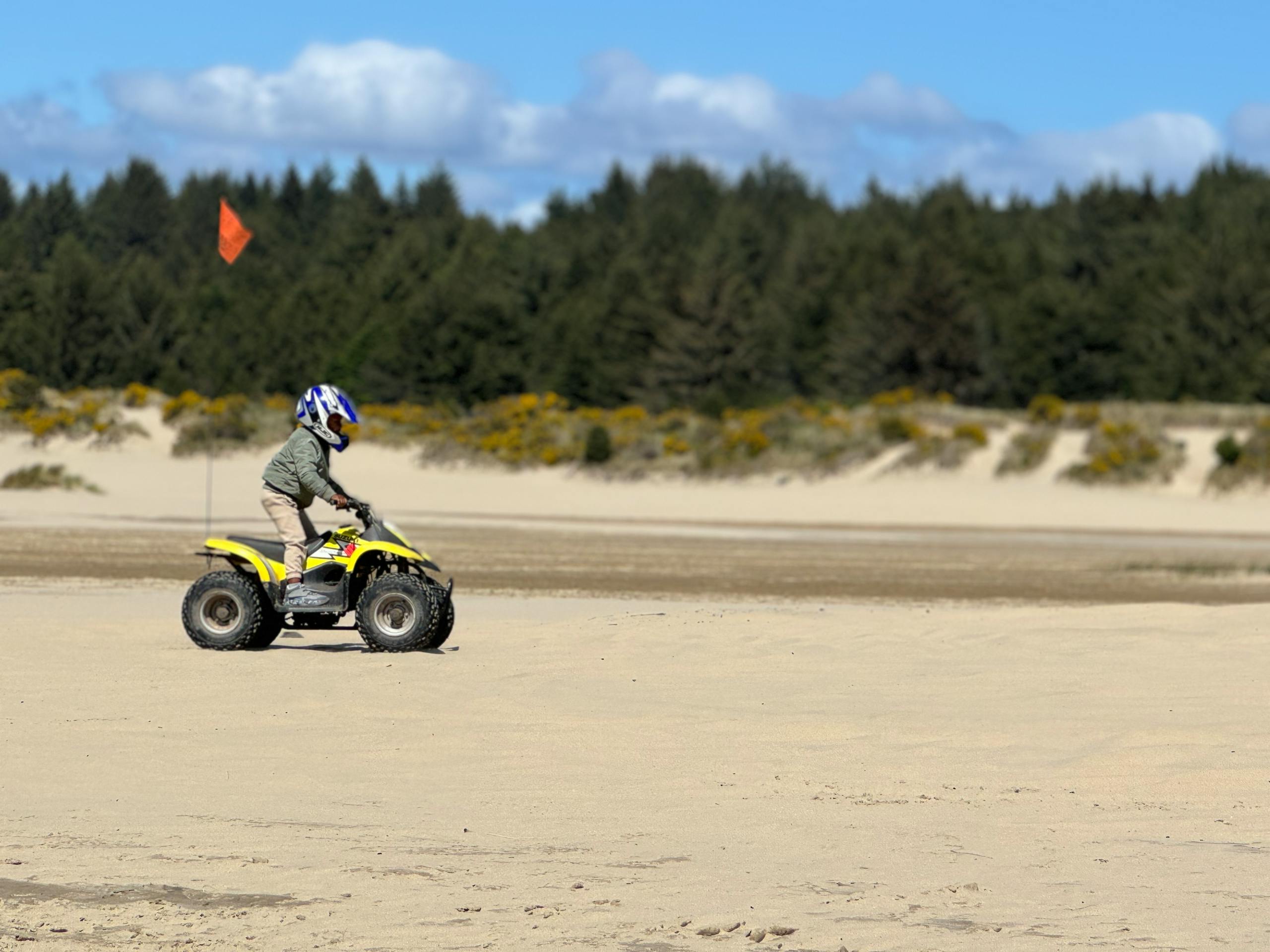
Jason Alvarado had traveled from Texas to Illinois during spring break, a time when families usually expect a few days of joy, movement, and memory-making. Instead, police said the child was operating a REX110 ATV on a sidewalk along Mission Boulevard in Joliet when the vehicle lost control and crashed into a tree. He was ejected from the ATV and later died after being transported to St. Joseph Medical Center.
An 8-year-old boy was riding as a passenger and survived without reported injury. That single detail gives the story a haunting split screen. One child lived through the crash. One child did not. For Jason’s family, the difference became a permanent wound that no investigation, recall notice, or safety warning can fully soften.
The ATV was described as a model designed for children, yet police said it could reach speeds of up to 20 mph. That number may sound small beside highway speeds, but for a 6-year-old sitting low to the ground on a motorized vehicle, even 20 mph can leave almost no room for judgment, correction, or recovery once control slips away.
Why the Sidewalk Setting Matters in the ATV Crash
ATVs are built for off-road riding. Their tires, balance, steering, and handling are not designed for sidewalks, curbs, traffic edges, trees, driveways, and neighborhood obstacles. A sidewalk can look safer than a road because it is away from moving cars, but for an ATV, it can create a narrow corridor where one mistake has nowhere to go.
In Jason’s case, the crash reportedly happened on a sidewalk in the 900 block of Mission Boulevard. That matters because sidewalks are not riding trails. They are bordered by fixed objects such as trees, poles, signs, landscaping, fences, parked cars, and uneven surfaces. A small swerve can become a direct impact.
We should be careful not to turn one tragedy into a courtroom before all facts are known. Still, the location points to a safety lesson that reaches far beyond one family. A youth ATV is not harmless just because it is small. A sidewalk does not become safe because it feels familiar. A short ride can still carry the force of a motorized crash.
The Helmet Detail Families Cannot Ignore
Police said Jason and the 8-year-old passenger were not wearing helmets at the time of the crash. That detail is painful because it is simple, visible, and preventable, but it should not be an excuse to reduce the entire tragedy to a single missing piece of gear.
Helmets matter because ATV crashes often involve ejection, rollovers, sudden stops, and head impact. A child thrown from a vehicle has very little control over how they land. The body moves faster than instinct. The ground, a tree, or the vehicle itself can become the point of impact before a nearby adult has time to react.
Still, a helmet is not a magic shield. It is the last layer of protection, not the full safety plan. Real ATV safety begins before a child climbs onto the seat, and the larger lesson is simple: helmets help, but they cannot make an unsafe ride safe.
The Passenger Risk That Often Gets Overlooked
The ATV in the Joliet crash reportedly had an 8-year-old passenger. That detail deserves attention because many ATVs are designed for a single rider. A passenger can change weight distribution, affect balance, limit movement, distract the driver, and make steering harder, especially for a child.
Adults often underestimate how much body position matters on an ATV. Riders lean, shift, brace, and adjust their weight to help control the vehicle. A 6-year-old is still developing coordination, reaction time, judgment, and strength. Add another child to the vehicle, and the machine becomes harder to manage at the exact moment the young driver needs simplicity.
This is one reason ATV safety guidance repeatedly warns against extra passengers unless the vehicle is specifically designed for more than one rider. A child may see a shared ride as fun. Adults must see the physics underneath that fun. More weight, less control, and less space for correction can turn a playful moment into a crash path.
The Later REX110 Recall Added a Bigger Safety Question
The story took on a broader safety dimension in 2026, when federal regulators announced a recall of about 4,900 Rex110 and Sierra110 youth ATVs. The recall did not turn the Joliet crash into a finished product-liability finding on its own, but it did add serious context regarding the type of vehicle involved.
The recalled youth ATVs were flagged for failing to meet mandatory federal ATV safety requirements. Regulators cited several hazards, including failure to meet maximum speed limitations for certain child-intended ATVs, noncompliant mechanical suspension, a throttle that may get stuck during use, and footwell surfaces that can reach high temperatures.
Those details matter because they shift the conversation from “a child lost control” to a more complete question. What was the child expected to control? Was the machine appropriate? Was it functioning as required? Was it limited in the way parents would reasonably expect from a youth model? Those questions are not small. They go to the heart of the central concern: whether families can trust a product marketed for children.
“Made for Children” Does Not Mean Safe for Every Child
One of the most dangerous phrases in youth recreation is “made for kids.” It sounds reassuring. It suggests smaller, softer, slower, safer. Yet a product can be marketed to children and still require a level of judgment, strength, reaction time, and risk awareness that a young child has not yet developed.
A 6-year-old can be bright, active, fearless, and coordinated for his age and still be too young to safely handle a motorized vehicle in a risky setting. Childhood confidence is not the same as crash readiness. A child may know how to press a throttle, turn handlebars, and smile through a ride. That does not mean the child can respond when the vehicle suddenly veers, accelerates, bumps, tilts, or heads toward a fixed object.
This is where families need blunt language. A youth ATV is not a bicycle. It is not a scooter. It is not a toy with a motor attached. It is a heavy, powered vehicle, and the central lesson is that treating it like a toy can put a child in danger before anyone nearby can stop it.
Why 20 MPH Can Be Dangerous for a 6-Year-Old
A top speed of 20 mph can sound manageable to an adult. Many people jog their memories against car speeds and assume 20 mph is slow. For a young child on an ATV, that assumption can be deadly.
At 20 mph, a vehicle covers a distance quickly. A child has only seconds to notice danger, decide what to do, move their hands correctly, control the throttle, steer away, and stay balanced. That is a lot to ask from a first-grade child, especially on a narrow sidewalk with hard objects nearby.
There is also the matter of impact. The danger is not just speed. It is speed plus mass, speed plus inexperience, speed plus terrain, speed plus no helmet, speed plus a passenger, and speed plus a fixed object. The central point is simple: a crash does not need freeway velocity to become fatal when a child is ejected from a motorized vehicle.
The National ATV Injury Problem Is Larger Than One Crash
Jason’s death is personal before it is statistical. He was a child, a grandson, a son, and a member of a family that now has to carry a loss most people cannot imagine. But national injury data shows why one crash should still make families across the country pause.
Off-highway vehicle injuries send tens of thousands of people to emergency departments in the United States. ATVs account for the overwhelming majority of those OHV-related injuries. That means this is not a rare safety category that only affects extreme riders on remote trails. It is a recurring injury pattern tied to machines that many families treat as weekend recreation.
The danger becomes sharper for children because they are still developing the very skills ATV riding demands. Judgment, strength, hazard recognition, impulse control, coordination, and emergency reaction all matter. A child can be supervised and still crash before an adult can intervene. Supervision helps, but it does not erase physics.
The Hardest Part for Parents Is Access
Many families do not own an ATV, but still have children who may encounter one. A child may ride at a relative’s home, a friend’s house, a rural property, a vacation spot, a neighborhood gathering, or a spring break visit. That makes ATV safety a conversation parents must have before the invitation happens, not after the engine starts.