Some celebrities become famous because people adore them. Others stay famous because people cannot stop debating, mocking, defending, criticizing, and turning every public move into a national group chat. That second kind of fame is messy, profitable, exhausting, and strangely powerful. It keeps names trending long after the original headline should have faded.
We see this pattern across politics, sports, music, reality television, royal drama, and old-school tabloid culture. A polarizing celebrity does not need everyone’s approval. They only need attention, and attention often grows fastest when admiration and irritation collide. These ten famous figures prove that being disliked can still keep a person firmly planted at the center of American culture.
Donald Trump remains the celebrity politician people cannot ignore
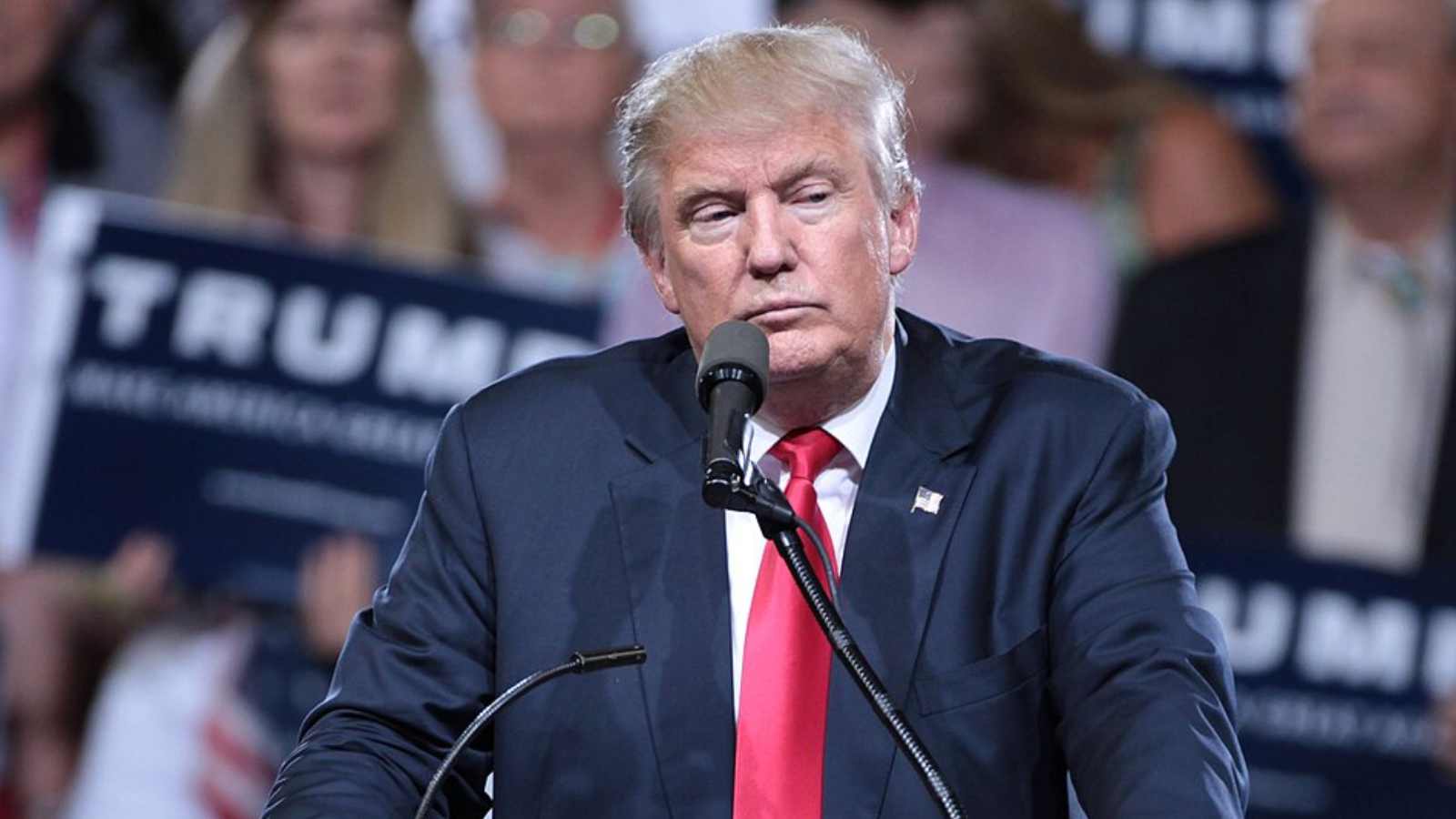
Donald Trump is more than a politician in the public imagination. He is a television-made brand, a campaign machine, a media magnet, and a cultural dividing line. Supporters see him as blunt, disruptive, and willing to fight institutions they distrust. Critics see the same qualities as exhausting, inflammatory, and dangerous for public life. That split is why Trump remains one of the easiest public figures to argue about at dinner tables, in online comment sections, on cable news panels, and in workplace break rooms.
What makes Trump so polarizing is that his celebrity identity has never fully separated from his political identity. Long before the White House, he understood spectacle, catchphrases, image control, and conflict as entertainment. That skill made him unforgettable, even to people who strongly dislike him. For many Americans, hating Trump became a daily ritual during his first presidency, the 2020 election fight, the legal battles that followed, and his return to power. We may disagree on almost everything about him, but we cannot pretend he fades into the background.
Kim Kardashian turns fame itself into the argument.

Kim Kardashian became a symbol of a question Americans have been asking for nearly two decades. What counts as talent in a culture built on visibility? Her critics often frame her as the face of empty celebrity, reality-TV wealth, filtered beauty, and influencer capitalism. Her defenders point to her business instincts, legal reform work, brand discipline, and ability to turn public curiosity into billion-dollar commerce. That tension keeps the Kardashian name alive even among people who claim they are tired of hearing it.
Kim attracts hate because she represents a kind of modern fame that feels both impossible and uncomfortably familiar. She built an empire from image, access, family drama, beauty standards, and constant self-promotion. Many people resent that formula, especially when traditional markers of celebrity, such as acting, singing, or athletic greatness, seem missing from the equation. Still, her staying power says something uncomfortable about us. We may mock the machine, but we keep watching the machine work.
Amber Heard became a symbol of trial-by-internet culture.

Amber Heard’s public image changed dramatically during and after the televised defamation battle with Johnny Depp. The case became more than a legal proceeding. It turned into a social media spectacle, with clips, memes, reaction videos, commentary channels, and fan armies treating private pain as public entertainment. Heard received intense backlash, and that backlash often moved faster than careful analysis of the evidence, the verdict, or the legal complexity behind the case.
The reason Heard remains so polarizing is that her name now sits at the intersection of celebrity, gender politics, domestic abuse discourse, internet mob behavior, and distrust of Hollywood narratives. Some people view her as a cautionary tale about credibility and public testimony. Others see her treatment as proof that online audiences can turn a trial into a digital punishment ritual. We do not have to relitigate every detail to understand the larger cultural point. Heard became one of the clearest examples of how celebrity scandals are now judged in courtrooms and comment sections at the same time.
Aaron Rodgers draws criticism far beyond the football field.
Aaron Rodgers built a Hall of Fame-level football reputation through accuracy, creativity, confidence, and years of elite quarterback play. Yet his public image has often been shaped just as much by what he says away from the field. His comments on COVID vaccination, medical skepticism, media narratives, and personal beliefs turned him from a great quarterback into a recurring culture-war figure. Fans who once debated only his arm talent began debating his judgment, honesty, and public influence.
Rodgers is the kind of athlete people love to argue about because he combines brilliance with defiance. When he plays well, supporters describe him as misunderstood, independent-minded, and unfairly targeted. When he struggles or says something controversial, critics see arrogance, evasiveness, and unnecessary drama. That is why his haters rarely sound indifferent. They do not just dislike his teams; they also dislike him. They dislike the feeling that every Rodgers headline comes with a lecture, a mystery, or a new media firestorm.
Joe Biden became a target for age, policy, and political fatigue.

Joe Biden has spent decades in American public life, and that long visibility has made him both familiar and easy to criticize. Supporters often point to his experience, empathy, legislative record, and steady political style. Critics focus on his age, speaking style, policy decisions, and the frustrations many Americans felt during his presidency. For people already tired of establishment politics, Biden became a symbol of Washington’s old guard.
What made Biden such a frequent target was not only ideology. It was the way his public image became tied to national exhaustion. Inflation anxiety, border debates, foreign policy crises, student debt arguments, and concerns about physical and mental sharpness all fed into the criticism. Some attacks were fair political scrutiny. Others became cheap jokes and viral clips stripped of context. Either way, Biden joined the small group of public figures who could make half the country groan before he even finished a sentence.
LeBron James keeps the GOAT debate permanently alive.
LeBron James is one of the greatest basketball players ever, which is exactly why so many people root against him. Greatness attracts admiration, but sustained greatness attracts resentment. LeBron entered the NBA as a teenage phenomenon, carried impossible expectations, changed teams, won championships, broke scoring records, built a business empire, and spoke openly on social issues. That level of visibility gives fans endless reasons to celebrate him and endless reasons to complain.
The strongest LeBron hate often comes from comparison. For many basketball fans, Michael Jordan is not just a player. He is a memory, a standard, and sometimes a childhood religion. Every argument that puts LeBron near or above Jordan feels like a personal insult to that era. Add in “The Decision,” superteam debates, flopping accusations, social commentary, and years of playoff dominance, and LeBron becomes more than an athlete. He becomes a test of what fans value most: loyalty, rings, numbers, longevity, personality, or nostalgia.
Taylor Swift proves that overexposure can create backlash even at the top.
Taylor Swift has one of the most loyal fan bases in modern music, but that loyalty also fuels some of the backlash against her. To fans, she is a songwriter, storyteller, business strategist, performer, and emotional archivist of growing up, falling apart, and starting over. To critics, she can feel overexposed, overly protected, too dominant in pop culture, and surrounded by a fan culture that sometimes treats disagreement like a crime. That push-and-pull keeps Swift permanently in the spotlight.
Swift is polarizing because she is everywhere, and being everywhere changes how people react to success. Her albums become events. Her tours become economic stories. Her relationships become headline cycles. Her awards speeches, friendships, outfits, and stadium appearances become content. Some people see a woman mastering the music industry on her own terms. Others see a celebrity machine so large that it becomes impossible to escape. In both cases, attention keeps feeding the empire.
Meghan Markle sits at the center of royal tradition and modern celebrity conflict.
Meghan Markle became one of the most debated women in the world because she entered a monarchy already built on scrutiny, symbolism, hierarchy, and tabloid obsession. Her marriage to Prince Harry looked like a modern fairy tale at first. Then the story shifted to family tension, press battles, conversations about race and identity, debates over royal duty, and public arguments over privacy. The result was a celebrity narrative in which every appearance, interview, outfit, and business move became laden with meaning.
The Meghan backlash often says as much about the audience as it does about Meghan herself. Some critics blame her for Harry’s distance from the royal family. Others resent the couple’s media projects, seeing them as contradictory to their stated desire for privacy. Her supporters argue that the criticism has often been excessive, racialized, sexist, and unfairly personal. That is why Meghan remains such a powerful culture-war figure. She is not just discussed as a duchess or celebrity. She is discussed as a symbol of who gets protected, who gets punished, and who gets believed.
Rosie O’Donnell built a career on being impossible to ignore
Rosie O’Donnell has never been a quiet celebrity, and that is a major reason people react so strongly to her. She built her public identity through comedy, daytime television, political commentary, advocacy, and blunt celebrity feuds. Her supporters appreciate her honesty, sharpness, and willingness to say what others soften for public comfort. Her critics see the same traits as loud, smug, combative, and exhausting.
Rosie’s long-running public conflict with Donald Trump helped cement her as a celebrity people either defend with loyalty or mock with enthusiasm. That feud worked because both figures understood direct confrontation, personal branding, and the value of a headline that refuses to die. Rosie does not fit the polished, careful celebrity mold. She interrupts, argues, jokes, and provokes. For audiences who prefer celebrities to stay pleasant and neutral, she becomes an easy target. For others, that is exactly why she still matters.
Dennis Rodman turns eccentricity into permanent controversy.
Dennis Rodman has always been difficult to categorize. As a basketball player, he was a rebounding genius, a defensive force, a championship contributor, and one of the most visually distinctive athletes of his era. As a celebrity, he became famous for dyed hair, piercings, public unpredictability, reality-TV appearances, and a personal style that challenged the rigid masculinity of sports culture. Some fans loved the rebellion. Others dismissed him as attention-hungry chaos.
Rodman’s later public image became even more complicated through his visits to North Korea and his unusual connection to Kim Jong Un. Those trips pushed him from eccentric sports legend into geopolitical curiosity, and many people found the whole thing bizarre, irresponsible, or surreal. Yet Rodman’s strange durability comes from the fact that he never seemed interested in being respectable in a traditional way. He became famous by being useful on the court and unforgettable off it. That combination still makes him one of the easiest celebrities to love, question, laugh at, and criticize.
Conclusion
The celebrities people “love to hate” are rarely ignored, and that is the whole point. Donald Trump, Kim Kardashian, Amber Heard, Aaron Rodgers, Joe Biden, LeBron James, Taylor Swift, Meghan Markle, Rosie O’Donnell, and Dennis Rodman all occupy different corners of fame, but they share one important advantage: they provoke a reaction. Some reactions come from politics. Some come from sports loyalty, gender expectations, internet drama, royal obsession, or pure overexposure.