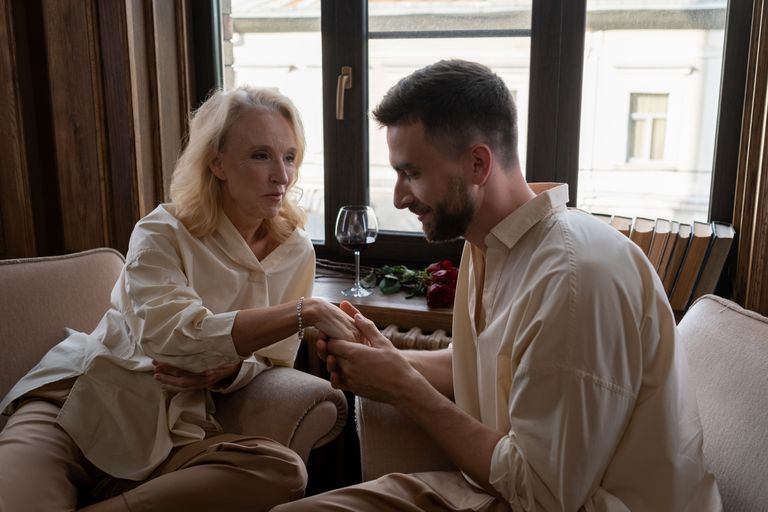
Dessert plates are cleared, the last sip of wine is gone, and an American couple at a sidewalk table in Paris starts glancing around for the check. Twenty minutes later, it still has not arrived, and nobody on staff seems to be in a hurry.
That wait is not bad service. Travel writer Rick Steves has explained for years that in France, as in most of Europe, waiters do not bring the bill until a diner asks for it, and he has a simple way to speed things up when he is short on time: he uses the server’s offer of coffee as his cue to ask. Here is how the custom works and what else American diners can expect at the table.

The Check Comes Only When a Diner Asks
In his essay about a long French restaurant meal, Steves writes on his website that in France, as in most of Europe, a server will not bring the bill until the diner asks for it. The same essay frames the slow pace as part of the experience, noting that in France, slow service is good service.
His advice for first-time visitors to Europe puts it even more plainly: “Slow service is respectful service.” Steves explains there that diners have to ask for the check only because the host considers the table theirs for the night. He suggests thinking of dinner as the evening’s entertainment rather than a stop between activities.
For American diners used to a server dropping the check with the last plate, that can feel like being forgotten. It is the opposite. Frenz Hub’s list of things never to do in France covers a few more of the customs that tend to surprise visitors.
Rick Steves Uses the Coffee Offer as His Cue
Steves does have a strategy for evenings when he cannot linger. Once dessert is finished, a waiter typically comes back to ask about coffee. Rather than waiting for a check that is not coming, Steves writes that he uses that moment as “the perfect opening to ask for the bill.”
A June 17, 2024, Explore article on the tip points out that U.S. servers often bring the check without being asked, while in Europe a bill handed over too early can signal that it is time to leave. The article adds a few other ways to signal readiness: learning to say “check, please” in the local language, miming a signature in the air once the server is at the table, or setting a payment card on the table.
The same habits that make a trip go smoothly often help at home, too. Frenz Hub’s list of old-school etiquette rules that have disappeared shows how much table manners have shifted in the U.S. over the years.

French Dinner Runs From 7 to 9 p.m.
Timing matters as much as the check. Steves writes that French restaurants commonly serve dinner only between 7 p.m. and 9 p.m., so travelers used to an early American dinner hour may arrive before the dining room opens, and those who wander in late may miss the window. He recommends a reservation when diners have a particular place in mind.
Because the table is not turned over during the evening, a single booking often covers the whole meal, from the first course to coffee. Travelers mapping out where to stay and eat on a holiday trip can also look at a short list of things never to do when booking a hotel for holiday travel.
La Carte Versus Le Menu
The vocabulary can trip up visitors before the food even arrives. According to Steves, what Americans call the menu is la carte in France. Ordering le menu, or la formule, means choosing a multi-course, fixed-price meal with a limited set of options, which he notes is a way to save money.
In his broader guide to eating well in Europe, Steves writes that most restaurants offer a well-priced menu of the day with a set choice of starter, main course and dessert, and that locals order it too. Portions are smaller than many Americans expect, he adds in the French restaurant essay, because the meal is spread across several courses instead of one large plate.
Visitors who like to plan ahead often have a few key words ready before they go. A recent look at what people who plan vacations far in advance have in common fits that kind of traveler. Food rules can vary by country in other ways too, as Frenz Hub’s roundup of food laws and rules in other countries shows.
Tipping Works Differently at the End
Once the check does arrive, the math is different too. In his first-trip advice, Steves writes that a service charge is almost always included in a European restaurant bill, so locals tend to round up a little, rarely as much as 10 percent. In his eating guide he points to phrases such as “service compris” in France and “servizio incluso” in Italy as signs that service is already covered.
The Explore article notes that customs vary by country, with tips treated as optional thanks in Italy and some places in Berlin and London adding an automatic gratuity. Steves, whose public television series Rick Steves’ Europe has introduced many Americans to these places, sums up the larger point: in most European restaurants, dining is not rushed, and the table belongs to the diners for the entire evening.
For American travelers, the easiest adjustment is to plan for it. A long dinner in France is part of the trip, and when the clock does matter, the coffee question is the moment to ask for the check.
This article was produced with AI assistance and edited for accuracy against the sources linked above.
Image: Philippe Alès – CC BY-SA 3.0/Wikimedia Commons